

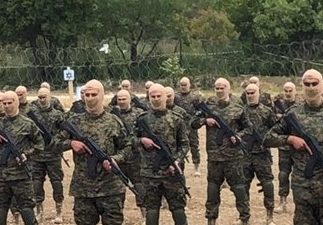
Parade of the Hezbollah armed militia in southern Lebanon.
As discussions continue regarding a potential easing of sanctions targeting Iran, several diplomatic and regional sources believe Tehran could bolster its financial backing for its armed allies in the Middle East, notably Lebanese Hezbollah.
According to Reuters, Iranian officials have reportedly assured Hezbollah that increased financial assistance would be granted if a portion of Iranian assets currently frozen abroad were released. Lebanese sources cited by the agency also claim that Tehran has pledged to promptly disburse funds to its foremost regional partner.
A weakened Hezbollah, yet still vital to Tehran
Hezbollah emerged significantly weakened from recent clashes with Israel. Human casualties, the destruction of infrastructure, and the degradation of its military capabilities have taken a toll on the Lebanese Shiite organization.
Prior to the conflict, Western estimates assessed direct Iranian aid to Hezbollah at between $700 million and $1 billion annually. These resources were allocated to fighters' salaries, social services, the movement's media outlets, as well as a share of its military operations.
Hezbollah remains a cornerstone of Iranian regional strategy. Established with the backing of the Islamic Revolutionary Guard Corps in the 1980s, it is widely regarded as Tehran's primary armed proxy in the region.
The Axis of Resistance: a region-wide pro-Iranian network
Hezbollah belongs to an alliance of groups known as the "Axis of Resistance."
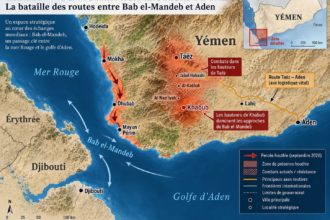
In Yemen, the Houthis have benefited for years from Iranian support in the form of military training, drones, and missiles. Their capacity to disrupt maritime traffic in the Red Sea has endowed them with growing strategic importance in the eyes of Tehran.
In Iraq, several pro-Iranian Shiite militias—including Kataib Hezbollah, Asaib Ahl al-Haq, and Harakat Hezbollah al-Nujaba—have received funding, weaponry, and operational support from the Quds Force, the branch of the Revolutionary Guards responsible for extraterritorial operations.
In the Palestinian territories, Hamas and Palestinian Islamic Jihad have likewise received Iranian financial and military backing. Relations between Tehran and Hamas have, however, experienced periods of strain, particularly during the Syrian civil war.
Until the fall of the Bashar al-Assad regime, Syria also occupied a pivotal position in this regional framework, serving as a logistical corridor between Iran and Hezbollah.
The stakes of a potential unfreezing of Iranian assets
The exact volume of frozen Iranian assets remains difficult to ascertain and varies across estimates. In recent years, certain Iranian officials have cited figures exceeding $100 billion. Several Western analyses, however, suggest that the funds genuinely accessible are considerably lower, with a portion already encumbered or held in illiquid assets.
Among the assets most frequently cited are oil revenues blocked in several countries, notably South Korea, Iraq, China, and Japan. In 2023, an agreement enabled the transfer of approximately $6 billion in Iranian funds held in South Korea to monitored accounts in Qatar. This arrangement stipulated that the funds were to be utilized exclusively for humanitarian purchases, under the oversight of the relevant authorities.
According to several observers, Iran's capacity to reassert its regional influence will largely hinge on the trajectory of negotiations with the United States and access to a portion of these frozen assets.
In Washington, this prospect raises serious concerns. U.S. officials routinely reiterate that unfrozen funds must not be channeled toward financing armed groups allied with Tehran. In previous transfer or unfreezing mechanisms, the United States generally imposed restrictions limiting their use to humanitarian goods, such as pharmaceuticals, foodstuffs, and medical equipment.
Tehran, however, argues that money is fungible: even when specific funds are earmarked for designated purposes, the easing of financial pressure allows other budgetary resources to be redirected toward strategic priorities.
The modalities of any future unfreezing will depend on agreements reached between the parties. Several experts believe Washington will seek to maintain oversight mechanisms or sectoral restrictions to mitigate the risk of these resources directly benefiting Iranian-backed armed groups. The actual efficacy of such measures, however, remains a subject of debate among specialists.
For their part, Iranian authorities dismiss these allegations, maintaining that these funds legitimately belong to the Iranian state. Beyond diplomatic negotiations, a fundamental question persists: if sanctions are eased and frozen assets are indeed unlocked, what proportion of these resources will be devoted to the domestic Iranian economy, and what proportion will serve to sustain Tehran's regional proxies?
For many analysts, the answer to this question could durably alter the strategic balance of the Middle East in the years ahead.


One comment
As a Newbie, I am constantly searching online for articles that can help me. Thank you