
By Guilherme Casarões, Florida International University
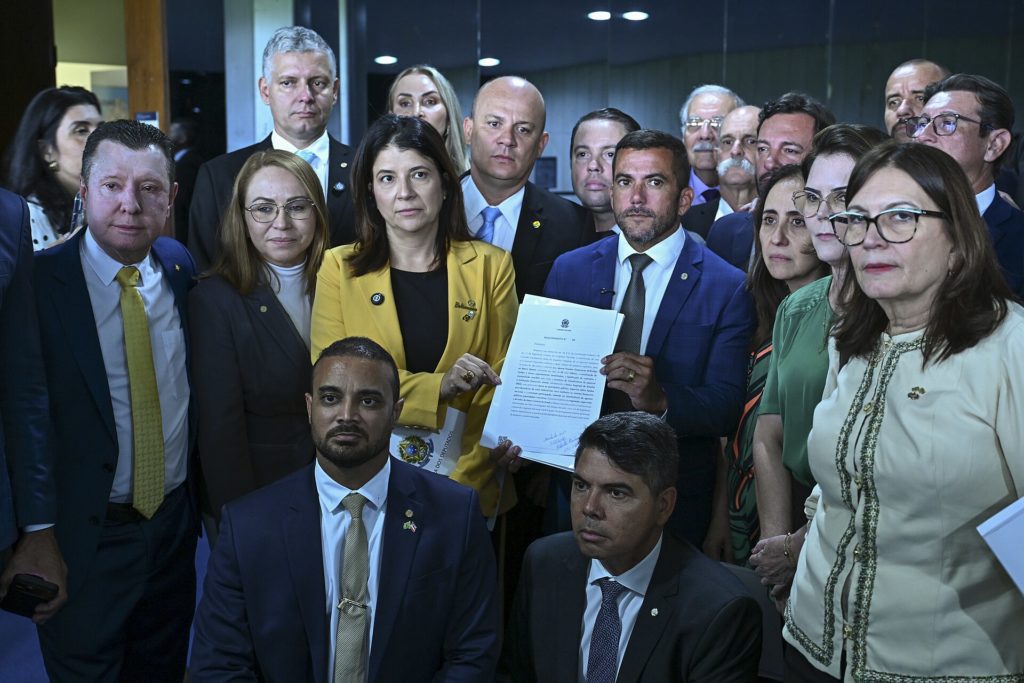
Less than a month before Brazil's national elections, scheduled for 4 and 25 October 2026, what is now known as the "Banco Master crisis" threatens to shake the country's democracy to its very foundations. On the night of 17 November 2025, Brazilian Federal Police officers arrested banker Daniel Vorcaro on the tarmac of São Paulo's Guarulhos Airport as he was preparing to board a private jet. Initially remanded in custody as a flight risk, he was indicted on multiple counts of bank fraud, corruption, and money laundering. He is currently awaiting trial.
At first glance, it appeared to be merely a financial scandal. Shortly after Vorcaro's arrest, the Central Bank of Brazil ordered the liquidation of his bank, Banco Master, incurring unprecedented losses estimated at 47.3 billion reais (approximately €8 billion). Nearly 90% of this amount was reimbursed to account holders and shareholders by the Credit Guarantee Fund (FGC)—the Brazilian equivalent of the French Deposit Guarantee and Resolution Fund (FGDR)—marking the largest payout in the institution's history.
The Brazilian financial system has come under severe strain. Since 2018, Banco Master had secured contracts to manage state and municipal pension funds and to provide services to banking institutions. If convicted, Vorcaro would be far from the first Brazilian swindler in a banker's suit. However, investigations have uncovered methods as inventive as they were ruthless.
To shield Banco Master's operations from public scrutiny, Vorcaro allegedly established a vast network of economists, influencers, senior civil servants, politicians, and judges. Some were purportedly enlisted to vouch for the bank; others, according to prosecutors, were openly bribed to turn a blind eye to dubious transactions. When this strategy failed, Vorcaro allegedly resorted to intimidation and blackmail against his critics, including journalists and public officials, going so far as to contemplate causing them physical harm.
After a ten-month investigation, the Banco Master affair suggests that Vorcaro succeeded in holding the country's political system hostage. The banker appears to have understood that Brazil no longer possessed three branches of government checking and balancing one another, but rather three distinct power centres whose veto power could be purchased separately.
By acquiring leverage across all three branches, Vorcaro was able to insulate himself against state intervention. Yet he could only establish such a system because Brazilian politics had grown increasingly dysfunctional over the preceding decade.
The Institutional Standoff in Brazil
In Brazil, Congress determines the allocation of public spending almost as much as it legislates. The Supreme Federal Court steps in for the legislature when lawmakers reach an impasse, occasionally going so far as to overturn congressional decisions. As for the weakened president—burdened by substantial public debt and subjected to pressure from the other two branches—he possesses minimal leeway to advance his policy agenda. This standoff has become a defining feature of contemporary Brazilian political life.
The empowerment of Parliament dates back to 2016. During the impeachment proceedings against President Dilma Rousseff, Eduardo Cunha, then President of the Chamber of Deputies, realised that the position could cease to be a purely procedural role and become a veritable sword of Damocles hanging over the presidency. Parliamentary budget amendments became mandatory and surged from 12.9 billion reais (€2.2 billion) in 2017 to 61 billion ($10.3 billion) in 2026, representing roughly one-quarter of all federal discretionary spending. The president can no longer withhold these disbursements to maintain coalition discipline.
Judicial intervention in the political arena intensified under the presidency of Jair Bolsonaro. The relentless clashes between the former president—now imprisoned—and the Supreme Court over pandemic management, disinformation, and freedom of expression led the justices to assume a political role they have never truly relinquished. While the Court indisputably played a vital role in safeguarding Brazilian democracy during Bolsonaro's 2022 coup attempt, its foray into politics has long since exceeded the conventional bounds of democratic governance.
And although the current president, Lula da Silva, returned to office in 2023 pledging to restore Brazilian democracy, the institutional imbalance has only worsened. The Lula administration supported the Supreme Court's conviction of hundreds of participants in the 8 January 2023 assault on Brasília and made no secret of its satisfaction when Bolsonaro and his inner circle were imprisoned. Yet recent coordinated attacks from Donald Trump's White House and far-right lawmakers in the US Congress have only confirmed that the presidency remains the weakest link in Brazilian politics.
Vorcaro's Web of Influence
It was against this backdrop that a liquidity-strained banker entered the scene—one whose pragmatism far outweighed any ideological convictions. Investigators have uncovered an influence network remarkable not only for its scale, but also for its ability to cut across political divides.
On the right, Vorcaro reportedly provided lavish perks and disbursed funds to several politicians, including Ciro Nogueira, a former minister under Bolsonaro and leader of the right-wing coalition. Vorcaro's money was also used to finance Dark Horse, the biopic dedicated to Bolsonaro: according to reports from Brazil's financial intelligence unit, approximately $12.3 million was transferred to the Texas fund tasked with managing the film's budget, including $1.6 million in September 2025 at the behest of Flávio Bolsonaro, the former president's son, a senator, and presidential candidate.
Several weeks ago, voice messages from Vorcaro's phone were leaked. They appeared to reveal that Nikolas Ferreira, a rising figure on the Brazilian far right and a member of Congress, had solicited the banker's assistance to secure certain favours.
On the left, the Federal Police assert that Jaques Wagner, a senator for the state of Bahia and then Lula's Senate majority leader, allegedly received an apartment in Salvador along with 3.5 million reais (€600,000). The investigation also revealed that, as early as 2018, Rui Costa—then Governor of Bahia and later Lula's Chief of Staff—favoured Vorcaro's business interests by allowing civil servants to take out high-interest payroll loans linked to Banco Master.
Finally, there remains the judiciary, where the allegations are the most grave and the evidence most delicate to navigate. Supreme Court Justice Dias Toffoli recused himself from the Banco Master investigation in February, after media reports revealed that at least 35 million reais (€6 million) from Vorcaro-linked funds had been paid to a resort in Paraná in which he held a financial stake. Toffoli denies any wrongdoing.
The son of another Supreme Court justice, Kássio Nunes Marques, received 281,600 reais (€47,600) via a consultancy firm remunerated by the bank, according to the inquiry.
Alexandre de Moraes, a Supreme Court justice often regarded as Bolsonaro's primary nemesis, faces the most explosive accusation: the law firm of his wife, Viviane Barci de Moraes, signed a 131-million-reais (€22 million) contract with Banco Master. Police recovered communications from Vorcaro's phone with Justice Moraes, suggesting an unusual proximity between the two men, though there is no tangible evidence that Moraes acted upon any of the banker's requests.
The revelations regarding the exchanges between Moraes and Vorcaro stem from a police report commissioned—and subsequently made public—by another Supreme Court justice, André Mendonça, who took over the Banco Master investigation earlier this year. Prior to his appointment to the Supreme Court in 2022, Mendonça served as the federal government's chief legal counsel and subsequently as Minister of Justice under Bolsonaro. He now finds himself on the front line of an open war between rival factions within the Court, including the one led by Moraes.
Mendonça's critics on the left accuse him of weaponising the Banco Master investigation to undermine Moraes and his allies in service of the Bolsonaro family's interests. In doing so, Mendonça is further eroding the Court's legitimacy—the very outcome Brazil's far right has long sought to achieve.
The Scandal Disrupts the Elections
The irony lies in the fact that the politicians best positioned to campaign on the delegitimisation of the Supreme Court are also those most deeply implicated in the very same files. Flávio Bolsonaro continues to demand Moraes's resignation, yet he has failed to explain how he benefited from Vorcaro's funds intended to finance his father's biopic. (The ultimate destination of that money remains unknown.)
Meanwhile, Mendonça, a devout evangelical Christian, has become an almost venerated figure at far-right rallies. By focusing his attention on potential misconduct by Moraes—while overlooking other political figures who crossed ethical lines to accommodate a banker who enriched himself at the expense of retirees, civil servants, and small investors—he appears to offer Flávio Bolsonaro a political lifeline in what promises to be one of the tightest presidential elections in Brazilian history.
Lula, for his part, has limited room for manoeuvre. Although he does not appear to be implicated in the scheme orchestrated by Vorcaro, he maintained a prolonged silence to avoid being drawn into an institutional crisis that primarily concerned the other two branches. He only broke his silence a few days ago, once the fissures within the Supreme Court became fully exposed and the situation untenable. He then called for the complete public disclosure of all case files related to Banco Master.
Yet it may already be too late to seize control of this latest corruption scandal rocking Brazil in the midst of an election campaign. His endorsement of the investigations is unlikely to boost his polling numbers. Conversely, the proceedings could yield further revelations and upend the dynamics of the presidential race.
The Brazilian presidential contest remains far from decided. Should a weakened Lula secure re-election in October, his challenge will extend far beyond safeguarding democracy. In his fourth term, he will also need to mend an increasingly dysfunctional political system, address mounting public grievances, and prevent further scandals from undermining the country's institutions.
Should Flávio Bolsonaro prevail, the Banco Master scandal might instead be suppressed—though likely not before he seeks to impeach his adversaries on the Supreme Court. Replacing sitting justices with ideological allies has been a favoured tactic of the far right to capture state institutions, from Hungary to the United States. In that event, the banker will not merely have contributed to destabilising Brazil's institutions: he will have paved the way for a profound democratic retreat.
Guilherme Casarões, Associate Professor of Brazilian Studies, Florida International University
This article is republished from The Conversation under a Creative Commons licence.