In an interview given to La Tribune des Nations in Geneva, the Minister of Industry and Trade, Moussa Alassane Diallo, called on the private sector and the diaspora to support the country’s productive projects. The “Mali Kura” forum, due to take place in Bamako in December, is intended to serve as a meeting point with investors.
Geneva — Dina Abi Saab
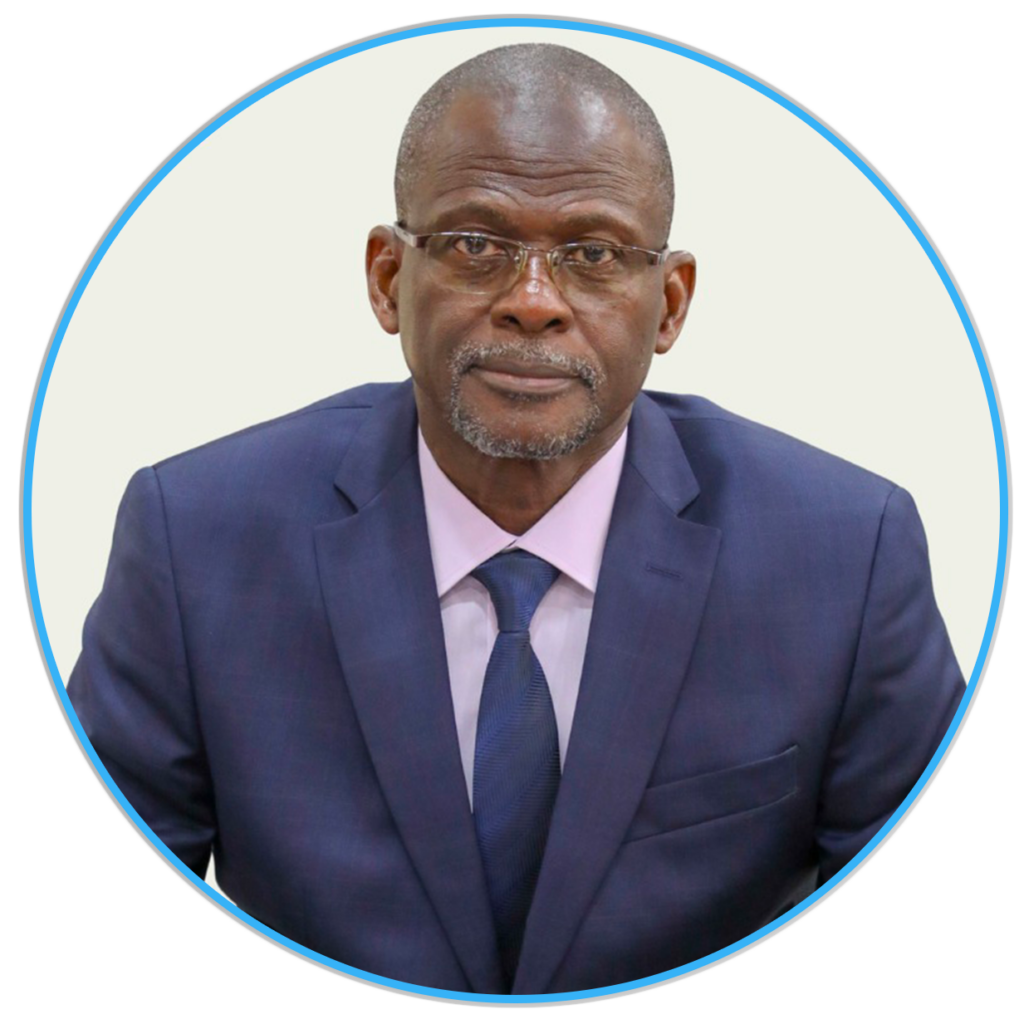
“We need this pooling, this synergy of efforts, to drive transformative projects.” Mali’s Minister of Industry and Trade, Moussa Alassane Diallo, is championing the mobilisation of capital in the service of national production. We met him in Geneva at the 30th World Investment Conference, organised by the World Association of Investment Promotion Agencies (WAIPA).
In the interview he gave us on the sidelines of the conference, the minister stressed the complementarity between Malian businesses, foreign investors and Malians living abroad. The stated aim is to strengthen the country’s productive capacity and to develop activities that allow more of its resources to be processed at home.
This mobilisation is set to continue in particular at the “Mali Kura” forum, scheduled for 11 and 12 December 2026 in Bamako. “Around 400 foreign investors are expected,” Moussa Alassane Diallo said, referring to a total attendance of about a thousand people.
For Bamako, the challenge will be to turn this expected turnout into financial and industrial partnerships. But moving from intentions to results will also depend on production conditions, foremost among them access to energy, security and continuity of supply.
Involving the diaspora in national projects
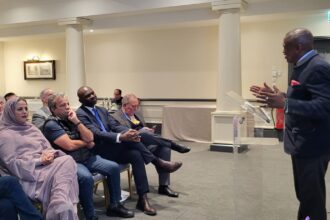
The minister had just met the Malian community living in Switzerland, at the premises of Mali’s diplomatic mission in Geneva. He presents the exchange as a way of keeping Malians abroad in touch with economic developments in their country. “The purpose of this meeting is to share news of the country with our compatriots,” he explained, adding that the discussions had covered both development prospects and the difficulties Mali has been facing.
Investment was central to the dialogue. “The diaspora is called upon to invest in our country,” the minister said, stressing that this contribution should complement domestic investment led by the Malian private sector. The approach is therefore not simply about seeking additional capital. It aims to foster partnerships around local projects, to which Malians abroad could contribute not only funding but also skills and professional networks.
Speaking about the Bamako event, Moussa Alassane Diallo said: “We have called on the diaspora to come and take part in large numbers in this international forum on investment in our country.” The aim, he added, will be to “present the key structural projects of our economy”.
Processing resources, retaining value
The strategy presented to investors rests on a change of model: no longer treating agricultural and mineral resources solely as commodities for export, but as the foundation for processing activities based in the country.
Cotton illustrates the gap that the authorities wish to close. At the launch of preparations for the forum, Moussa Alassane Diallo said that less than 2% of output was processed locally, according to remarks reported by Journal du Mali. Developing spinning, weaving and garment-making would extend the production chain within the country, with the aim of retaining more added value there. This approach goes beyond the textile sector alone. It involves linking the exploitation of resources to the development of processing, service and subcontracting businesses, so as to spread the economic benefits beyond production and extraction sites.
In our interview, the minister said that Mali’s “economic development prospects” had been presented to the diaspora. He linked this approach to national policy on strengthening the productive base, without detailing the financial or industrial instruments planned for each sector.
A portfolio of projects seeking finance
According to the forum’s presentation, more than 200 projects are to be put forward across six sectoral groupings: mining and natural resources; agriculture and livestock; energy; the digital economy and financial technology; infrastructure and construction; and tourism and culture.
Organised by the Ministry of Industry and Trade through the Agency for the Promotion of Investment in Mali (API-Mali), the event is due to take place at the Bamako International Conference Centre. The organisers say that the project files specify where the projects are located, their financing needs and how far they have progressed. The aim is to provide a basis for targeted discussions, rather than to settle for a general presentation of the country’s strengths.
The programme includes business-to-business meetings and discussions with public bodies, particularly on public-private partnerships. This selection nevertheless remains a portfolio of opportunities: it constitutes neither a guarantee of financing nor a list of investments already committed. In this light, the role expected of national companies is decisive. The minister’s speech places the Malian private sector at the heart of the drive, on the premise that foreign partners come to support locally led projects.
Energy and security at the heart of the equation
The proclaimed determination comes with an acknowledgement of the difficulties. The minister said he had discussed with the diaspora “all the challenges our country has faced in recent years, in recent months”, citing in particular “the security crisis”, “the fuel crisis” and “the energy crisis”. These constraints bear directly on the feasibility of industrial projects. Processing raw materials requires a steady electricity supply; running equipment and delivering products also demands reliable supplies and transport available at a sustainable cost.
Moussa Alassane Diallo referred to government decisions and projects intended to address these difficulties, without specifying during the interview their costs, timetables or expected results. He explained that these exchanges were meant to enable Malians abroad “to have the same level of information as Malians living in the country”.
The minister also gave an upbeat assessment of the economic situation, linking what he described as an improvement in the security situation to economic momentum. He spoke of “a growth rate that is very comfortable in 2026”, without giving a figure.
According to International Monetary Fund projections published in October 2026, Mali’s real gross domestic product growth is expected to reach 5.5% this year. This figure remains an annual forecast, not a final result. This favourable outlook does not, however, erase the economy’s vulnerabilities. The IMF links the expected recovery to improved security conditions and higher gold production, while highlighting the risks associated with disruptions to energy and fuel supplies.
For investors, then, the assessment will not be confined to the headline growth rate. It will also cover the cost of energy, the availability of inputs, market outlets and the predictability of the regulatory and contractual framework.
A regional ambition
The minister also referred to the Confederation of Sahel States, which brings together Mali, Burkina Faso and Niger. In his view, this framework should enable the three countries to “pool their efforts in the fields of defence and security, diplomacy and development”. He sees in it the foundations of an economic area whose nationals could take advantage of it to expand their activities. This prospect places Mali’s offer within a potential market larger than the national territory alone.
The existence of regional outlets does not, however, guarantee access to them. The movement of goods, the reliability of transport and the continuity of supplies will remain decisive factors for companies wishing to produce in Mali and sell beyond its borders.
After mobilisation, delivery
For Moussa Alassane Diallo, dialogue with the diaspora should help to bring Malians abroad into the country’s economic trajectory. “It is through these exchanges, through this dialogue, through this consultation that the Malian community living abroad will also feel involved in the economic development of our country,” he concluded.
The Bamako forum is meant to give concrete form to this mobilisation. Its outcome, however, will not be measured solely by the number of participants or by announcements of partnerships. It will depend on the projects actually financed and brought into operation, the jobs created and the place given to local businesses.
It is on this scale that the ambition championed in Geneva will be judged: to make Mali’s resources the starting point for more diversified production, capable of keeping a greater share of the value in the country.
Translated from French. The French original prevails.