By Alain Jourdan, Director of La Tribune des Nations
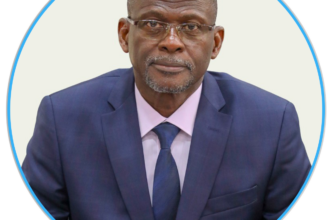
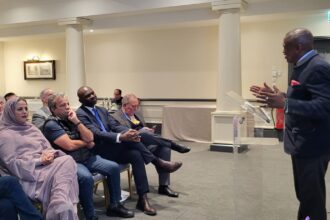
On Saturday evening in Geneva, my friend El Hadji Gorgui Wade Ndoye received the first Prix Ébène, awarded by the Fédération des associations d’afrodescendants et de noirs de Genève. He dedicated the award to African youth and spoke of what the generations owe one another. When I heard the news, I remembered the day I had been advised not to become his friend.
It was some twenty years ago. I was arriving at the Palais des Nations as correspondent for La Tribune de Genève. I had been told to keep my distance from Gorgui. He “spoke like an African”, I was told. He could lose his temper in the middle of a press conference. I was even advised, in all seriousness, not to become his friend.
I promptly devoted two pages to him in La Tribune de Genève. I have never taken kindly to being told whom I should associate with and, even less, whom I should avoid. But if I wanted to write a profile of him, it was above all because, in listening to him, I had understood what moved me about him.
I think back to those press conferences where we talked about migrants who had died in the Mediterranean. Yes, Gorgui would lose his temper. In his voice I heard the cry of Africa’s children, their suffering and their plea for our solidarity. I heard his anger as that of an entire people. Where some stopped at his tone, I wanted people at last to pay attention to what he was saying.
That piece of advice, offered in passing in a corridor, has stayed with me. At the Palais des Nations, I sometimes sensed, between the speeches about fraternity and the corridor conversations, a disconnect that diplomatic courtesy at times rendered almost imperceptible. Some people still viewed Africa through ideas inherited from another era. To my mind, equality also begins there, in the way one listens to a voice that unsettles the habits of a room.
Over the years, Gorgui has turned this freedom of speech into both a profession and a commitment. A Senegalese journalist accredited to the United Nations in Geneva, he has covered multilateral diplomacy and worked as a special correspondent for the Senegalese daily Le Soleil. With Continent Premier, the pan-African magazine he founded, he has created a space where Africans can tell the story of their own societies and debate their future.
He has extended this work with the Gingembre littéraire, an initiative that brings together writers, journalists and readers around literature and social issues. In Rufisque, Senegal, these gatherings have paid tribute to figures from literature and the press as well as opening a discussion on civic-mindedness. I recognise in this a quality I admire in Gorgui. He speaks out forcefully and knows how to create opportunities for others to do the same. His dedication to African youth, on the evening of the award, is part of this work of passing on.
Twenty years on, I am glad I wrote those two pages and gladder still that we have become friends. Gorgui, you speak from the heart. You do so with emotion, sometimes with anger, and always with the generosity and love of others that I know in you. I am delighted that Geneva is today honouring this free voice. Your award is richly deserved, my friend.
Translated from French. The French original prevails.