UN Photo
At a Security Council meeting held under the presidency and at the initiative of Latvia, the UN Secretary-General, Antonio Guterres, stated on 24 November 2026, during the “high-level debate on conflict resolution in an era of rapidly evolving technologies”: “Machines that choose their targets and take lives without any human control are morally repugnant and politically unacceptable” (UN, 2026).
The President of the International Committee of the Red Cross (ICRC), Mirjana Spoljaric, for her part, highlighted how complex it is for humanitarian aid to operate in the absence of clear rules: “We are seeing that AI is already accelerating and amplifying military operations, with devastating consequences for civilians. In practical terms, this can mean hundreds of attacks following one another at a rapid pace, often without regard to their cumulative effects. Such a volume and succession of attacks can lead to a humanitarian catastrophe, overwhelming the capacity of first responders, humanitarian organisations and communities to cope with the consequences” (ICRC, 2026).
Kelly Sipp, the observer for the Council of Europe, drew attention to the answers given to these questions by the Council of Europe Framework Convention on Artificial Intelligence, opened for signature on 5 September 2024. She said that a quarter of the 193 UN Member States, representing every continent, are today working to promote the Framework Convention, which has so far been signed by 60 countries. This mobilisation, Kelly Sipp observed, shows that accountability in the use of AI is truly a global concern. The question is also whether the use of AI and other technologies will remain transparent and strictly aligned with human rights standards (UN, 2026).
International humanitarian law (IHL) exists, but some of those in power contest it. It requires that combatants be distinguished from civilians, that attacks be proportionate and that precautions be taken. The real question is a practical one: how can these rules be applied when critical functions – identifying, selecting and engaging a target – are delegated to software? And who is responsible when an error costs lives? The current deadlock reflects a fundamental legal disagreement over whether existing international humanitarian law is capable of governing the autonomy of these autonomous weapon systems on the battlefield.
This debate on the maintenance of international peace and security follows the most recent Geneva Conference, held from 16 to 20 November 2026, at which the 128 countries did reach a compromise, but without the mandate that many others had been calling for: to negotiate a legally binding instrument on lethal autonomous weapons systems. Yet 76 states had declared themselves in favour of opening negotiations, a majority of the parties. But the consensus rule gives a handful of actors the power to block the rest. The conference therefore ended without result. The United States, Israel and Russia voted against. Delegates granted only a two-year extension (2027-2028) to a group of experts, who have been working on the issue for more than a decade, to draw up a draft legal instrument, without opening formal negotiations. The binding treaty that the United Nations Secretary-General had set as a goal for 2026 has been postponed.
The fundamental lesson of Geneva is that technology alone does not hold back the development of law. It is political choices that do so. The decisive question now is whether states will manage to agree on common limits before military investment makes negotiating them more difficult, and whether the countries developing these systems will accept that defining acceptable risk is not theirs alone to decide (Abi Saab, 2026).
Lethal autonomous weapons systems
The 2010 Montréal Declaration for a Responsible Development of Artificial Intelligence, published on 3 December 2018 and ratified by 187 organisations, states in Principle 9 (3): “The decision to kill must always be made by human beings, and responsibility for this decision may not be transferred to an AI system ” (Marijan and Munoz, 2023).
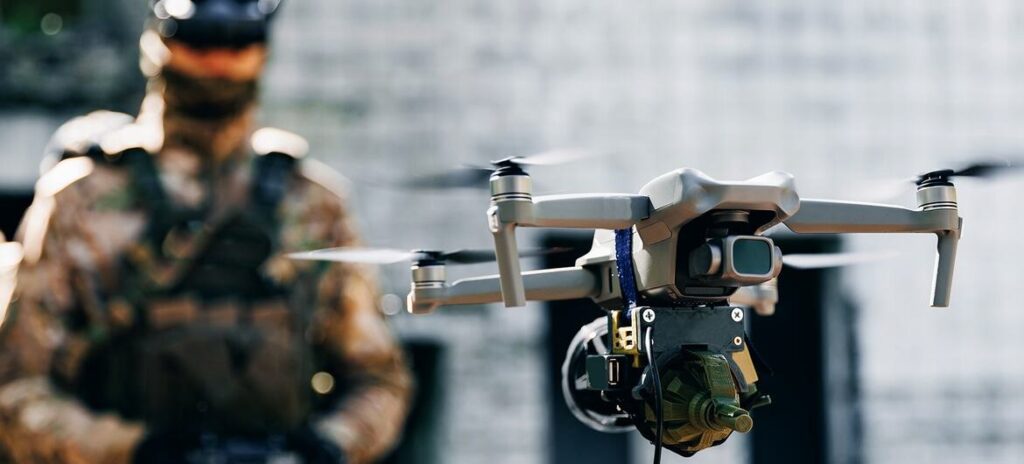
Once activated, these lethal autonomous weapons systems are capable of searching for, selecting and targeting an individual. They can take life-or-death decisions without any further human intervention or control (Chengeta, 2025). Debates on the international stage no longer focus on technical aspects and definitions, but rather on the role humans must play in the use of force and on what this implies for the growing autonomy of weapons […] Many scientists believe that an arms race in weapons equipped with artificial intelligence should be prevented by a ban on offensive autonomous weapons operating without meaningful human control, and published an open letter to that effect in 2015 (Bontridder, 2021).
AI-based autonomy is no longer a mere possibility. Weapons systems that, once activated, select and attack targets and use force on their own, without any human intervention, are already being refined (United Nations, Human Rights Council, 2013). In his 2013 report to the Human Rights Council of the United Nations General Assembly, the Special Rapporteur Christof Heyns highlighted the serious concerns raised by these weapons systems, questioning in particular the extent to which they comply with international human rights law and international humanitarian law (Marijan and Munoz, 2023).
Eleven guiding principles affirmed by the Group of Governmental Experts (GGE) on Emerging Technologies in the Area of Lethal Autonomous Weapons Systems were adopted on 13 December 2019 in Geneva at the Meeting of the High Contracting Parties to the Convention on Prohibitions or Restrictions on the Use of Certain Conventional Weapons Which May Be Deemed to Be Excessively Injurious or to Have Indiscriminate Effects (UN, 2019).
Of these guiding principles, we will cite two: first, accountability for the development, deployment and use of any new weapons system within the framework of the Convention must be ensured in accordance with applicable international law, including through the operation of such systems within a responsible chain of human command and control. Second, in the study, development, acquisition or adoption of a new weapon, means or method of warfare, a determination must be made as to whether its employment would, in some or all circumstances, be prohibited by international law, in accordance with States’ obligations under international law.
The 2023 US Directive 3000.09 on this subject was issued to minimise the probability and consequences of failures in autonomous and semi-autonomous weapon systems that could lead to unintended engagements. It sets out a number of requirements: allowing commanders and operators to exercise appropriate levels of human judgement over the use of force with regard to autonomous and semi-autonomous weapon systems and, for those who authorise, direct or operate such systems, the duty to do so with appropriate care and in accordance with the law of war, applicable treaties, weapon system safety rules and applicable rules of engagement (US Department of War, 2023).
What is being sought is an internationally legally binding instrument that will lie at the heart of the policy interventions needed to address concerns about AI-based weapons systems. The assessment made in Bridgetown is blunt: artificial intelligence is advancing faster than governments’ capacity to control its effects. At the close of a summit devoted to the risks of this technology, held on 23 November 2026 in Barbados with Prime Minister Mia Mottley, the United Nations Secretary-General, Antonio Guterres, issued a warning as political as it was technological: “ The future of artificial intelligence cannot be decided by a few for everyone else” […] The stakes therefore go beyond merely regulating an innovation. They touch on the sovereignty of states, the protection of citizens and the capacity of democratic institutions to set limits on technologies whose development is largely driven by private interests (Armand, 2026).
The example of the Libyan case
Drone warfare no longer knows any borders. On 22 November 2026, strikes carried out by remotely operated craft (Ukrainian naval drones) hit Russian vessels in Libya, far from the front lines in Ukraine. The UN-recognised Libyan government condemned the strikes and denied any agreement with the Ukrainian authorities. It is demanding an explanation of the nature and scale of the operation […] In a country still divided between two rival governments, the strikes have raised fears of a further escalation in regional tensions (Bamba, 2026).
The United Nations Support Mission in Libya (UNSMIL) stressed that it is imperative to fully respect Libya’s sovereignty, its territorial integrity, the security of its citizens and its resources. The Mission called for an immediate, independent and transparent investigation to establish the facts and bring those responsible to justice, while expressing its readiness to assist the Libyan authorities in that investigation.
The Mission also urges all parties to exercise the utmost restraint and to refrain from spreading any unverified information or politicising the incident while the investigation is under way, warning against any act or rhetoric likely to heighten tensions in Libya or to draw the country into wider regional or international confrontations; it asserts that Libya cannot and must not become an arena for external conflicts (UNSMIL, 2026).
The use of lethal autonomous weapons in Libya was documented by the Panel of Experts on Libya, established by Security Council resolution 1973 (2011), during Operation Peace Storm, launched on 27 March 2020 by forces affiliated with the Government of National Accord against Haftar’s military forces, according to its final report of 8 March 2021: “Logistics convoys and retreating Haftar-affiliated forces were subsequently hunted down and remotely engaged by the unmanned combat aerial vehicles or the lethal autonomous weapons systems such as the STM Kargu-2 and other loitering munitions. The lethal autonomous weapons systems were programmed to attack targets without requiring data connectivity between the operator and the munition: in effect, a true ‘fire, forget and find’ capability. The unmanned combat aerial vehicles and the small drone intelligence, surveillance and reconnaissance capability of Haftar-affiliated forces were neutralised by electronic jamming from the Koral electronic warfare system” (UN, 2021).
The degree of autonomy of these machines is often unknown, and that is precisely the problem: without clear rules, no one knows what should be verified or who should be held accountable. Technology advances in months; the law, in decades.
Is human free will negotiable?
Opponents of a treaty put forward serious arguments, and they deserve a hearing. Some states prefer voluntary standards to immediate bans. Others argue that existing law is already sufficient to regulate these technologies, or point out that states have legitimate defence interests. Arms manufacturers also argue that these systems are difficult to define and that, used properly, they could improve the precision of strikes.
Senior figures in the AI industry are increasingly pushing back against a view widely held within Anthropic: that humanity should cede some of its decision-making power to superintelligent AI systems […] the debate over superintelligence is no longer only about how to stop uncontrollable machines from destroying humanity, but also about whether humans should be prepared to step aside voluntarily (Mills, 2026). Anthropic’s Chief Executive, Dario Amodei, rejected the idea that humans should surrender their free will to AI, thereby refuting Axios’s reporting on the widening ideological divide among AI industry leaders […] and stated: “We should never sacrifice legitimacy or self-determination on the altar of efficiency or safety” (Mills, 2026).
The purpose of law is not only to set norms but also to provide for consequences when those norms are violated. Yet the deployment of an autonomous weapon, however contrary to positive law it may be, has the effect of eroding existing forms of accountability, in particular the criminal responsibility of individuals for serious violations of IHL that constitute war crimes. Ensuring the accountability of the humans involved in the life cycle of any physically deployable weapon is therefore essential; otherwise certain lethal actions risk falling outside the legal framework, which is built by humans and for humans (Bontridder, 2021).
Amnesty International is part of the Stop Killer Robots campaign, an international coalition of more than 330 civil society organisations in 78 countries calling for the negotiation of a global treaty on autonomous weapons systems.
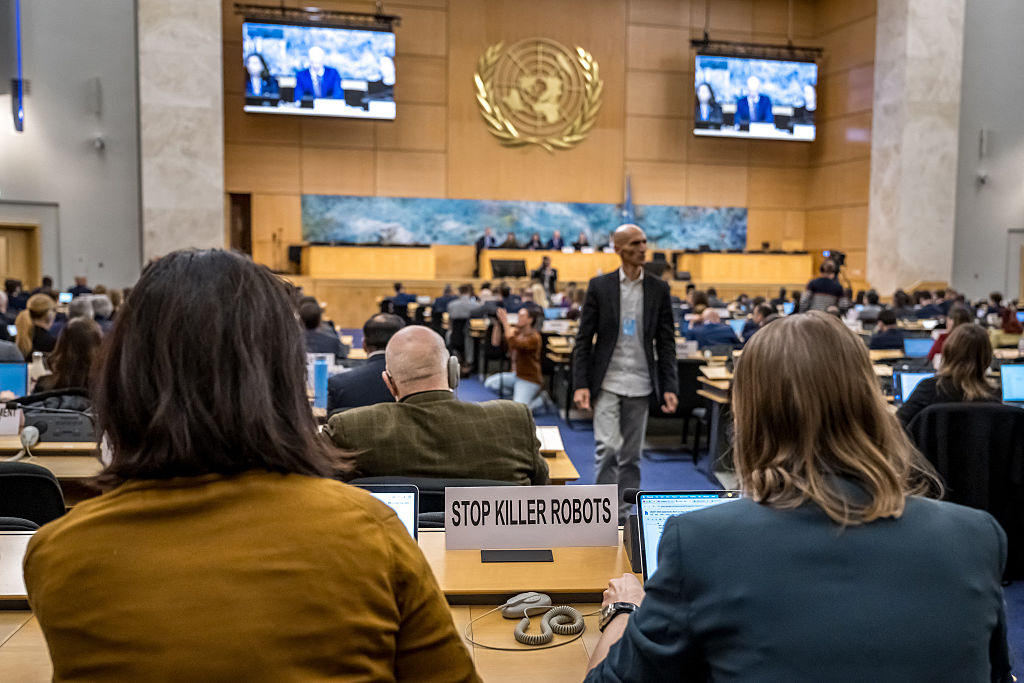
Stop Killer Robots is calling on states to adopt a legally binding instrument containing both prohibitions and positive obligations: a prohibition on systems that would target people and on systems that do not allow meaningful human control, and a positive obligation to ensure that all other systems are effectively controlled, including that they are sufficiently understandable and limited in their area/duration of use (SKR, 2026).
These arguments deserve consideration. Voluntary standards are hard to verify and bind no one. Existing law presupposes a human agent to whom a decision can be attributed, and it is precisely this link that autonomy weakens. As for the difficulty of definition, it did not prevent the international community from banning blinding laser weapons in advance – “Article 8, 3 (b) of the Convention, an ‘additional Protocol’ entitled Protocol on Blinding Laser Weapons Protocol IV” (UN/Treaty Collection, 1995) – before they came into widespread use.
Unlike the nuclear weapons used by the United States against Japan in 1945, against Hiroshima and Nagasaki, not forgetting the nuclear tests in the United States, in countries of the former USSR, notably Russia, Kazakhstan and Ukraine, but also in Algeria, in the Pacific and Atlantic Oceans, in Alaska and off the Bering Sea (UN/Treaty Collection, 2017). Were anti-personnel mines and cluster munitions banned by treaties negotiated outside forums paralysed by consensus?
References:
- Abi Saab, Dina, 2026, The Geneva deadlock on autonomous weapons: the geopolitics of buying time, La Tribune des Nations, 22 November 2026, https://ltdn.org/…/limpasse-de-geneve-sur-les-armes…/
- Armand, Inès, 2026, UN refuses to leave AI governance to states or companies alone, La Tribune des Nations, 24 November 2026, https://ltdn.org/lonu-refuse-de-laisser-la-gouvernance…/
- Bamba, Ali, 2026, Ukraine-Libya: Kyiv invokes self-defence after strike on Russian vessels, africanews.fr, 24 November 2026, https://fr.africanews.com/2026/11/24/ukraine-libye-kyiv-invoque-la-legitime-defense-apres-la-frappe-contre-des-navires-russes/
- Bontridder, Noémi, 2021, “Lethal autonomous weapons and international humanitarian law: the necessary human control over the use of force”, in Time to reshape the digital society: 40th anniversary of the CRIDS. CRIDS collection, no. 52, Larcier, Brussels, pp. 407-440.
- Chengeta, Thompson, 2025, Can We Stop Autonomous Weapons?, United Nations, https://www.youtube.com/watch?t=102&v=VqCMkXftDx8
- ICRC, 2026, No weapon, technology or method of warfare should allow the conduct of hostilities to escape human control, says ICRC President, 24 November 2026, https://www.icrc.org/fr/declaration/aucune-arme-technologie-ou-methode-de-guerre-ne-doit-permettre-que-la-conduite-des
- US Department of War, 2023, DoD Announces Update to DoD Directive 3000.09, “Autonomy in Weapon Systems”, 25 January 2023, https://www.war.gov/News/Releases/Release/article/3278076/dod-announces-update-to-dod-directive-300009-autonomy-in-weapon-systems/
- Marijan, Branca, and Munoz, Wanda, 2023, Autonomous Weapons and Deepfakes: The Risks of the Current Militarisation of AI and the Urgent Need for Regulation, UNESCO-MILA, pp. 355-376, https://youpia.ca/wp-content/uploads/2025/06/Angle-mort-de-la-gouvernance-de-lIA-384801fre.pdf#page=354
- Mills, Madison, 2026*, Exclusive: AI leaders clash over giving up human free will, Axios, 25 November 2026, https://www.axios.com/2026/11/25/anthropic-ai-human-control-debate-free-will
- Mills, Madison, 2026**, Anthropic CEO rebuts Axios articles on AI and free will, 25 November 2026, https://www.axios.com/2026/11/25/anthropic-dario-amodei-ai-free-will-contro-axios
- UN, 2019, Meeting of the High Contracting Parties to the Convention on Prohibitions or Restrictions on the Use of Certain Conventional Weapons Which May Be Deemed to Be Excessively Injurious or to Have Indiscriminate Effects, CCW/MSP/2019/9, Geneva, 13-15 November 2019, https://docs.un.org/fr/CCW/MSP/2019/9
- UN/Treaty Collection, 1995, Protocol IV, entitled Protocol on Blinding Laser Weapons, Vienna, 13 October 1995, https://treaties.un.org/pages/ViewDetails.aspx?src=TREATY&mtdsg_no=XXVI-2-a&chapter=26&clang=_fr
- UN/Treaty Collection, 2017, Treaty on the Prohibition of Nuclear Weapons, New York, 7 July 2017, https://treaties.un.org/pages/ViewDetails.aspx?chapter=26&mtdsg_no=XXVI-9&src=TREATY&clang=_fr
- UN, 2021, Letter dated 8 March 2021 from the Panel of Experts on Libya established pursuant to Security Council resolution 1973 (2011) addressed to the President of the Security Council, Security Council S/2021/229,file:///C:/Users/eghez/OneDrive/Bureau/Libye%20et%20le%20dossier%20de%20la%20reg%20armement/S_2021_229-FR.pdf
- UN, 2026*, AI and conflict: UN fears warfare beyond human control, UN News, 24 November 2026, https://news.un.org/fr/story/2026/11/1159899
- UN, 2026**, Security Council: debate on the role of technology in conflict resolution highlights the need for human control, UN Meetings Coverage and Press Releases, 24 November 2026, https://press.un.org/fr/2026/cs16516.doc.htm
- SKR Stop Killer Robots, 2026, Negotiations on autonomous weapons fail to meet the urgent need for a treaty, says Stop Killer Robots official, 21 November 2026, https://www.stopkillerrobots.org/news/revcon-press-release-sat-21st/?filter_submit_btn=Search&filter_news_type=57
- UNSMIL, 2026, UNSMIL expresses serious concern over Sunday’s attacks at the port of Benghazi and off the city’s coast, Press release, 22 November 2026, https://unsmil.unmissions.org/en/press-releases/unsmil-expresses-serious-concern-over-the-attacks-carried-out-at-benghazi
Translated from French. The French original prevails.