Four days after federal forces entered Jurf al-Sakhar, a stronghold of Kataib Hezbollah, the Iraqi Prime Minister, Ali al-Zaidi, ordered Baghdad to reassert control over Kurdistan’s border crossings and over certain oilfields secured by Kurdish forces. On 26 November, Baghdad closed two crossings, one into Iran and the other into Syria. The fate of the oilfields remains unresolved. In Jurf al-Sakhar, the aim is to regain control of territory held by an armed faction. In Erbil, what is at stake is the division of powers between the federal state and the autonomous region.
On 20 November, federal forces entered Jurf al-Sakhar, in Babil province, south of Baghdad. Kataib Hezbollah, an armed faction close to Iran, had held one of its main strongholds there since the town was retaken from Islamic State in 2014. The negotiated handover averted an immediate confrontation. The Iraqi Ministry of Migration estimates that more than 6,000 families have fled the area. According to its spokesperson, registration of those wishing to return has begun.
On 25 November, Al-Mada reported, citing anonymous sources, that the faction still held the centre of Jurf al-Sakhar. 964media said it had been unable to verify this report. The extent of federal control and the timetable for residents’ return remain uncertain.
What the Constitution guarantees Kurdistan in the face of federal power
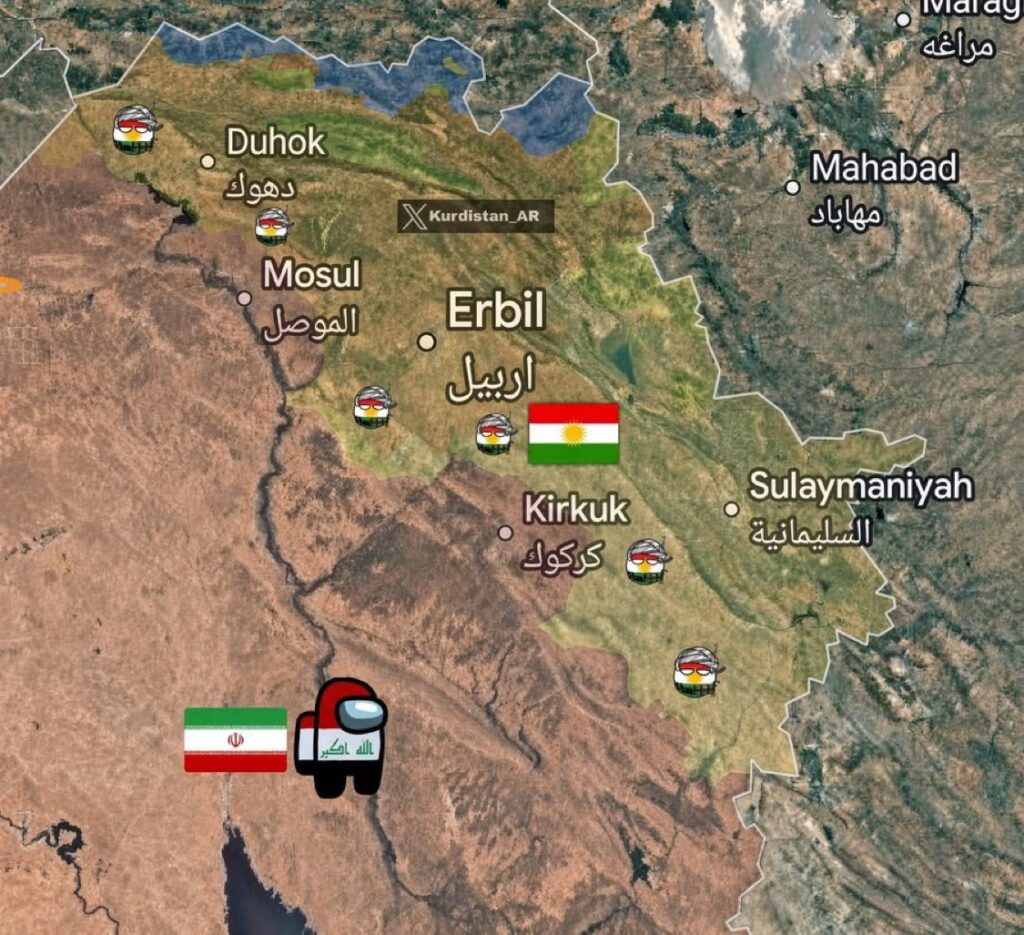
Kurdish autonomy took shape de facto after the 1991 Gulf War. The 2005 Iraqi Constitution enshrined it within the federal framework. Article 117 recognises the Kurdistan Region and its institutions. Article 121 grants it legislative, executive and judicial powers in areas that do not fall exclusively within the competence of the federal state. Foreign policy, national defence, currency and the preparation of the federal budget are matters for Baghdad. The region may organise its own internal security forces. Backed by the international coalition, the Peshmerga played a major role in the fight against Islamic State (ISIS) from 2014 onwards. Their advance extended Erbil’s control over the disputed territories. In October 2017, Iraqi federal forces retook the city of Kirkuk and several of the province’s oilfields from the Peshmerga.
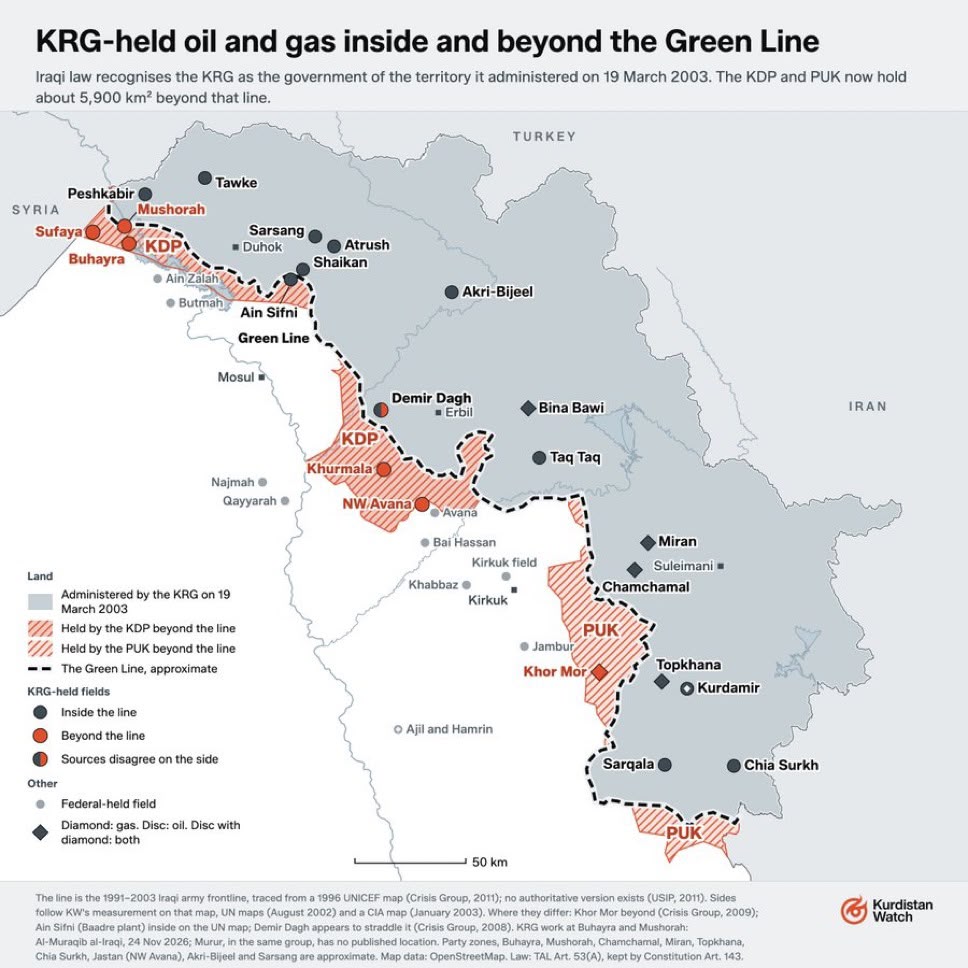
The ruling of 25 November, issued at Zaidi’s request, limits Erbil’s territorial jurisdiction to the areas the region administered on 19 March 2003. This criterion applies in six provinces, including Kirkuk, Nineveh and Diyala. The final status of Kirkuk and the other disputed territories falls under Article 140 of the Constitution, which provides for reversing the effects of population displacement and administrative boundary changes, followed by a census and a referendum. The process remains incomplete. The demand attributed to Zaidi for a pullback to the “blue line” and the prospect of a general withdrawal of the Peshmerga have not been publicly confirmed.
Baghdad regains control of two border crossings
On 24 November, after an investigation was opened into suspected smuggling at the North Oil Company, Zaidi ordered that only the federal Ministry of Oil may authorise exports of crude oil and petroleum products. He instructed the Federal Border Ports Authority to take over the management of Kurdistan’s crossings. The Ministry of Oil is to take charge of certain fields in Kirkuk, Nineveh, Diyala and Salah ad-Din which Baghdad considers to fall within its jurisdiction and which are secured by Kurdish forces. The company’s director general and his deputies have been suspended as part of the investigation. On 27 November, the Minister of Oil travelled to Kirkuk to examine the reorganisation of the company, according to Shafaq News.
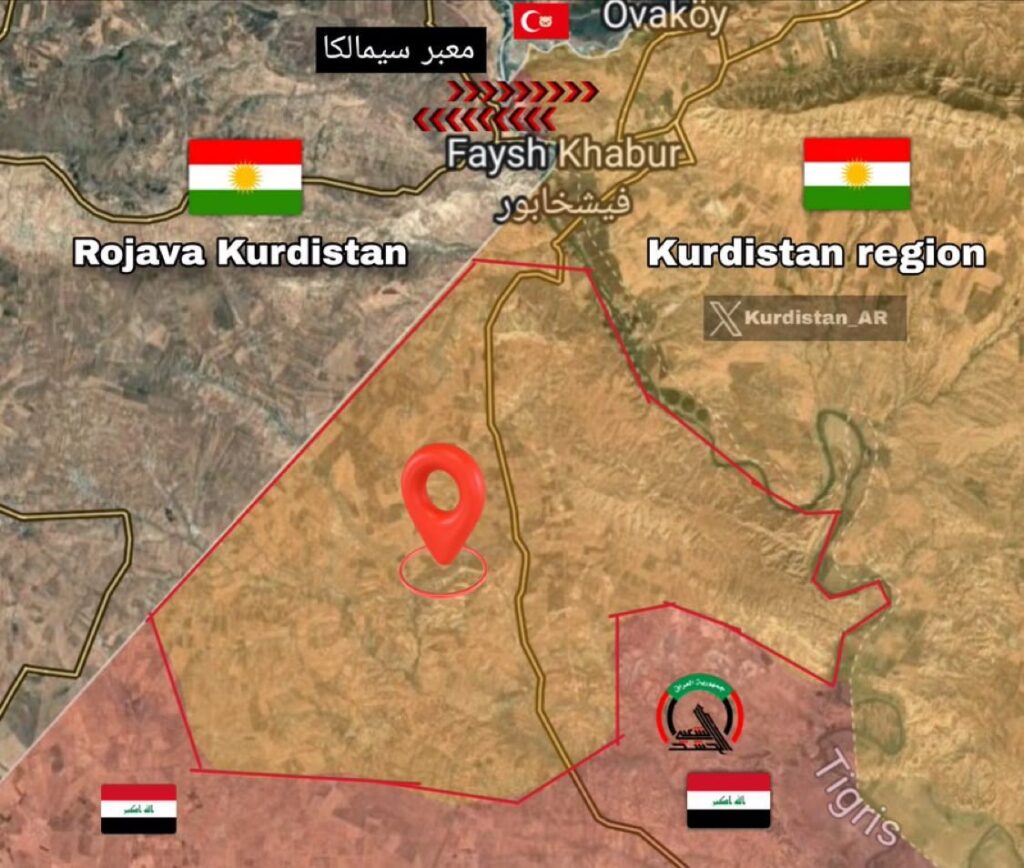
On 25 November, the Supreme Court upheld federal jurisdiction over securing international borders and overseeing the services operating there. Customs remain administered in coordination with the regions and provinces concerned. On 26 November, the commander of the Iraqi border guards announced the closure of Sartek Bashta, in Halabja province on the Iranian border, and of al-Walid, north of Rabia on the Syrian border. Both crossings had been administered by the Kurdish authorities. Whether all border posts have been handed over to Baghdad has yet to be verified.
Near the point where Iraq, Syria and Turkey meet, the Fishkhabour–Semalka crossing links Iraqi Kurdistan with north-eastern Syria, notably the Kurdish-majority areas of Rojava. On 26 November, local media reported a suspension of freight at this crossing, which is separate from al-Walid. Reports differ on the conditions of access for travellers. A lasting interruption of trade would deepen the isolation of Syria’s Kurds. The takeover of Semalka by units of the Hashd al-Shaabi, mentioned by some sources, has yet to be confirmed.
Which oilfields are affected?
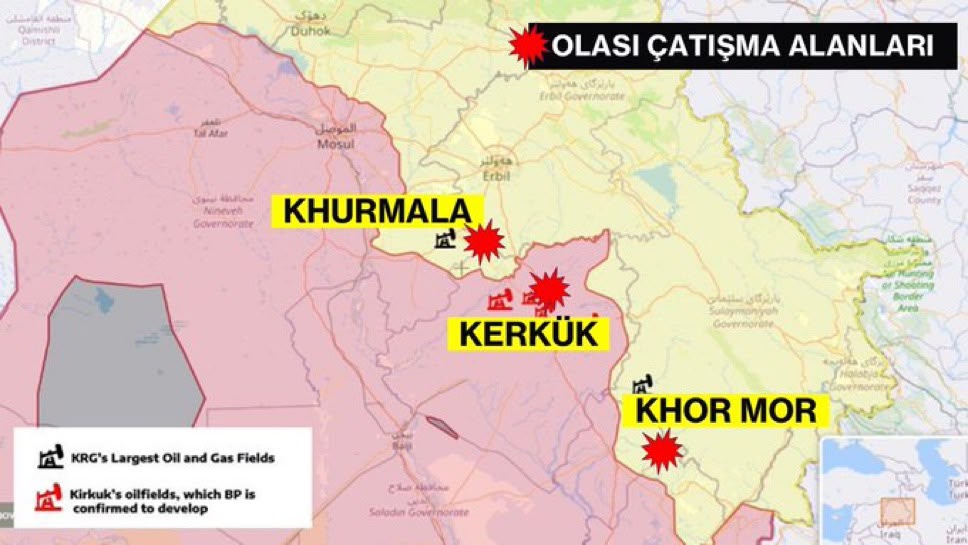
The order of 24 November does not specify which fields are covered. According to Rudaw’s research centre, a narrow interpretation would concern Khurmala, Ismail and Qarachogh. Khurmala, the northern part of the Kirkuk field, is operated under Erbil’s authority. Bai Hassan and the Avana dome returned to federal control in 2017. If Baghdad adopts a broader scope, its order could also affect fields under regional contracts, including Shaikan and Atrush, in the Sheikhan area. Whether management has actually been transferred to the federal ministry remains to be established.
Article 111 of the Constitution vests ownership of hydrocarbons in all the Iraqi people. Article 112 provides that Baghdad, together with the producing regions and provinces, manages the oil and gas extracted from existing fields. Erbil has relied on this distinction between existing and new fields to sign its own contracts. In 2022, the Federal Supreme Court struck down the 2007 Kurdish oil and gas law and ordered production to be handed over to the federal authorities. On 25 November, it upheld the federal ministry’s supervisory powers and restated the principle of joint management of oil and gas. The security of a field, its operation and the validity of the contract governing it are matters for separate decisions.
Oil, salaries and foreign companies
In September 2025, an interim agreement between Baghdad, Erbil and most of the foreign producers allowed exports to resume to the Ceyhan terminal in Turkey after a halt of more than two years. The federal state-owned company SOMO markets the crude. The agreement provides for compensation of $16 per barrel for production and transport, pending an independent assessment of costs. On 27 November, the federal spokesperson said that Baghdad regarded exports that bypass SOMO as smuggling.
The Kurdistan Region is funded by transfers from Baghdad and by revenue it collects itself, notably taxes and customs duties. The 2023–2025 budget law tied the regional allocation to the delivery of crude to SOMO and to the handover to Baghdad of a share of non-oil revenue. According to a review by the Kurdistan Regional Government, Erbil should have received a total of 58,300 billion dinars in federal operating funds between 2023 and 2025. Over those three years, Baghdad paid out 24,300 billion.
On 9 November, the day after the drone attack that halted production at the Khor Mor gas field, the two Prime Ministers discussed revenues, the regional allocation and the payment of civil servants. According to an official report from Erbil, one version of the draft federal budget for 2027 provided for a share of 12.70%. Erbil is seeking 14.14%, which corresponds to the region’s share of Iraq’s population according to the 2024 census. The amount also depends on the federal expenditure deducted before the allocation. The final share for 2027 has yet to be set.
Salaries, meanwhile, are settled month by month. For October, the federal transfer announced by the Kurdish Ministry of Finance on 4 November amounted to almost 835 billion dinars. The ministry said that Baghdad had withheld 120 billion as its share of the region’s non-oil revenues. Erbil sent the November payrolls to Baghdad on the 22nd. The federal government maintains that salaries must be kept separate from the other disputes. As of 27 November, their funding had yet to be confirmed. No public document consulted makes the 2027 allocation conditional on a territorial withdrawal.
The Texas-based HKN Energy operates the Sarsang and Atrush fields. In May 2025, Erbil announced agreements with HKN and WesternZagros on the Miran and Topkhana-Kurdamir projects in Sulaymaniyah province. Baghdad declared these agreements void. For these producers, the impact of the dispute will depend on the scope set by Baghdad and on whether deliveries via Ceyhan continue. TotalEnergies’ main Iraqi assets are in the south of the country. The group holds 45% of the Gas Growth Integrated Project in the Basra region, alongside the Basrah Oil Company and QatarEnergy. The project falls outside the scope of the measures targeting the northern fields.
Tehran, Washington and Ankara confront the dispute
The security agreement signed by Baghdad and Tehran in March 2023 was intended, among other things, to prevent armed Iranian Kurdish opposition groups from carrying out operations in Iran from Iraqi territory. A memorandum strengthened this cooperation in August 2025. On 8 November 2026, the Presidency of the Kurdistan Region of Iraq confirmed that it had discussed these agreements with an Iranian delegation. On 24 November, drones struck near two camps of the Democratic Party of Iranian Kurdistan in Erbil province, according to Rudaw. None of the public documents consulted links the agreement with Iran to Zaidi’s order on the border crossings.
According to the Iraqi Minister of Foreign Affairs, Fuad Hussein, the United States had asked in early November for most of the crossings with Iran to be closed in order to step up pressure on Tehran. An Iraqi intelligence report refers to crude oil being diverted to Iran and then on to Afghanistan. AFP, which has seen the document, was unable to authenticate it. A Reuters investigation documented undeclared crude exports to Iran in 2024 and, to a lesser extent, to Turkey. The current scale of these flows and the responsibility of the networks involved have yet to be established. Ankara, for its part, has an interest in exports via Ceyhan continuing.
On 27 November, in a post on Truth Social, Donald Trump publicly backed Zaidi’s efforts to strengthen the authority of the Iraqi state, combat oil smuggling and corruption, and bring all weapons under state control. His statement made no mention of either the disputed territories or the management of the oilfields.
Stand-off draws KDP and PUK closer together
The Barzanis’ Kurdistan Democratic Party (KDP) dominates in Erbil and Duhok. Bafel Talabani’s Patriotic Union of Kurdistan (PUK) has its stronghold in Sulaymaniyah. Despite their rivalry, the two parties issued a joint statement on 24 November opposing Baghdad’s unilateral decisions. On 26 November, thousands of people demonstrated in Kurdistan, notably around the Erbil citadel. Rallies were also reported in Duhok and Zakho. The same day, Masrour Barzani reaffirmed to diplomats his willingness to engage in dialogue and renewed his call for Article 140 to be implemented.
On 25 November, Rudaw reported that Peshmerga forces were being mobilised along the edge of the disputed territories. Baghdad denied reports of army movements towards the region. On 26 November, Zaïdi said that the army would deploy to the international borders and stay out of the cities. Saad Maan, head of the Security Media Cell, ruled out the prospect of a clash and said joint management of the border crossings was possible. Three Kurdish opposition parties have also proposed sharing the administration of the crossings, while calling for a single federal customs policy and the protection of public-sector salaries.
The national dialogue announced for 1 December will show whether Baghdad and Erbil can reach agreement on customs, oil and revenue-sharing. In Jurf al-Sakhar, Zaïdi’s credibility will hinge on federal forces taking effective control of the area and on the return of displaced families, most of them Sunni.
Follow the author on X · Seals Consulting
Further reading in La Tribune des Nations
Iraq: Baghdad begins negotiated handover in Jurf al-Sakhar
Iraq: Prime Minister takes on Kataeb Hezbollah
Iraq: from disarmament to “weapons management”, the emerging compromise with the militias
Iraq: Jurf al-Sakhar, the forbidden territory where Baghdad seeks to restore its sovereignty
PKK: the end of a war, but also the end of the Kurdish moment in the Middle East?
Confronting the militias, Zaïdi opens a front against corruption
Iraq: two more Shia armed groups rally behind Al-Zaidi’s government
Translated from French. The French original prevails.