By Sachin Gaur
From humanitarian convoys in conflict zones to airliners and merchant ships, safe travel increasingly depends on GPS, satellite navigation and radio communications. Yet these signals are ever more frequently jammed or spoofed, exposing civilian populations to growing risks. These technologies rely on the electromagnetic spectrum, which has become both indispensable to modern military operations and a genuine battleground.
“The more we depend on these technologies, the more exposed we are to interference, manipulation and disruption,” explains Federico Mantellassi, a researcher in the Security and Technology Programme at the United Nations Institute for Disarmament Research (UNIDIR) in Geneva.
Signal jamming and spoofing
Two techniques are of particular concern: jamming (jamming), which blocks signals, and spoofing (spoofing), which involves feeding false information into navigation systems. According to UNIDIR estimates, cases of GPS signal spoofing in civil aviation rose by 500% between January and August 2024, affecting hundreds of flights.
In early 2026, the crisis in the Middle East also led to the highest concentration of maritime jamming ever recorded. Mr Mantellassi recently moderated a session on these disruptions and their consequences for peace and security, as part of UNIDIR’s 2026 “Innovations Dialogue” in Geneva.
The electromagnetic spectrum: a new battleground
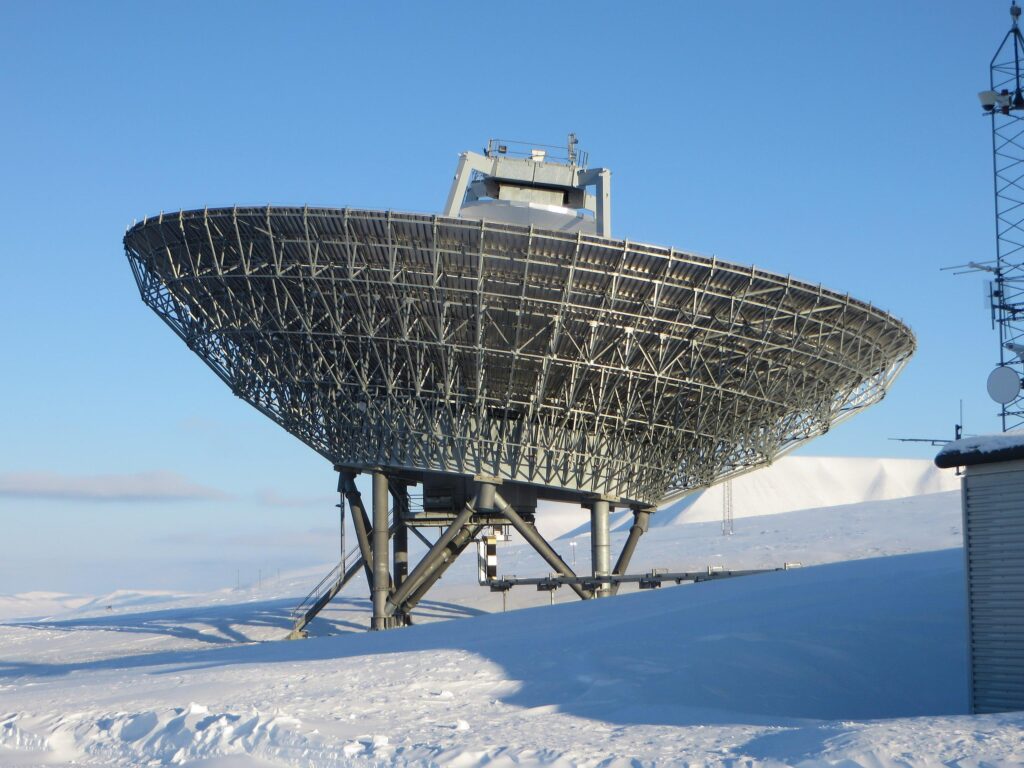
The electromagnetic spectrum encompasses all electromagnetic waves, from radio waves and microwaves to infrared radiation, visible light, X-rays and gamma rays. Armed forces increasingly depend on it to operate their surveillance systems, transmit data, guide weapons and coordinate operations on the battlefield.
“The military use of the electromagnetic spectrum dates back to the early 20th century and came fully into its own during the Second World War,” the expert notes. “What has changed is the exponential growth in the number of devices and systems that emit and receive signals, and that depend on uninterrupted access to this spectrum.”
Cascading repercussions for civilians
While electronic warfare waged on the front lines does not always directly affect civilian populations, its effects can spread far beyond combat zones when the disruptions affect everyday and commercial activities.
Earlier this year, during the conflict triggered by the US-Israeli attacks on Iran, media outlets reported an upsurge in signal jamming and spoofing in the Gulf of Aden and the Strait of Hormuz, increasing the risk of maritime collisions.
Such interference can also prevent humanitarian workers, peacekeepers and emergency services from relying on their navigation and communication systems. It can disrupt mobile phone and internet networks, relief operations, public transport and financial systems. “These kinds of services, just like humanitarian actors, are genuinely suffering and are seeing in concrete terms the knock-on effects of this increased disruption,” Mr Mantellassi stresses.
Civil aviation is exposed too. Positioning systems can give aircraft an incorrect location, forcing pilots to fall back on other instruments. “At a recent conference, a speaker from the International Civil Aviation Organization (ICAO) said that if you have ever flown, it is highly likely that you have travelled on an aircraft that has been subjected to attempted jamming or spoofing,” he reports.
Artificial intelligence in the countermeasures race
As these disruptions multiply, armed forces are developing new capabilities to deal with them, fuelling a cycle of measures and countermeasures in which artificial intelligence (AI) could play a growing role. One of the applications under consideration is enabling autonomous systems to keep operating when communications are cut.
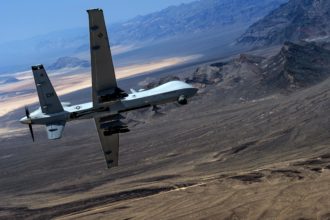
“One of the main arguments put forward to justify integrating artificial intelligence (AI) into weapons systems is this: when the environment is rendered inaccessible by jamming or spoofing — preventing, for example, any radio link to pilot a drone — AI can then be relied upon to enable that device to navigate, select targets and, sometimes, engage them, without the need for an external connection,” the researcher explains.
This development raises particular concerns when machines are capable of identifying and selecting targets, then carrying out attacks without human supervision.
Rules still limited
Management of the electromagnetic spectrum falls in particular to the International Telecommunication Union (ITU) in Geneva, which allocates radio frequencies to the various services, coordinates interference issues between countries and sets binding international rules. Member States can report incidents to it in order to draw on coordination and dispute-settlement mechanisms.
But this framework has a significant limitation: ITU rules do not cover military uses of radio frequencies. International humanitarian law nevertheless remains applicable to activities carried out in the context of an armed conflict. “So there is a framework that still applies. But the situation is, clearly, a little more complex,” Mr Mantellassi observes.
An emerging priority for disarmament
For UNIDIR, such interference and the military responses it provokes have now become an issue in their own right for the disarmament community. Having devoted its previous work to artificial intelligence, quantum technologies and neurotechnologies, the Institute is now turning its attention to disruption of the electromagnetic spectrum. The subject extends well beyond military considerations: the security of communications, transport and humanitarian operations also depends on the ability to preserve the integrity of these signals.
Translated from French. The French original prevails.