In a new essay on the Sharifian kingdom, political scientist Sébastien Boussois examines the trajectory of a country which, in a region marked by crises, has made political continuity and institutional stability the pillars of its strategy.
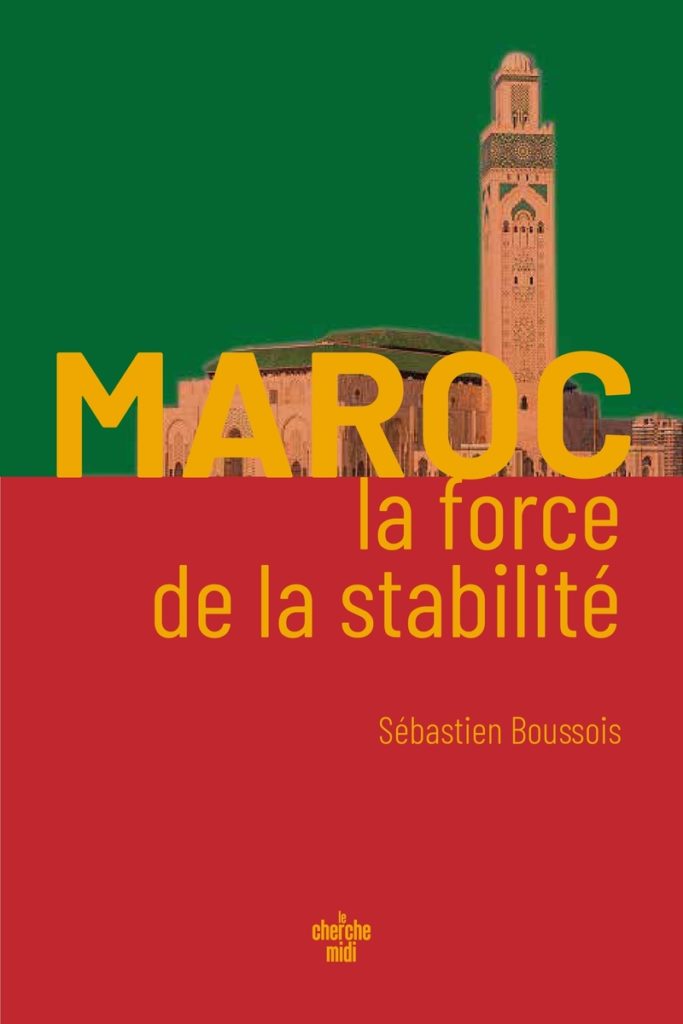
Beyond the upheavals of the Middle East, the uncertainties of the Sahel and the reshaping of the international order, Morocco occupies a singular place in contemporary geopolitical analysis. It is this singularity that the researcher and essayist Sébastien Boussois explores in his new book, Maroc, la force de la stabilité, published by Le Cherche Midi.
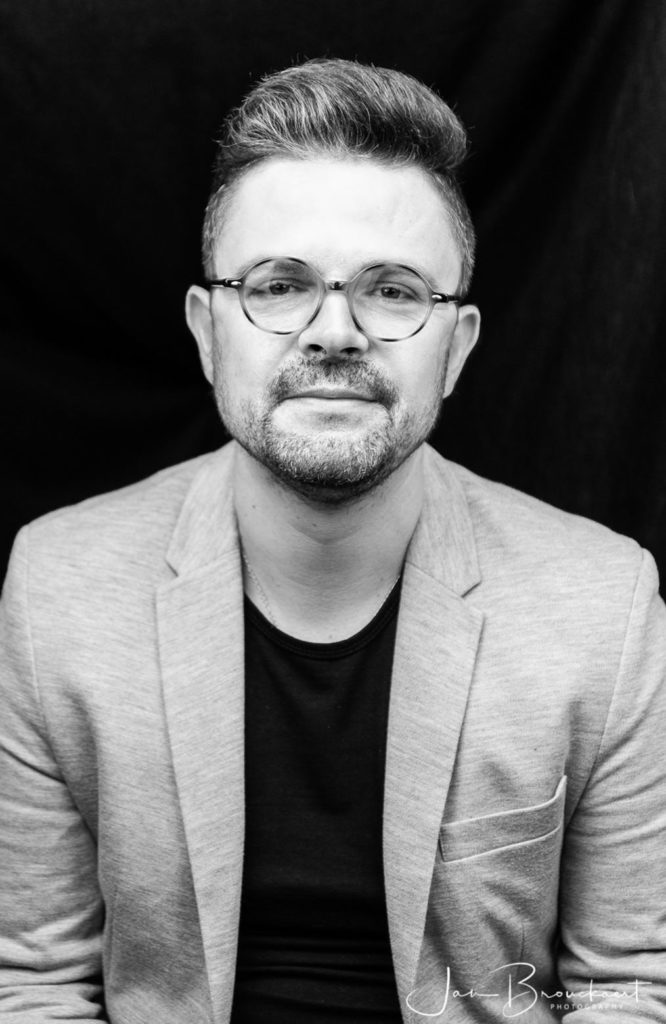
The author starts from a simple observation: while many states in the region have been weakened by civil wars, revolutions, terrorism or crises of governance, the kingdom has followed a distinct path. Without denying the social, economic and democratic challenges the country still faces, he examines the sources of a political resilience that has enabled Morocco to preserve its cohesion while strengthening its regional influence.
The book comes at a time when the very notion of stability is regaining strategic value. Long taken for granted, it now appears to be a scarce resource in an international environment marked by an accumulation of crises. From Ukraine to the Middle East, by way of the Sahel, states capable of maintaining institutional continuity enjoy a growing diplomatic advantage.
A geopolitical reading of contemporary Morocco
More than a political portrait of the kingdom, the book offers a reflection on the way in which Morocco has sought to turn its internal stability into a lever of external influence.
The analysis examines several dimensions of this strategy: monarchical continuity under Mohammed VI, gradual institutional reforms, security cooperation with Western partners and the fight against radicalism, but also the country’s diplomatic assertiveness in Africa and the Arab world.
According to Sébastien Boussois, Morocco has gradually built a balanced position between its African, Mediterranean, Arab and European moorings. This position now enables it to engage with sometimes antagonistic actors and to appear, on several regional issues, as a credible interlocutor.
This thesis is not entirely new. It echoes a growing body of literature on the role of middle powers in international relations. But the book’s interest lies in its attempt to place the Moroccan case within a broader geopolitical framework: that of a world in which traditional hierarchies are being called into question and states are seeking to redefine their place in the international balance of power.
An author well versed in Middle Eastern affairs
Holding a doctorate in political science, Sébastien Boussois has established himself over the years as one of the leading French-speaking specialists in the geopolitical dynamics of the Middle East and North Africa. Director of the Institution Géopolitique Européenne (IGE), an associate of CNAM Paris within its Security-Defence team and of the Observatoire géostratégique de Genève, he appears regularly in the French, Belgian and Swiss media to comment on international affairs. (Institut Géopolitique Européen –)
His work is generally characterised by an effort to link regional developments to the major transformations of the world order. Whether examining the realignments in the Gulf, rivalries between powers or new forms of diplomatic influence, he focuses on states that seek to carve out a place between blocs rather than fully joining them. From this perspective, Morocco is a natural subject of study. The kingdom is indeed often portrayed as an actor capable of combining political continuity, economic openness and the diversification of its international partnerships.
Between analysis and debate
One of the merits of Maroc, la force de la stabilité is that it feeds a debate that extends far beyond the Moroccan case alone. Is stability today an exportable political model or merely a national exception? Can it endure without meeting the social expectations of a young and connected population? And to what extent can it become an instrument of power in a more fragmented world?
The book does not claim to offer definitive answers to these questions. Rather, it proposes an analytical framework that invites readers to view Morocco as a geopolitical laboratory of its time: a state seeking to reconcile reform and continuity, sovereignty and openness, regional roots and global ambitions.
At a time when the international balance of power is being redrawn and geopolitical certainties are faltering, Sébastien Boussois’s essay thus offers food for thought, even for those who do not necessarily share all of his conclusions. That is no doubt the book’s chief merit: it contributes to a substantive debate on the place of stable states in a world that is becoming less and less so.
Maroc, la force de la stabilité, by Sébastien Boussois, will be published on 26 June 2026 by Le Cherche Midi. The book runs to 192 pages.
Translated from French. The French original prevails.