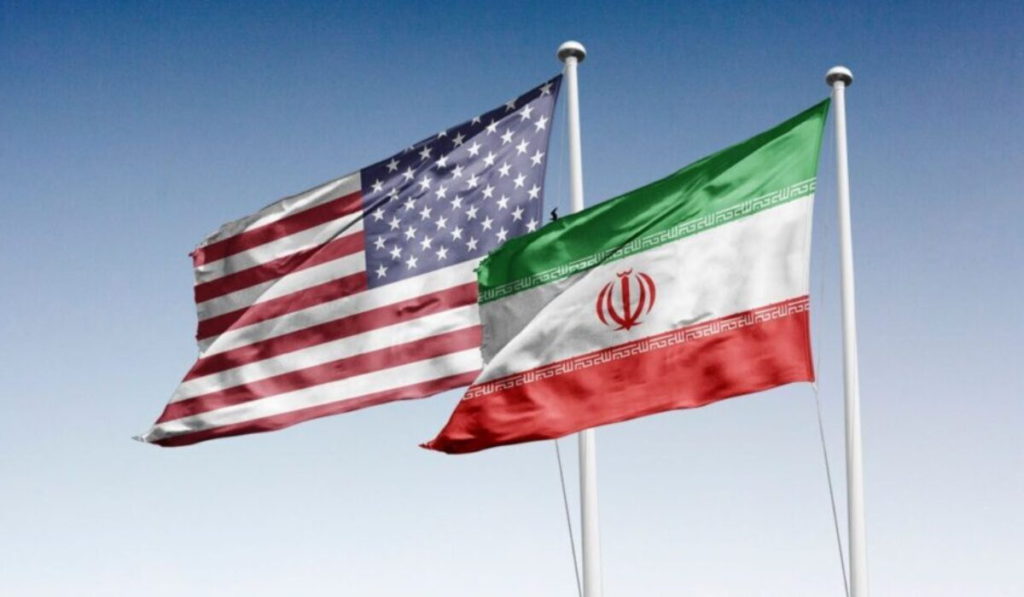
The United States and Iran took a major diplomatic step on Monday by electronically signing a memorandum of understanding intended to end nearly four months of conflict that has profoundly destabilised the Middle East and disrupted global energy markets.
According to senior US officials, a peace framework agreement was signed digitally on Sunday by US President Donald Trump, Vice-President JD Vance and the Speaker of the Iranian Parliament, Mohammad Bagher Qalibaf. An official signing ceremony is due to take place in Switzerland on Friday 19 June 2026.
The framework agreement paves the way for a gradual de-escalation between Washington and Tehran. It provides in particular for the phased reopening of the Strait of Hormuz, a strategic passage through which a crucial share of the world’s hydrocarbon trade transits. Maritime traffic could begin to resume in the coming days, although a full return to normal is expected to take several weeks.
However, the memorandum does not constitute a definitive settlement of the disputes between the two countries. Issues relating to Iran’s nuclear programme, US economic sanctions and several sensitive regional matters have been deferred to later negotiations.
Vice-President JD Vance stressed that no immediate release of frozen Iranian assets was planned. According to Washington, any easing of sanctions will depend on verifiable commitments by the Islamic Republic regarding its nuclear activities.
Battle of narratives over the Strait of Hormuz
While the agreement is intended, among other things, to restore freedom of navigation in the Gulf, Washington and Tehran are already at odds over the actual timetable and the terms of normalisation.
On his Truth Social network, Donald Trump claimed on Monday that several vessels, including many oil tankers, had already begun using a “southern route” which he described as “totally safe, secure and intact”. The message is clearly aimed at reassuring international markets after several days of uncertainty.
For its part, the Iranian news agency Tasnim has struck a more cautious tone. According to Iranian media, the strait would only officially reopen on 19 June, after the signing of an additional protocol. Tehran is also considering introducing technical fees for vessels transiting this strategic waterway, without specifying what services these would cover or how much they would amount to.
Beyond the practicalities, this divergence reflects a struggle for political influence. Washington is seeking to show that freedom of navigation has been restored and that global energy flows are secure. Iran, by contrast, intends to make clear that no lasting normalisation can be envisaged without its active participation and without recognition of its role in managing this maritime artery.
For observers, the two narratives are not necessarily contradictory. A gradual resumption of traffic may already be under way, while full formalisation of the process would remain subject to further political agreements.
CIA doubts Iran’s willingness to make nuclear concessions
CIA Director John Ratcliffe has told US President Donald Trump and several senior administration officials that intelligence gathered by the United States raises serious questions about whether Iran is genuinely willing to accept the nuclear concessions Washington is demanding as part of a final agreement.
According to several sources close to the talks, intelligence assessments suggest that Iran’s intentions may not match the commitments discussed in the ongoing negotiations. These findings were reportedly presented to President Trump in confidential briefings on the future of the talks between Washington and Tehran.
President Trump has nevertheless remained optimistic about the prospect of a lasting agreement preventing Iran from acquiring nuclear weapons, while the negotiations are expected to continue in the coming weeks.
Lebanon remains a major flashpoint
Despite this diplomatic breakthrough between Washington and Tehran, the situation in Lebanon remains one of the main risk factors for regional stability.
Israeli officials have said that Israel has no plans to withdraw its forces from the positions it controls in southern Lebanon as long as Hezbollah retains its military capabilities. Israel maintains that the Shia movement’s presence near its northern border continues to pose a direct threat to its security.
The Israeli authorities are also maintaining their doctrine of immediate retaliation against any attack on their territory. According to several officials, the diplomatic progress between Washington and Tehran does not alter Israel’s security concerns over Hezbollah and Iranian influence in the region.
For Jerusalem, the US-Iranian negotiations and the question of security on the Lebanese border remain two separate issues.
Hezbollah rejects any return to the status quo
In a statement issued on Monday, Hezbollah reaffirmed its determination to pursue what it calls “resistance” against Israel.
The Shia movement declared that Israel must understand that “there can be no return to the situation that prevailed before 2 March”, suggesting that the recent clashes have profoundly altered the regional balance of power.
Hezbollah reaffirms its commitment to Lebanon’s “legitimate and immutable right” to defend its territory, its population and its sovereignty. The movement makes any lasting stabilisation conditional on the complete withdrawal of Israeli forces from the areas concerned and the release of all prisoners.
The group also called on displaced residents of southern Lebanon to be patient and to await official instructions before returning to their towns and villages, citing security imperatives.
On the domestic political front, the statement contains implicit criticism of the Lebanese authorities. Hezbollah believes it is necessary to re-examine the strategic choices made so far and to abandon what it calls “illusions” and “losing bets”.
A peace that remains fragile
The framework agreement signed between Washington and Tehran represents the most significant diplomatic breakthrough since the start of the conflict triggered in February by joint US-Israeli strikes on Iran.
While the electronic signing of the memorandum marks a major turning point, the main challenges lie ahead. The actual resumption of traffic through the Strait of Hormuz, the opening of substantive negotiations on Iran’s nuclear programme and the ability of regional actors to avert a fresh escalation, notably in Lebanon, will determine whether this initiative leads to a lasting peace or merely a temporary truce.
For now, diplomacy has regained the upper hand. But from the Persian Gulf to the Israeli-Lebanese border, the balance remains fragile and tensions could flare up again at any moment.
Translated from French. The French original prevails.