From Zarqa, in Jordan, where he spoke with leading figures of jihadist Salafism, to Rabat and Casablanca, where he gathered the fragile testimonies of young people who had been through radicalisation, Abdelkader Filali’s career has followed some of the most sensitive terrain of our times.
A sociologist trained in ethnography and the author of numerous academic works, he defended an ambitious thesis at the University of Ottawa on the contemporary transformations of political violence. Today he heads an NGO dedicated to the rehabilitation of child soldiers, carrying into the field a line of thinking begun in his research. His is a rare expertise, forged through direct contact with the realities he analyses – and one might regret that it is not drawn on more in public debate.
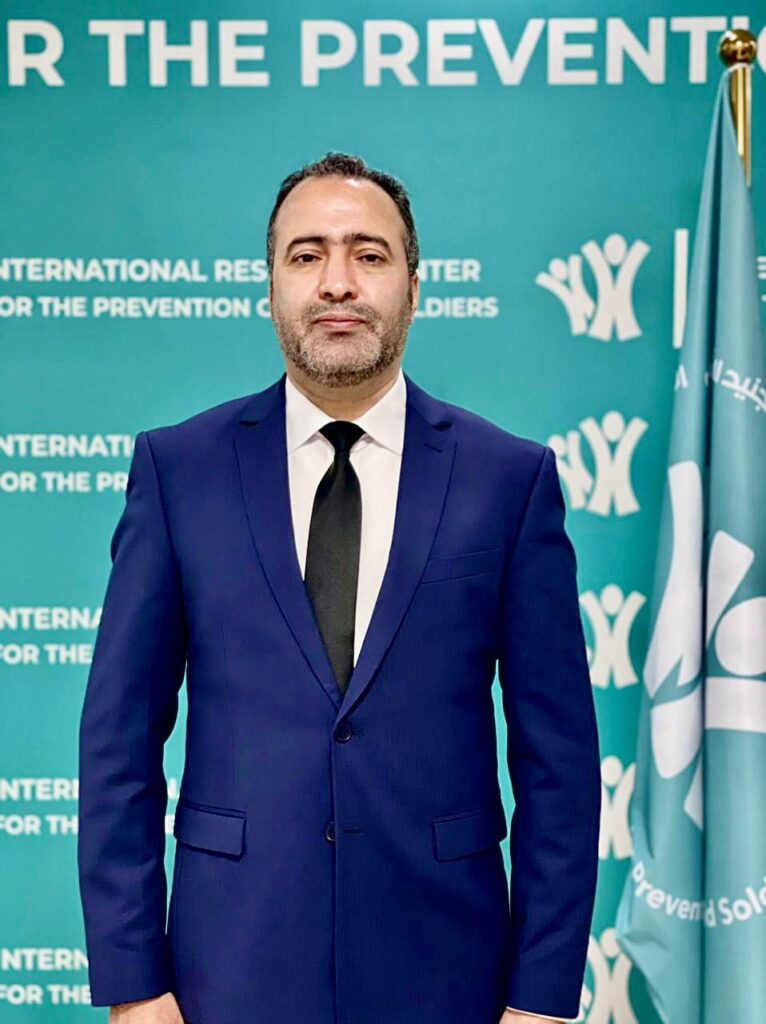
His starting point is a warning against reading the phenomenon from afar. “Radicalisation cannot be understood from a distance,” he insists. “It is not enough to analyse texts or data. You have to listen, observe and immerse yourself in human trajectories.” Rejecting a strictly theoretical approach, he champions a method grounded in presence, in attentiveness to narratives and to silences. “This closeness makes it possible to grasp the nuances, the contradictions and the grey areas that more abstract approaches tend to erase.”
From this immersion emerges a central hypothesis that runs through all his work: contemporary violence can no longer be understood solely as an ideological or political phenomenon. “It is becoming a global spectacle,” he asserts. “We have moved from a logic of propaganda to a logic of performance.” In what he calls a “parallel reality”, images and narratives no longer merely reflect violence: they produce it. “Images no longer depict violence, they carry it out. Narratives no longer describe reality, they recruit within it,” he explains.
This shift in perspective leads him to question the dominant analytical frameworks, notably those that reduce jihad to an intrinsically offensive dynamic. Filali points out that “a large part of the Muslim legal tradition insists, on the contrary, on a defensive conception of jihad”, often akin to a form of self-defence. “There is a profound gap between these doctrines and the contemporary uses of violence,” he stresses. For him, the problem lies less in the texts than in the uses made of them. “These references are reinterpreted, instrumentalised and sometimes hijacked in contexts that have little to do with their original framework.”
It is from this perspective that he develops the concept of “Simulcraft”, which lies at the heart of his thesis. “Simulcraft is the strategic manufacturing of violence as a media object,” he explains. Videos, manifestos, live streams: so many devices that turn the violent act into a global performance. “It is not a backdrop, it is an infrastructure. Violence is designed to be seen, shared and imitated.” In this system, attention itself becomes a central issue. “It is both the currency and the battlefield of contemporary conflicts,” he adds.
Filali nonetheless steers clear of any deterministic reading. What strikes him, over the course of his investigations, is the diversity of individual trajectories. “What struck me was how ordinary these paths were,” he says. Far from stereotypical figures, he describes individuals “searching for meaning, marked by ruptures, frustrations and a sense of injustice”. Radicalisation thus appears as a gradual, often imperceptible process. “It is a patchwork, a construction made of disparate elements that end up producing a coherent whole,” he says. His analysis implicitly echoes research showing that violence cannot be explained by religious factors alone, but also by broader social and political dynamics.
This attention to individual life stories finds a direct continuation in his current work. As head of an NGO devoted to child soldiers, Filali now works on the reintegration of young people who were recruited in conflict settings. “Understanding the mechanisms of violence also means committing to repairing the damage it does,” he says. These children, he says, are “both victims and instruments”, caught up in forces beyond their control. “My work involves supporting their reintegration, but also understanding the processes that led them there.”
As his analysis unfolds, one idea comes to the fore: contemporary violence is profoundly globalised. “It circulates through images, narratives and platforms. It transcends traditional ideological boundaries,” he observes. The mechanisms he identifies in jihadism, he adds, “are also found in other forms of extremism”. Hence the need, in his view, to “think about these phenomena on a global scale, taking into account the media and digital dynamics that shape them”.
One question remains, a more political one: why does such a reading struggle to gain traction in public debate? Filali offers a clear-sighted answer. “Because it requires nuance and time, and because it challenges simplistic categories,” he explains. “Public debate often favours quick, binary readings. Yet when faced with such a complex phenomenon, we need depth.”
Ultimately, Abdelkader Filali’s thesis reaches well beyond the study of jihadism alone. It questions our contemporary relationship with reality, with images and with violence. “We live in a world where violence is also manufactured in narratives and on screens,” he sums up. “Understanding this is already a first step towards limiting its effects.”
An NGO at the heart of the field: prevention rather than cure
Beyond the theoretical analyses developed in his thesis, Abdelkader Filali now heads an organisation that stands out on the international scene: the International Research Center for the Prevention of Child Soldiers (IRCPCS). Founded in Morocco in 2022, this research and action centre aims to bring about a major strategic shift: “moving from a logic of intervention to a logic of prevention”, drawing on data from the field rather than on standardised models.
The organisation’s 2022-2025 institutional report, entitled From Foundation to Strategic Impact, charts its rapid growth. In three years, the centre has deployed operations in more than twelve countries, from Central Asia to Latin America, as well as in several conflict zones in Africa. This presence across multiple sites enables it to produce rare empirical material, based on what its teams describe as a method of “letting the field speak”.
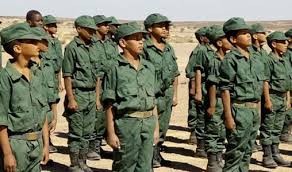
The findings highlighted in the report point to both successes and structural failures in reintegration policies. In Kazakhstan, for instance, 725 people, including children, were repatriated with high reintegration rates, whereas in the Democratic Republic of the Congo only 5 of the 230 children recruited in the late 1990s achieved lasting reintegration. “This figure is not merely a statistic; it reveals the profound limitations of conventional approaches,” the report notes.
In light of these findings, the NGO is developing innovative tools, such as the Child Reintegration and Resilience Index, designed to track the trajectories of former child soldiers remotely and to measure their social reintegration. The organisation also stresses the need to put cultural contexts back at the heart of public policy, advocating legal frameworks adapted to local realities.
Beyond research, the centre is positioning itself as an advocacy actor, forging a growing number of partnerships with ministries, military institutions and international organisations. In particular, it is preparing an African intergovernmental conference on preventing the recruitment of children, scheduled for 2025.
Breaking with top-down approaches, which are often criticised as ineffective, the IRCPCS champions a vision rooted in local realities and indigenous knowledge. It is an ambition summed up in its guiding principle: “from captivity to community, from survival to dignity”.
Translated from French. The French original prevails.