Created in 2023, the Alliance of Sahel States (AES) has established itself as a force challenging the post-colonial order. Its member states have broken away from their Western partners to explore new horizons, such as cooperation with Russia and China, the leaders of the Global South bloc. However, the alliance has clearly been weakened by the recent emergence of the Alliance of Sahel Democrats (ADS), founded on 7 April 2026, which firmly opposes the AES juntas.
This opposition coalition is calling for an end to the militarisation of the Sahel and for popular sovereignty founded on a liberal, democratic order. Does the creation of the ADS mark a forceful return of liberal and pro-Western currents, or is it the last gasp of an exiled opposition facing firmly entrenched juntas?
Clash of the blocs: AES vs ADS
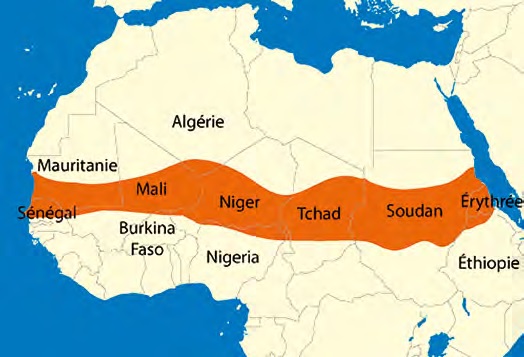
Established by the Liptako-Gourma Charter in 2024, the alliance bringing together Burkina Faso, Mali and Niger set itself the mission of tackling the security challenges facing the region, in particular the terrorist threat posed by jihadist groups. Its creation, which coincided with its member states’ withdrawal from the Economic Community of West African States (ECOWAS), reveals a shift in priorities towards West African security sovereignty and military cooperation in the Sahel.
In this spirit, the AES sought to stand firm against any outside interference and to base its approach on a strategic autonomy rooted in the local socio-political context rather than on Western security doctrines. However, besides its failure to contain terrorist threats, this drive towards militarisation has eroded popular consensus, giving way to the emergence of a protest movement.
Indeed, on 7 April 2026 the Alliance of Democrats of the Sahel (ADS) was founded, a movement of “peaceful struggle” against the military juntas of the AES. While the latter claims security sovereignty in the region, the ADS champions the sovereignty of the ballot box. It campaigns for the establishment of a liberal democracy that takes the popular will into account and for an end to the “militarisation of the state”. Unlike its Malian predecessor, the Coalition of Forces for the Republic, the ADS brings together the three member countries of the military alliance and represents a common voice for their populations, reflecting coordination that is not only local but also regional and cross-border.
Organised around a general secretariat and chaired by Mayra Djibrine, it has clear objectives: the restoration of democracy and the protection of human rights in the Sahel. This structure, together with the popular support the ADS is seeking to gather, could position it as a formidable opponent to the AES, offering a democratic alternative to the region’s strategic interests.
However, the ADS’s ability to turn this common voice into concrete political action will depend on its capacity to mobilise on Sahelian soil, and not only from digital platforms or neighbouring regional capitals
The new drivers of instability
In the light of this new political divide, the Sahel finds itself split into two political blocs that will be hard to reconcile. The risk posed by this fragmentation is a loss of vigilance brought about by the instability, which would directly benefit armed groups. Without security coordination between the AES and the ADS, these jihadist organisations could exploit the rifts to carry out more terrorist operations.
Moreover, the AES’s perception of the ADS as a threat could lead it to step up its repression, making the ADS’s action counterproductive. The existing security crisis would then be compounded by an internal political crisis marked by further human rights abuses. The new democratic alliance must act accordingly, exercising greater caution in its dealings with the AES, so as to avoid sliding into situations worse than the present one in terms of both security and democracy.
Their plan of action rests on bringing diplomatic pressure to bear on the AES juntas by welcoming Western partners back into the region. This about-turn lends the region’s stakes an international dimension: by pitting the Western bloc against the pro-regime camp, proxy conflicts could break out, turning the Sahel into a theatre of confrontation for global influence.
From now on, the region’s future will no longer be decided solely in the barracks of Bamako or Niamey, but by the ability of these two alliances to win over the great powers as arbiters. If the ADS manages to turn diplomatic pressure into leverage for a transition, it could restore a failing multilateralism. Conversely, if the AES walls itself up in a radicalised survival stance, the Sahel risks sinking into irreversible fragmentation, in which the quest for sovereignty would end up sacrificing the very stability it claimed to protect.
SOURCES AND BIBLIOGRAPHY
Institutional documents and founding texts
Alliance des États du Sahel (AES), “À propos de l’AES : Charte du Liptako-Gourma et objectifs de la Confédération”, aes.ml, 2023-2026.
Université de Perpignan (MJP), “Charte du Liptako-Gourma portant création de l’Alliance des États du Sahel (16 septembre 2023)”, Digithèque de matériaux juridiques et politiques.
Strategic and academic analyses
Fondation pour la Recherche Stratégique (FRS), “L’Alliance des États du Sahel : une configuration émergente de souveraineté sécuritaire en Afrique de l’Ouest”, Note d’analyse, 2025.
Policy Center for the New South (PCNS), “De l’Alliance des États du Sahel à la Confédération: les enjeux d’un chemin complexe”, Policy Brief, 2025-2026.
The Third World Quarterly, “Sovereignty and Security in the Sahel: The AES Experiment vs. Liberal Norms”, Tandfonline / Sciences Po IDM, March 2026.
III. Media monitoring and field reports
BBC Afrique, “Sahel : Le retrait de la CEDEAO et les nouvelles dynamiques de puissance”, bbc.com/afrique, 2026.
Courrier International, “Au Sahel, la contestation se renforce face aux juntes de l’AES”, courrierinternational.com, April 2026.
Deutsche Welle (DW), “Alliance of Sahel Democrats joins Coalition of Forces for the Republic: fighting for democracy”, dw.com/fr, 8 April 2026.
Jeune Afrique, “Facing the AES juntas, a coalition of Sahelian democrats organises from Brussels”, jeuneafrique.com, April 2026.
MaliActu, “Sahel: a new democratic alliance rises up against the military regimes”, maliactu.net, April 2026.
Radio France Internationale (RFI), “In the Sahel, a new citizens’ coalition to stand up to the AES military juntas”, rfi.fr, 8 April 2026.
Translated from French. The French original prevails.