Despite a tentative economic recovery, a new UNDP report reveals widespread insecurity, hitting women, rural areas and the most vulnerable households particularly hard.
Kabul/New York – Although Afghanistan recorded slight GDP growth of 2.7% in 2023-2024, its first since 2019, a new report by the United Nations Development Programme (UNDP), published on 30 April, paints an alarming picture: this fragile recovery has failed to halt the worsening day-to-day hardship now affecting three quarters of the population. The trade deficit has soared to $6.7 billion, domestic production is stagnating and new jobs are scarce, deepening the country’s dependence on imports and international aid.
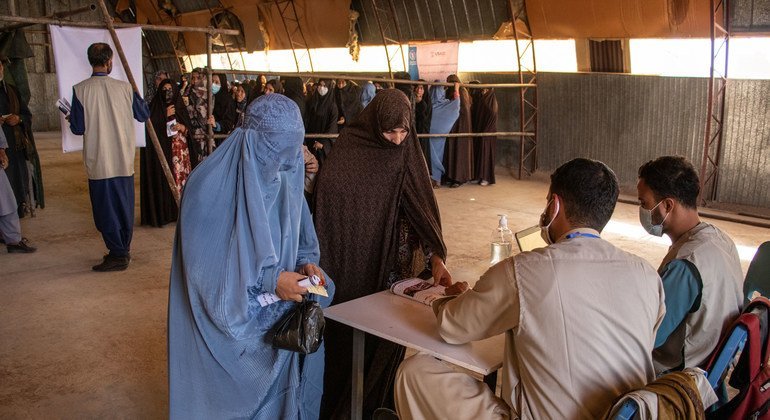
Far removed from the macroeconomic indicators, the reality on the ground is marked by a six-point rise in the rate of livelihood insecurity between 2023 and 2024, which now stands at 75% of the population. Economic and climate shocks are intensifying, living conditions and access to healthcare and housing are deteriorating, and households headed by women or by internally displaced people are the hardest hit. Nine households out of ten report having had to cut their daily consumption, thereby eroding their resilience.
The report also stresses that persistent restrictions on women’s education and employment are further deepening gender inequality. The economy could lose up to $920 million by 2026 as a result of these discriminatory policies. Women’s access to healthcare has plummeted, and their safety in public spaces continues to deteriorate. On top of this, rural areas, home to more than 70% of the population, are increasingly marginalised and remain deprived of essential services.
In light of these findings, UNDP is calling for targeted, long-term interventions that go beyond humanitarian assistance: support for women-led businesses, the development of agricultural value chains, the strengthening of sustainable livelihoods in ecologically fragile areas, and the establishment of social safety nets. According to Kanni Wignaraja, UNDP Regional Director for Asia and the Pacific, “the Afghan people are facing a deeply worrying trajectory”. And for Stephen Rodriques, UNDP Resident Representative in Afghanistan, “lifting the current restrictions imposed on women is an essential condition for the country’s economic recovery”.
Translated from French. The French original prevails.