Three models of resilience in an energy crisis that has become entrenched
Illustration produced with AI.
The war around Iran and the de facto closure of the Strait of Hormuz have exposed East Asia’s energy dependence. Seven months on, oil and gas are partly flowing again, but along longer, costlier and sometimes militarised routes. China, Japan and South Korea have responded with three different strategies: protecting the domestic market, diversifying suppliers, and replacing gas with nuclear power or coal. None of them removes the vulnerability created by the simultaneous threat to Hormuz and Bab el-Mandeb.
When the war began, the shock seemed straightforward: the closure of Hormuz abruptly removed part of the Gulf’s oil and gas from the market. The reality is now more complex. Producers, shipowners and consumer states have managed to restore some of the volumes through bypass pipelines, ship-to-ship transfers at sea, transits under military escort and the search for distant suppliers. But this adaptation has not restored the status quo ante. It has turned a physical disruption into a lasting crisis affecting prices, refining, insurance and maritime security.
Brent still stood at $102.25 a barrel on 2 October. Meanwhile, the strain was shifting to refined products. Reduced output from refineries in the Middle East and Russia has, in particular, worsened the diesel shortage. In Asia, the suspension of Chinese exports pushed the refining margin on petrol to more than $50 a barrel above Brent. The question is therefore no longer simply how much oil is leaving the Gulf, but in what form, at what cost and how reliably it reaches Asian economies.
LNG suffered a comparable shock. Disruption to Qatari production removed around 36 million tonnes from the market and pushed Asian spot prices from about $10 to nearly $30 per million BTU (the British Thermal Unit is an Anglo-Saxon unit measuring a quantity of heat or thermal energy). After that peak, the Japan-Korea benchmark still averaged $25.39 per million BTU in September. The rise prompted several Asian buyers to turn back to coal or oil. It also served as a reminder of a fundamental constraint: gas is harder to store and redirect than crude. Reuters notes that Asian demand could pick up again if prices fall back towards $7 to $9, but such a normalisation depends first and foremost on the security of shipping routes.
China turns its strategic depth into energy protectionism
China is the world’s largest oil importer, but it is also the best equipped of the three powers to withstand a prolonged crisis. Its strategic and commercial reserves are difficult to measure precisely. One estimate cited by Reuters Breakingviews put them at between 900 million and 1.3 billion barrels. That is a range, not an official figure. On top of this buffer come domestic production, Russian imports by pipeline and by sea, and an electricity system able to draw on coal, nuclear, hydropower and renewables.
Above all, the crisis is accelerating a shift that was already under way. Beijing is reducing the share of imported LNG in power generation and favouring gas produced on its own territory, Russian pipelines and renewables, while continuing to build coal-fired power stations. The rapid electrification of the vehicle fleet is also curbing demand for petrol. In June, the authorities even allowed some loss-making independent refineries to cut their output, a sign that falling domestic demand and export restrictions had temporarily eased pressure on supply. Reuters noted, however, that these refineries were recording an average loss of 752 yuan, or $111, per tonne of imported crude, compared with 202 yuan, or around $30, in April. China’s resilience therefore comes at a price : part of the cost is borne by companies.
The most telling decision came in the autumn. Having first suspended them in March, China again halted fuel exports in October to all destinations other than Hong Kong and Macao. The measure protects Chinese consumers while tightening supply in Singapore, Malaysia, Australia and other Asian markets. Beijing is not openly rationing its own population – it is rationing the outside market. In doing so, it is exporting part of the shortage to its neighbours.
The consequences are already visible. Singapore, the leading destination for Chinese petrol, received a volume over the first nine months of 2026 that was 62% lower than the total for 2025, and its stocks of light distillates have fallen to their lowest level in five years. Malaysia is among the main buyers of Chinese diesel and jet fuel. Australia remains less directly exposed to the suspension as far as diesel is concerned, since it imports mostly from South Korea, Taiwan, Brunei and Malaysia, but the disappearance of Chinese volumes is pushing up prices for all buyers. At the beginning of October, Canberra still had 42 days of petrol and 29 days of jet fuel, with deliveries of 3.5 billion litres already scheduled.
Japan scrambles to diversify
Japan was in the most exposed position. Before the war, around 95% of its oil imports came from the Middle East. Its refineries, largely designed during the period of rapid growth in the 1960s and 1970s, cannot process all grades of crude with equal ease. Replacing a Saudi or Emirati barrel is therefore not simply a matter of finding another seller – it means securing a compatible grade, arranging a longer voyage and adapting refinery logistics.
Tokyo first drew on its stocks. The stockholding obligation imposed on private companies was reduced by fifteen days from 16 March. On 24 March, the Ministry of Economy, Trade and Industry (METI) announced the release of 8.5 million kilolitres of national reserves, equivalent to roughly a month’s supply. On 24 April, the ministry announced a second tranche of 5.8 million kilolitres, equivalent to about twenty days, to be made available from 1 May. It then kept the private stockholding obligation at 55 days, down from 70 previously. In all, Japan combined private reserves, national reserves and joint stocks held with producer countries, as part of coordinated action with the International Energy Agency.
The second pillar was diversification. Japanese refiners bought crude from the United States, Latin America, the Caspian region and, within the limits of the sanctions regime, Russia. In May, Tokyo estimated that it had replaced around 60 per cent of the volumes that would normally have passed through Hormuz; the share forecast for June exceeded 70 per cent. Refinery utilisation, which had fallen to 67.7 per cent in early April, subsequently climbed back above 70 per cent thanks to alternative cargoes and drawdowns from stocks. Reuters.
The government avoided general rationing and opted to subsidise fuel instead. After hitting a record ¥190.8 a litre in mid-March, petrol had fallen back to ¥167.4 by early April thanks to the subsidies. Suppliers were also asked to deliver directly to priority sectors: healthcare, transport, agriculture, livestock farming, fishing and tea production. The policy shields economic activity, but it shifts part of the shock onto the public purse and does nothing to address the country’s structural dependence.
South Korea combines price caps with electricity substitution
South Korea shares Japan’s heavy dependence on imports, but it has an additional lever: its power system allows faster switching between gas, coal and nuclear. At the start of the crisis, some 1.7 million barrels a day bound for the country were affected by the blockade of Hormuz. Seoul responded by drawing on its reserves and imposing a maximum price on certain petroleum products, to prevent the global surge from being passed on in full to households and businesses. The cap was still in place in June, pending clarification of the conditions for reopening the strait.
LNG is the second front. Qatar supplied around 14 per cent of South Korea’s LNG imports, while gas-fired power stations accounted for 27 per cent of electricity generation in 2025. When QatarEnergy declared force majeure after its facilities were damaged, Seoul judged its stocks sufficient in the short term and prepared to rely more heavily on coal and nuclear power. Six reactors then undergoing maintenance were due to return to the grid and a new nuclear power plant was to come into service. The government also lifted certain restrictions imposed on coal-fired power stations. Reuters.
This strategy gives South Korea a flexibility that Japan does not possess to the same degree. It does, however, have two limitations. The price cap may weigh on distributors and on the state budget. The return of coal secures the electricity supply, but increases emissions and calls into question the pace of the climate transition. Here, energy resilience comes at the cost of a temporary environmental setback.
Three models of domestic resilience
| Country | Main buffer | Substitution | Domestic policy | Limitation |
| China | Large stocks, domestic production, Russia | Coal, domestic gas, nuclear, renewables | Suspension of fuel exports | Industrial cost and continued dependence on imported crude |
| Japan | Public reserves and purchases from outside the Middle East | Nuclear, energy savings, crude diversification | Subsidies and allocation to priority sectors | Dependence on shipping and limited refinery flexibility |
| South Korea | Stocks, spot purchases and diversification | Nuclear and coal in place of gas | Price cap | Budgetary cost and climate setback |
This picture reveals a fundamental difference. Japan is using the time its stockpiles buy it to diversify its suppliers. South Korea is relying on its power system to substitute one source of energy for another. China is drawing simultaneously on its reserves, its coal, its Russian supplies and its administrative control over exports. It has the greatest strategic depth, but in return it is aggravating the strains felt by the rest of Asia.
Gulf builds wartime logistics
Asia’s resilience is not determined solely in Beijing, Tokyo or Seoul. It depends on the ability of Gulf producers to get their oil and gas out despite Iranian pressure. Several arrangements have been combined : pipelines bypassing Hormuz, terminals on the Gulf of Oman, ship-to-ship transfers, night-time transits, switching off AIS transponders, aerial surveillance and time slots protected by US forces.
Saudi Arabia has increased the importance of its East-West network, which links the fields of the Eastern Province to the port of Yanbu on the Red Sea. The Emirates have the Habshan–Fujairah pipeline and a large terminal located outside the strait. Oman provides, around Sohar and the Musandam coast, the geography needed for some of the bypass operations. This architecture offers several exits, but none is invulnerable : the Yanbu route then depends on security in the Bab el-Mandeb, while the terminals at Fujairah and in Oman remain close to the zone of confrontation.
Ship-to-ship cargo transfers off Oman illustrate this adaptation. First trialled by the UAE’s national oil company ADNOC (Abu Dhabi National Oil Company), the shuttle system was subsequently taken up by other producers. According to Reuters, transhipped volumes reportedly reached 2.5 million barrels a day in September, up from 1.4 million in August. The arrangement spares laden supertankers from direct exposure in the Gulf, but it requires more vessels, more time and more coordination. The cost of shipping by very large crude carrier exceeded $30 a barrel in some operations.
LNG flows have also partially resumed. In September, analytics firms recorded between 19 and 21 cargoes passing through Hormuz, 13 of them from Qatar, according to S&P Global. Several LNG carriers linked to QatarEnergy made discreet transits by switching off their AIS transponders before reappearing in the Indian Ocean. Reuters nonetheless notes that it remains uncertain whether this pace can be sustained through the winter. Too visible an increase in exports could also prompt Tehran to tighten its control once again.
Bab el-Mandeb erodes the value of the detour
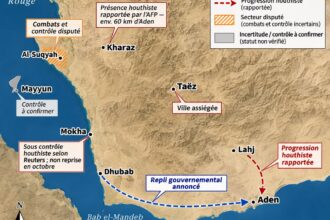
The Saudi problem sums up the fragility of the system. The East-West Pipeline makes it possible to bypass Hormuz, but it ends at Yanbu. Cargoes bound for Asia must then travel down the Red Sea and pass through the Bab el-Mandeb. The Houthi offensive in September on Yemen’s western coast and around the island of Mayun therefore threatened precisely the route built to escape Iranian pressure in the Gulf.
A lasting blockade of the Bab el-Mandeb would force ships to sail around Africa. The detour via the Cape of Good Hope lengthens journey times, ties up tankers for longer and drives up insurance costs. It is particularly punishing for supertankers, not all of which can use the Suez Canal when fully laden. Reuters estimated that a complete closure could push oil above $115 a barrel.
Securing the corridors must therefore cover the entire supply chain. It begins in the oilfields and liquefaction plants, runs through the pipelines and terminals, extends to naval escorts and maritime surveillance, and ultimately depends on receiving ports and refineries capable of processing the cargoes. The crisis has erased the boundary between energy policy and defence policy.
Energy shock draws Asia into the Gulf and the Red Sea
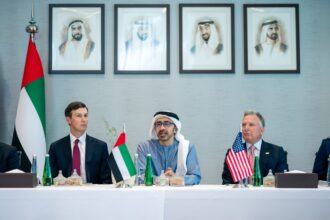
Japan moves forward without abandoning its legal limits. The crisis has not removed the constitutional constraints governing the use of force abroad: Tokyo refused to take part in a combat or escort mission in Hormuz despite American pressure. The Japanese government is nonetheless stepping up the deployment of the Self-Defense Forces abroad. Their facility in Djibouti, Japan’s only permanent overseas base, is already used for counter-piracy operations, intelligence gathering in the Middle East and the evacuation of Japanese nationals. Japan’s Ministry of Defense describes it as a lasting component of its regional posture. On 2 October, Tokyo also announced with Doha the preparation of a comprehensive plan to strengthen the economic and energy resilience of the Gulf states. Japan’s Ministry of Foreign Affairs cites in particular energy, LNG, waste management, rail and airport infrastructure. Relations with Washington have seen friction over risk-sharing in Hormuz, but no rupture of the alliance.
South Korea is guarding its autonomy more closely. Seoul is considering contributions to freedom of navigation, but President Lee Jae Myung rejects any deployment that could drag his country into the war. This caution has created real tension with Washington. Donald Trump said he had scaled back certain joint exercises, partly because South Korea had not helped the United States against Iran. Reuters describes an alliance under strain but not at breaking point: Seoul is seeking a limited maritime contribution that would safeguard its energy supplies, its military readiness against North Korea and its domestic political room for manoeuvre alike.
China is adopting a clearer great-power posture. Its base in Djibouti, opened in 2017, has become a foothold for naval operations in the Gulf of Aden and the Red Sea; recent works are set to expand its surveillance capabilities. Beijing has also asked Tehran to help rein in the Houthis following a Saudi approach. This combination of military support, mediation with Iran and energy ties with the Gulf monarchies goes beyond merely protecting trade. It does not yet amount to a security guarantee comparable to that of the United States: China continues to avoid direct military involvement in the conflict.
Second-order effects
The return of coal. China and South Korea can cut their gas consumption by relying more heavily on their coal-fired power stations. This substitution secures electricity supply, but slows the fall in emissions and could extend the lifespan of assets that governments had been planning to close.
Competition for cargoes. China, Japan and South Korea are simultaneously seeking American, Russian, African or Latin American barrels and American or Australian LNG. Asia is thus competing with Europe for the same replacement supplies.
Imported inflation. Rising prices for oil, gas, freight and insurance are spreading to transport, food, petrochemicals and manufactured goods. The weakness of the yen or the won adds further to the bill, since energy is generally paid for in dollars.
A weakened refining sector. A shortage of refined products may become more serious than a shortage of crude. A refinery cannot process every grade of oil interchangeably. China, which has become a major fuel supplier for Asia, may also suspend its exports to protect its own market.
Aviation and freight. The rise in jet fuel prices is forcing some airlines to cut their flight schedules, to carry more fuel from their home base or to add technical stopovers. The higher cost of diesel is simultaneously hitting road haulage, agriculture and shipping.
Depleting reserves. Stocks cushion the immediate shock, but they do not create oil. Rebuilding them in future will support demand and could keep prices high even after a military de-escalation.
Energy protectionism. China’s suspension of exports and the Western debates over diesel show that, in times of crisis, every major power tends to shield its domestic market. Energy security is becoming less cooperative and more national.
Uneven and temporary resilience
China has the greatest strategic depth. Its coal, its reserves, its overland links with Russia and its ability to control exports allow it to absorb a longer crisis. South Korea has the best capacity for substitution in electricity generation thanks to nuclear power and coal, while shielding its consumers through price caps. Japan, more dependent on Gulf oil and less flexible in terms of refining, offsets its vulnerability through stockpiles, accelerated diversification and highly active energy diplomacy.
None of these models, however, eliminates the risk. Reserves eventually run down, alternative suppliers are further away, the return to coal carries a climate cost and the bypass corridors remain exposed. The partial resumption of flows reflects states adapting to a wartime environment rather than the end of the crisis.
This adaptation has a major consequence : the energy consumed in Asia no longer depends solely on the Gulf’s production capacity. Its price now factors in the protection of terminals, the defence of pipelines, naval escorts, ship-to-ship transfers off Oman, the Houthi threat to the Bab el-Mandeb and administrative decisions taken in Beijing. The militarisation of the straits has become a component of the cost of a barrel.
Further reading from La Tribune des Nations
After Hormuz, Bab el-Mandeb : the land front that could reshuffle the deck
China in the Middle East : the long march towards influence
Seoul distances itself from Washington amid Middle East crisis
China closely watches war between the United States and Iran
Sources
• METI, 24 March 2026, Release of National Crude Oil Stockpiles
• METI, 24 April 2026, Second Release of National Crude Oil Stockpiles
• METI, 15 May 2026, Lowered Private Oil Stockpiling Obligation to Be Maintained
• IEA, 18 September 2026, Oil markets strain to plug the gap left by Middle East supply shortfall
• Reuters, 2 October 2026, China fuel export suspension to choke supplies in Asia
• Reuters, 21 September 2026, Hormuz shuttles keep oil flowing but at a high cost
• Reuters, 15 September 2026, LNG demand in China and India expected to recover when war ends
• Reuters, 2 October 2026, September LNG shipments through Hormuz hit highest level since war began
• Reuters, 13 May 2026, Japan refinery runs climb on alternative supply and stockpile releases
• Reuters, 20 March 2026, South Korea flags uncertainty from Qatar LNG plant damage
• Reuters, 9 March 2026, South Korea to impose fuel price cap
• Reuters, 30 July 2026, China shifting energy mix weakens pillar of global LNG growth
• Reuters, 20 July 2026, Houthi Red Sea blockade would lift oil prices
• Reuters, 1 October 2026, US LNG exports rise in September as Europe outbids Asia for cargoes
• Ministry of Foreign Affairs of Japan, 2 October 2026, Japan Qatar Foreign Ministers Meeting
• Ministry of Defense of Japan, 18 August 2025, SDF facility in Djibouti
• Reuters, 3 September 2026, South Korea reviewing military options for Hormuz
• Reuters, 17 September 2026, China Djibouti base upgrades
• Reuters, 17 September 2026, China presses Iran to help rein in Houthis
Translated from French. The French original prevails.