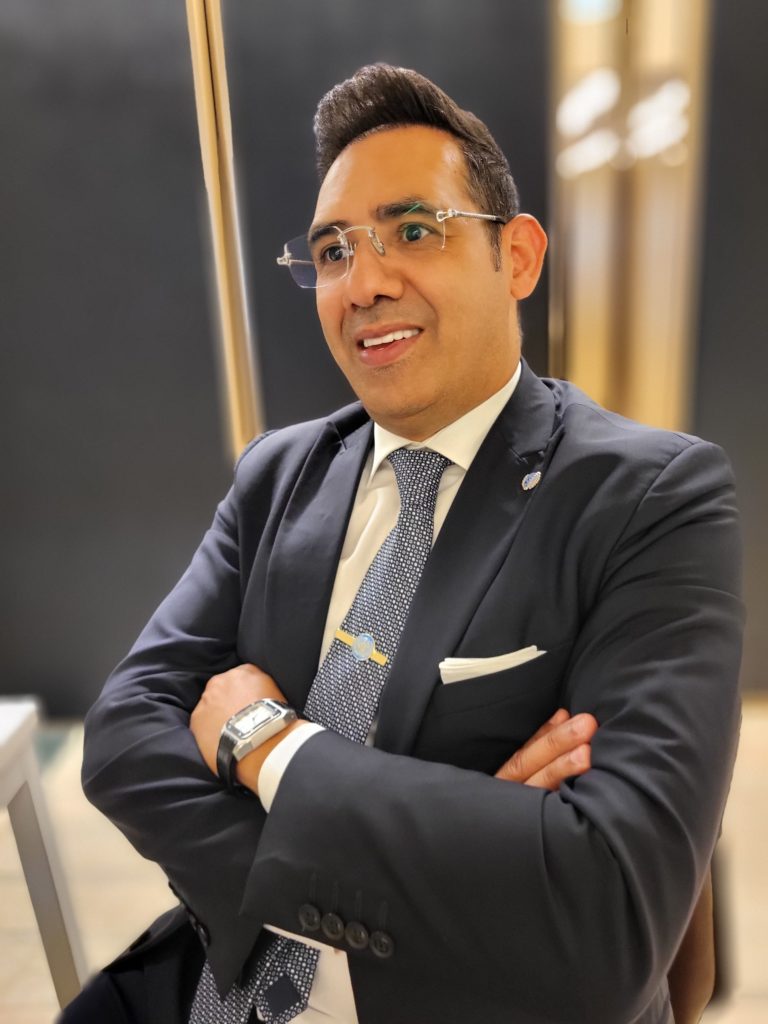
Recently appointed president of the NGO ASDH, Youcef Baadja looks back at the major challenges facing development in Africa and the role of civil society organisations. In response to critics who accuse him of seeking to use this platform to settle scores with Algeria, he denies the charge and insists that his commitment serves the common good. An interview on development in Africa.
Drawing on your experience, what are the main obstacles holding back development in Africa today?
Africa faces several structural challenges: poor governance, a lack of infrastructure, economic dependence on raw materials and ill-suited education systems. On top of that, political and security tensions undermine the stability needed for investment and innovation. Yet the continent is rich in human and natural resources which, if properly harnessed, could turn it into a genuine engine of growth.
In your view, which sectors should be prioritised to ensure sustainable and inclusive development on the continent?
Education and vocational training are key. There is an urgent need to train a generation of young Africans ready to meet the challenges of tomorrow. Next, there must be massive investment in basic infrastructure – energy, transport, digital – to foster the emergence of a competitive economy. Finally, industrialisation and sustainable agriculture are essential to reduce dependence on imports and create added value locally.
What role can NGOs such as the one you lead play in tackling the challenges of underdevelopment and governance in Africa?
NGOs are an indispensable counterweight for promoting transparency, civic education and human rights. They also act as an interface between citizens and institutions to drive structural reforms. They do not replace the state, but they remind it of its obligations and can act where governments fail.
Do you think the development models applied in Africa so far are suited to local realities? If not, what alternatives do you propose?
Africa must break away from imitating foreign models that do not match its realities. We need development policies that take account of the continent’s cultural, social and environmental specificities. Development must be endogenous, based on our own resources and skills, while remaining open to balanced international partnerships.
How do you see Africa’s place in the global economy in the decades ahead?
Africa has enormous potential to become a central player in the global economy. With a young and dynamic population, a wealth of natural resources and technological advances, it can position itself as a hub of innovation and industrialisation. But that will depend on our ability to invest in education, political stability and transparent governance.
Your appointment as head of the NGO ASDH has drawn mixed reactions. What are your main objectives as president?
My mission at the head of ASDH is clear: to strengthen the promotion of human rights and development in Africa. We want to support practical projects on the ground, work towards better governance and support vulnerable communities. The NGO aims to be a force for progress, independent and constructive.
Some say you could use your position to settle scores with Algeria. How do you respond to these accusations?
Accusations of this kind are unfounded. My commitment to ASDH goes beyond any personal or political consideration. The NGO works for the common good in Africa, with no bias and no hidden agenda. My aim is not to settle scores, but to contribute to harmonious development and respect for fundamental rights across the continent, including in Algeria.
How do you intend to strengthen ASDH’s credibility and impact on the ground?
By working on practical projects, building solid partnerships with local and international organisations, and ensuring transparent management of our activities. Credibility is built on tangible results, not on speeches.
Does your involvement in this NGO mark a turning point in your personal and professional career?
Absolutely. It is a step that allows me to put my experience at the service of a noble cause, beyond personal or national interests. I believe deeply in the importance of independent bodies that defend the common good.
What message would you like to send to Africans who are committed to development and the defence of human rights?
Don’t give up. The fight for a better future is hard, but necessary. Africa needs engaged citizens, responsible leaders and agents of change. Everyone has a role to play, however small, in building a fairer and more prosperous continent.
Translated from French. The French original prevails.