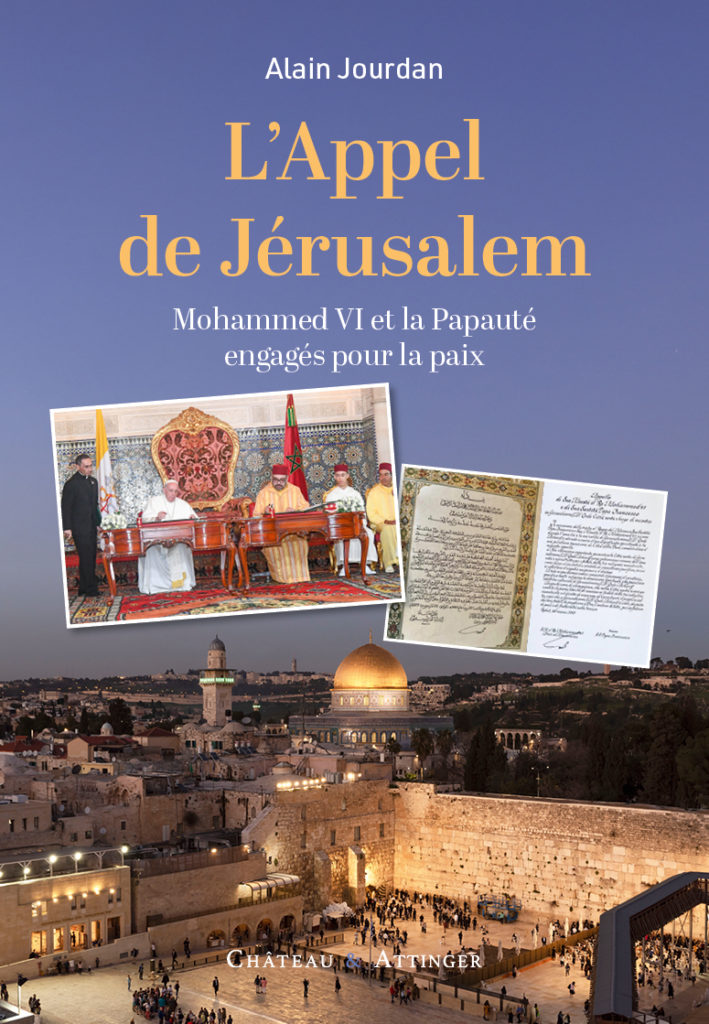
In a fragmented world where traditional diplomacy is struggling to prevent conflict, Alain Jourdan, author of L’Appel de Jérusalem – Mohammed VI et la Papauté engagés pour la paix, makes the case for the emergence of a new international approach: religious diplomacy. He explains how the joint initiative by King Mohammed VI and Pope Francis on Jerusalem offers a credible alternative for rebuilding global trust and defusing identity-based tensions. Interview.
Your book comes out against an international backdrop of geopolitical fragmentation and a weakened multilateral system. In what way is the Jerusalem Appeal a strategic response to this global crisis?
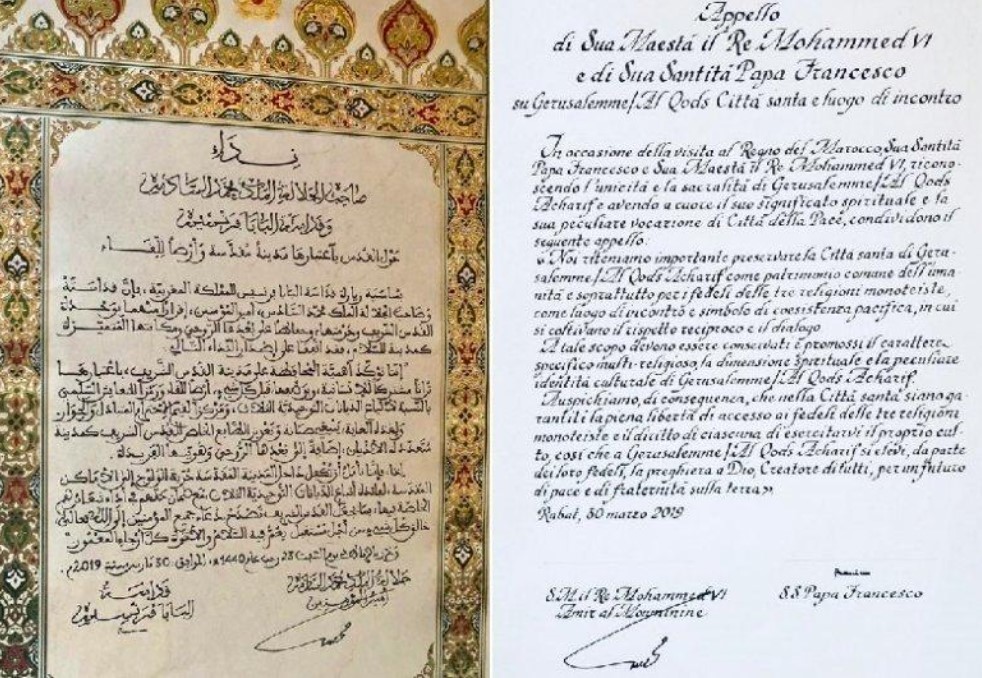
The Al-Quds Appeal, signed in 2019 by King Mohammed VI and Pope Francis, reflects a clear-eyed reading of the state of the world: the traditional mechanisms of multilateralism have run out of steam. In the very preface of the book, I note that “the multilateral model… appears to be faltering”, weakened by geopolitical tensions, identity-driven retrenchment and a crisis of trust between nations. In the face of this impasse, the Al-Quds Appeal is not merely a moral message: it reintroduces the human and spiritual dimension into international regulation, creating a space for mediation where conventional diplomacy has failed. It marks the entry of the diplomacy of conscience into the global geopolitical equation.
In your book, you speak of the exhaustion of conventional diplomacy. Why is it no longer enough today?
Because all too often it rests solely on the logic of power relations and ignores the identity dimension of modern conflicts. Today’s crises are not only territorial or economic; they are also symbolic, emotional and bound up with collective memory. As I write, “conventional diplomacy is running out of steam, and with it the ability of nations to build a shared future together”. Without the work of cultural and spiritual reconciliation, no political agreement can last. That is why it is becoming essential to complement traditional diplomacy with a diplomacy of meaning, capable of rebuilding trust between peoples.
You say that religion has once again become a geopolitical actor. Why has religion returned to the world stage?
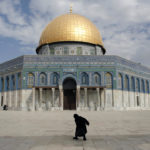
Because in a world that has lost its bearings, societies are turning to the sacred to rediscover a collective sense of meaning. This return is ambivalent: religion can be exploited to stoke divisions, but it can also become a powerful lever for peace if it is championed by responsible authorities. Therein lies the full strength of the Al-Quds Appeal, which recalls the need to preserve “Jerusalem as the common heritage of humanity” and to counter the identity-driven exploitation of holy sites. Religion must cease to be a fault line and become once again common ground for universal convergence.
In your book, you describe Morocco as a stabilising actor and a moral power. In what way is its position unique?
Morocco possesses a spiritual capital that is unique in the world. Under the leadership of King Mohammed VI, Commander of the Faithful, the country champions a moderate Islam founded on tolerance, the juridical moderation of the Maliki school and the balance of Ash’arism. The King states it clearly: “I ensure the free exercise of the religions of the Book” . Morocco acts rather than merely making declarations: restoration of Jewish heritage, training of foreign imams, international mediation, and active participation in peace efforts in the Sahel and the Middle East. This conciliatory role enables it to serve as a strategic bridge between Africa, the West and the Arab world. In a fractured world, it stands out as an architect of dialogue.
Is the Al-Quds Appeal a religious text or a major geopolitical act?
It is both. It is first and foremost an act of spiritual sovereignty, but also a diplomatic tool that gives shape to what follows. Never before had a pope and a Muslim head of state taken such a clear joint position on Jerusalem: “a symbol of peaceful coexistence” and a universal heritage. In reality, the Jerusalem Appeal defuses the temptation of a war of religions by restoring to the Holy City its unifying vocation. It charts a third way: neither confrontation nor domination, but mutual recognition. It is in this respect that it constitutes a new diplomatic platform, capable of opening a cycle of lasting peace in the Middle East.
Translated from French. The French original prevails.