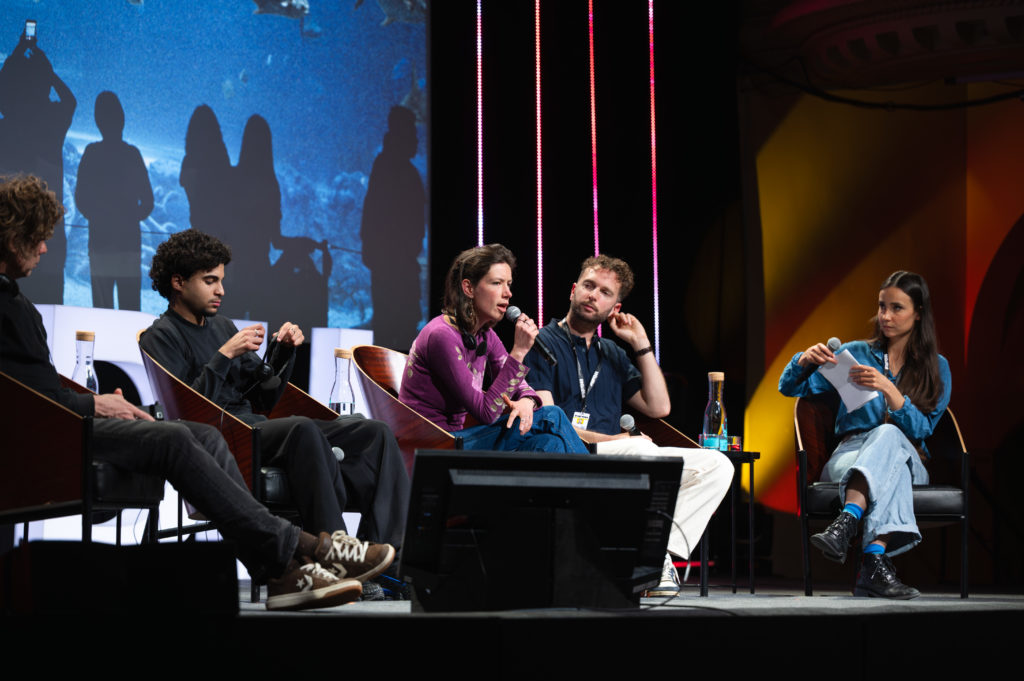
Gathered at the International Film Festival and Forum on Human Rights in Geneva, listening to new forms of climate activism, with the Dutch activist Pippi van Ommen at the microphone.
The era of “speaking truth to power” appears to be over. Gathered at the International Film Festival and Forum on Human Rights in Geneva (FIFDH) for the compelling panel “Ecology: the end of innocence?”, activists, researchers and journalists acknowledged the failure of a climate strategy built on awareness-raising alone.
While Joris Postema’s documentary “The System” reveals the psychological exhaustion
of the movement’s leading figures, new methods are emerging. The film shows how
official rhetoric blocks any real action, while shedding light on a new
force: patient grassroots work, as close as possible to citizens. Activism is shedding the
garb of the “saviour” for the more formidable one of the organiser.
The lights came back on in the packed FIFDH auditorium in Geneva. The silence that
followed the screening of “The System” was heavy with palpable emotion. In his new
documentary, Joris Postema does not merely observe the climate crisis; he closely follows
the paths of three figures: the special envoy for water Henk Ovink, the German
activist Tadzio Müller and the Dutch activist Pippi van Ommen. Before an audience
made up largely of young people, the film acted as a brutal eye-opener. What the
audience took full in the face was not yet another plea for the planet, but the story
of a turning point: that of a generation moving from spectacular indignation to a radical
questioning of its own methods.
The twilight of heroes and the price of silence
“Heroes are not going to save us,” Pippi van Ommen says bluntly in an interview on the sidelines
of the festival. Now almost 30, the woman who spent her youth blocking roads and risking
arrest embodies the central figure of this productive disenchantment. Her reflection is not
an admission of weakness but a critical examination of activist “performance”. For
decades, the environmental movement operated on a kind of messianism, convinced
that it was enough to “speak truth to power” for the powerful finally to agree to change their
model.
There is no point trying to “convince” decision-makers whose inertia is a survival strategy.
But this struggle comes at a cost. Salomé Saqué, a journalist and committed public figure who took part in the
debate, forcefully highlighted the psychological dimension of this activism. Beyond the
frustration of preaching in the wilderness, activists who take strong public positions
expose themselves to systematic harassment. This pressure, exerted both on social media
and in the political arena, aims to break the individual where argument is no longer enough. For Saqué,
activist fatigue is not only political; it is a mental erosion in the face of the hostility
of a system that prefers to discredit the messenger rather than listen to the message.
Féris Barkat’s insolence in the face of inertia
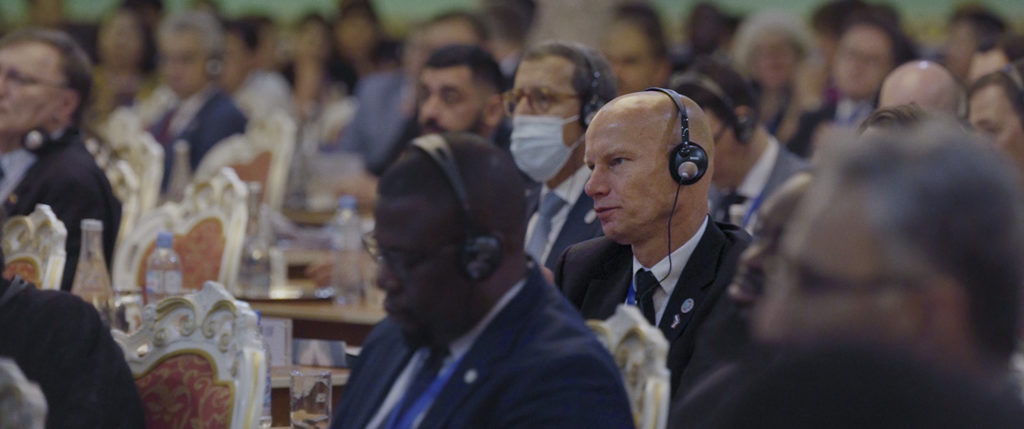
Among the large audience was the Special Envoy for Water, Henk Ovink.
The panellists in Geneva dissected this structural deadlock with rare
candour. Among them, Féris Barkat made a lasting impression. At just 24, the co-founder of
the association Banlieues Climat brings a voice that stands out. Very much at ease in public, using
humour to disarm his opponents, Barkat deftly exploits his newfound media
profile to expose the blind spots of traditional environmentalism. He denounces the hypocrisy
of a model that can be outraged by soup thrown at a museum’s glass, while accepting
as an economic inevitability the asthma eating away at the lungs of children in working-class
neighbourhoods.
Portrait of a multifaceted resistance that refuses to be pigeonholed.
Alongside him, Nicolas Framont, a researcher and sociologist and the founder and editor-in-chief of
Frustration Magazine, offered a cooler interpretation. In his view, we have left the era
of persuasion. There is no point trying to “convince” decision-makers whose inertia is a means of
survival. Framont highlights what he calls the “qualification of violence”: a formidable language
game in which the institution labels the activist a “radical” all the better to normalise the
invisible violence of an economy that is devastating to living things.
Betting on the grassroots: one hour to break the script
Pippi van Ommen has opted for a practical answer to this impasse: deep canvassing. Far
from the mechanical handing-out of flyers on the campaign trail, this method is about
investing time. It means spending an hour, sometimes more, talking on the doorstep
with citizens who, on the face of it, share none of the activists’ convictions. The aim
is to break through ready-made talking points and rebuild a human connection through personal stories. “You
don’t change people by telling them what to think, but by telling our stories,” she
explains.
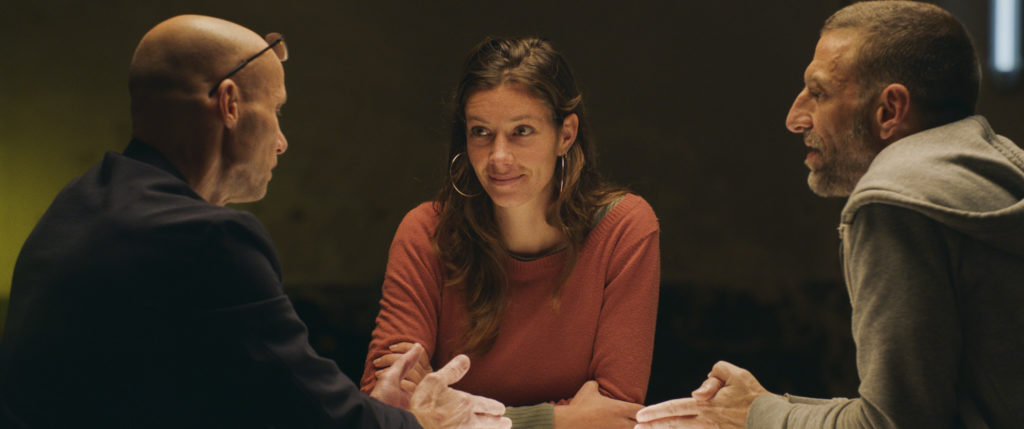
Special Envoy for Water Henk Ovink, German activist Tadzio Müller and Dutch activist Pippi van Ommen deep in discussion.
This approach, which seemed something of a cottage industry two years ago when there were only three founders,
has grown in scale. Today, the organisation led by Pippi brings together 300 people committed
to this quiet reconquest of the ground. Even so, Pippi van Ommen does not advocate
abandoning shock tactics. For her, there is no single “button” to press, but
a multitude of levers. While she now favours grassroots organising, she does not rule
out a return to direct action: tomorrow’s activism will be hybrid, able to hold a conversation on
a doorstep in the morning and blockade a centre of power in the evening.
Towards a new grammar
Ultimately, the age of innocence is over. What The System and the FIFDH
debates sketch out is the portrait of a multifaceted resistance that refuses to be pigeonholed. Joris
Postema once used the concept of a “code” to describe the misunderstandings surrounding development
aid in Africa (Stop filming (2020), FC Rwanda (2013)). Today, environmentalism
is running up against its own code: an institutional environment in which urgency is all too often
diluted by procedure and technocratic language.
Yet between Barkat’s media insolence, Framont’s clinical analysis and Pippi van Ommen’s surgical
patience, a new strategy is emerging. It no longer pins its hopes on change “from above”, but on the complementarity of different forces. The era of
lone prophets is over; that of versatile organisers is beginning.
Translated from French. The French original prevails.