By Lyna HAMANI, intern at the Observatoire Géostratégique de Genève
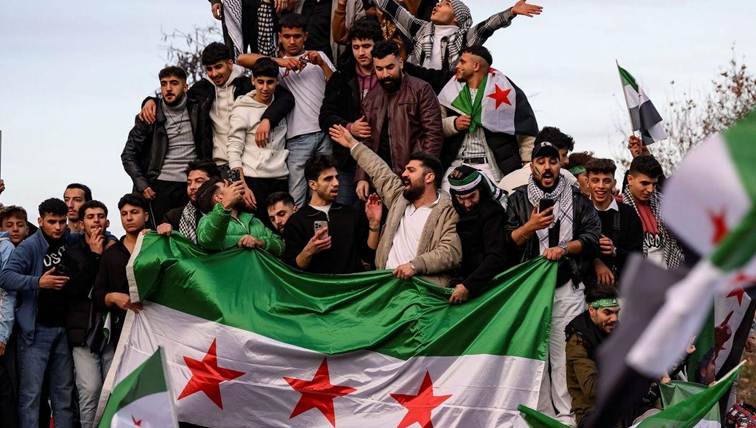
The night of 7 to 8 December 2024 will go down in Syria’s history as the end of the Ba’athist regime. Toppled by an offensive led by the armed rebel group Hayat Tahrir al-Sham (HTS) and its strongman, Abu Mohammed al-Jolani, the regime that had been in power since 1967 was neutralised in fewer than 10 days.
The abrupt removal of Bashar al-Assad followed many years of civil war and the domination of a brutal, security-obsessed system, which relied for its survival on violence and the repression of political opponents and popular protest movements. Bashar al-Assad was one of the last Arab political leaders to have survived the Arab Spring, which is why many saw his fall as the culmination of that revolutionary wave. Even so, the outcome remains mixed today, so uncertain does Syria’s future appear.
The Arab Spring: revealing a malaise in Arab societies
The Arab Spring had its origins in one man’s act of despair: that of Mohamed Bouazizi. The 26-year-old Tunisian street vendor set himself on fire outside the governorate headquarters in Sidi Bouzid after his goods were confiscated for the umpteenth time. His act would spark waves of protests across Tunisia and unleash the people’s pent-up social anger, culminating in demands for Ben Ali’s removal. On 14 January 2011, the Tunisian president was forced to flee Tunisia for Saudi Arabia. The regime had fallen, and Tunisia became an example for other Arab populations. The movement spread to Egypt, Libya, Yemen, Bahrain, Morocco, Algeria, Jordan, Oman, Saudi Arabia and Syria. Unfortunately, the outcome was not the same, and in some countries the protests were put down so violently that the country’s geopolitical situation was upended, as was the case in Syria.
In Syria, Bashar al-Assad, in power since 2000, would crush these protests in blood and trigger a civil war that would claim more than 500,000 lives. The conflict would draw in a multitude of non-conventional actors, including various jihadist forces, among them the Islamic State group. Throughout this period, al-Assad managed to cling to power, unshaken, thanks in particular to the backing of Russia and Iran.
According to Farid Jeanbart, a diplomat with a doctorate in geography, the fall of the regime stemmed mainly from its internal fragility: a weakened army, corruption, a lack of reform and an inability to anticipate the crisis. Added to this were the waning of external support, notably from Russia and Iran, and the rise of a structured armed opposition that was able to exploit these weaknesses. It was the combination of these internal and external factors that led to the regime’s downfall.
But despite the euphoria that gripped part of the Syrian population, the results have been mixed.
National unity still a distant prospect
The rise to power of interim President Ahmad al-Sharaa, former leader of Hay’at Tahrir al-Sham (HTS), on 29 January 2025, raises new issues that the “new Syria” must now confront. Faced with a Sunni-majority government, the question of minorities and respect for their rights quickly came to the fore.
Syria is characterised by a highly diverse religious mosaic, which makes its national cohesion particularly complex. According to a study by Minority Rights Group (2015), Kurds make up between 8% and 15% of the Syrian population; according to a note from OFPRA (2016), Christians account for between 8% and 10% of the total population, while around 1% are reportedly Ismaili Shia and 8 to 15% Alawite. The Druze community, for its part, is thought to number between 500,000 and 700,000 members.
Sectarian tensions have been illustrated in particular by a series of clashes in Sweida between Druze and Bedouin, in April and again in July this year, which left more than 1,300 people dead. The Sweida region is at the heart of the debate, with some calling for greater autonomy or even independence, demands championed in particular by Sheikh Hikmat al-Hijri, an increasingly influential opposition figure in the face of the central Syrian state. These demands are said to stem from the persistent discrimination that the Druze say they suffer as a minority, in a country where more than 74% of the population is Sunni.
This situation makes the country’s social and economic reconstruction even harder for interim President Ahmad al-Sharaa, who declared last August, in the wake of the deadly fighting in Sweida, that “the unification of Syria must not be achieved by military force“, thereby recalling the years of civil war and deep division endured under the Assad regime.
A Syria beset by foreign interference
Syria’s independence is not complete. Because of its political and security instability, the country remains vulnerable to foreign interference from powers taking advantage of this transition period to exert their influence and control parts of its territory.
The question of the Golan Heights, claimed by Israel, illustrates one of the oldest forms of interference Syria has suffered, recently revived by clashes involving the Druze community. The pretext of protecting the Druze, who make up the majority on the Heights, is in reality a strategic manoeuvre: the region is not only rich in resources but also carries a symbolic and biblical dimension, as shown by recent statements by Benjamin Netanyahu encouraging settlement and the consolidation of the Israeli presence in the territory.
A mixed Syrian record that echoes a chronic Arab malaise
The legacy of the Arab Spring for Syria remains mixed. While the fall of Bashar al-Assad seemed to breathe new hope into the prospect of establishing a system that would benefit Syrians, the state – its institutions, its values and its population – had been drawn into such a degree of democratic closure that only far-reaching reform could meet the people’s aspirations. This problem is the chronic syndrome of many Arab countries that have failed to turn the Arab Spring into their own revolutions.
The key may lie in the fact that many of these countries are attempting to transpose a Western ideological template without taking account of the socio-cultural realities on the ground. This transposition has at times been imposed by force, as was the case in Iraq and Afghanistan, and has consequently led to the destruction of any civilising synergy, pushing these societies from a civilised state into a post-civilised one. And when it is driven by the vital energy of the society in question, ideas run short, and the powers already in place – themselves a consequence of that society’s exhaustion of ideas and innovation – sink into a repetitive and chaotic cycle, from which the situation will only move forward through a fresh ideological and progressive impetus.
Bibliography:
- 22 April 2012. “La crise syrienne un an après le début du printemps arabe”. CJPMO – French. Accessed 1 November 2025. https://frcjpme.nationbuilder.com/fs_153.
- BBC News Afrique. “Où se trouvent les hauteurs du Golan et qui les contrôle ?” 21 July 2025.
https://www.bbc.com/afrique/articles/c62g4q8vy41o. - “Comprendre la chute de Bachar el-Assad et l’avenir de la Syrie”. Le Grand Continent, 12 December 2024.
https://legrandcontinent.eu/fr/evenements/comprendre-la-chute-de-bacharel-assad-et-lavenir-de-la-syrie/. - Conflits, Revue. “Syria: Why Assad Fell. An Insider’s Account”. Conflits : Revue de Géopolitique, 23 September 2025. https://www.revueconflits.com/syrie-pourquoi-assad-est-tombe-untemoignage-de-linterieur/.
- Franceinfo. “Mohamed Bouazizi: the Self-Immolation that Sparked the Arab Spring”. 17 December 2013. https://www.franceinfo.fr/monde/afrique/mohamed-bouazizi-l-immolationqui-a-declenche-le-printemps-arabe_459202.html.
- Franceinfo. “Arab Spring: Syria’s Painful Toll”. 16 March 2021. https://www.franceinfo.fr/monde/revolte-en-syrie/printemps-arabesle-douloureux-bilan-de-la-syrie_4335129.html.
- Insel, Ahmet. “Syria Between National Reconciliation and Foreign Interference: the Case of Turkey”. La Grande Conversation, 19 December 2024. https://www.lagrandeconversation.com/monde/la-syrie-entrereconciliation-nationale-et-ingerences-etrangeres-le-cas-de-la-turquie/.
- Le Nouvel Obs. “2010: the Unfulfilled Dream of the ‘Arab Springs'”. 27 December 2024. https://www.nouvelobs.com/idees/20241227.OBS98338/2010-le-reveinassouvi-des-printemps-arabes.html.
- rts.ch. “Bashar al-Assad, the Last Leader to Be Swept Away by the Arab Spring | RTS”. infoSport. 8 December 2024. https://www.rts.ch/info/monde/2024/article/bachar-al-assad-dernierdirigeant-a-etre-emporte-par-le-printemps-arabe-28720825.html.
- rts.ch. “The Autocrat Who Became the Face of Repression in Syria: a Portrait of Bashar al-Assad | RTS”. infoSport. 8 December 2024. https://www.rts.ch/info/monde/2024/article/l-autocrate-devenu-le-visagede-la-repression-en-syrie-portrait-de-bachar-al-assad-28720629.html.
- rts.ch. “Behind the Scenes of Syrian President Bashar al-Assad’s Flight to Moscow | RTS”. infoSport. 18 December 2024. https://www.rts.ch/info/monde/2024/article/la-fuite-secrete-de-bachar-alassad-les-dessous-d-un-depart-precipite-28730802.html.
- “Syrie : une mosaïque ethnique et religieuse | TV5MONDE – Informations” [Syria: an ethnic and religious mosaic]. 11 December 2024. https://information.tv5monde.com/international/syrie-unemosaique-ethnique-et-religieuse-2752399.
- Tribune de Genève. “Portrait de Bachar el-Assad: L’autocrate qui a maintenu la Syrie dans la répression” [Portrait of Bashar al-Assad: the autocrat who kept Syria under repression]. 8 December 2024. https://www.tdg.ch/bachar-elassad-lautocrate-qui-a-maintenu-la-syrie-dans-la-repression482073030797.
- Bennabi, M. (2016). Le problème des idées dans le monde musulman [The Problem of Ideas in the Muslim World] (reissue).
Tawhid Éditions. (Original work published 1970). - Luizard, P.-J. (2022). Les racines du chaos : Irak, Syrie, Liban, Yémen, Libye — cinq États arabes en faillite [The Roots of Chaos: Iraq, Syria, Lebanon, Yemen, Libya — Five Failed Arab States]. Tallandier
Translated from French. The French original prevails.