Saudi Arabia faces a number of threats all along its borders and coastline, to the east, north and south.
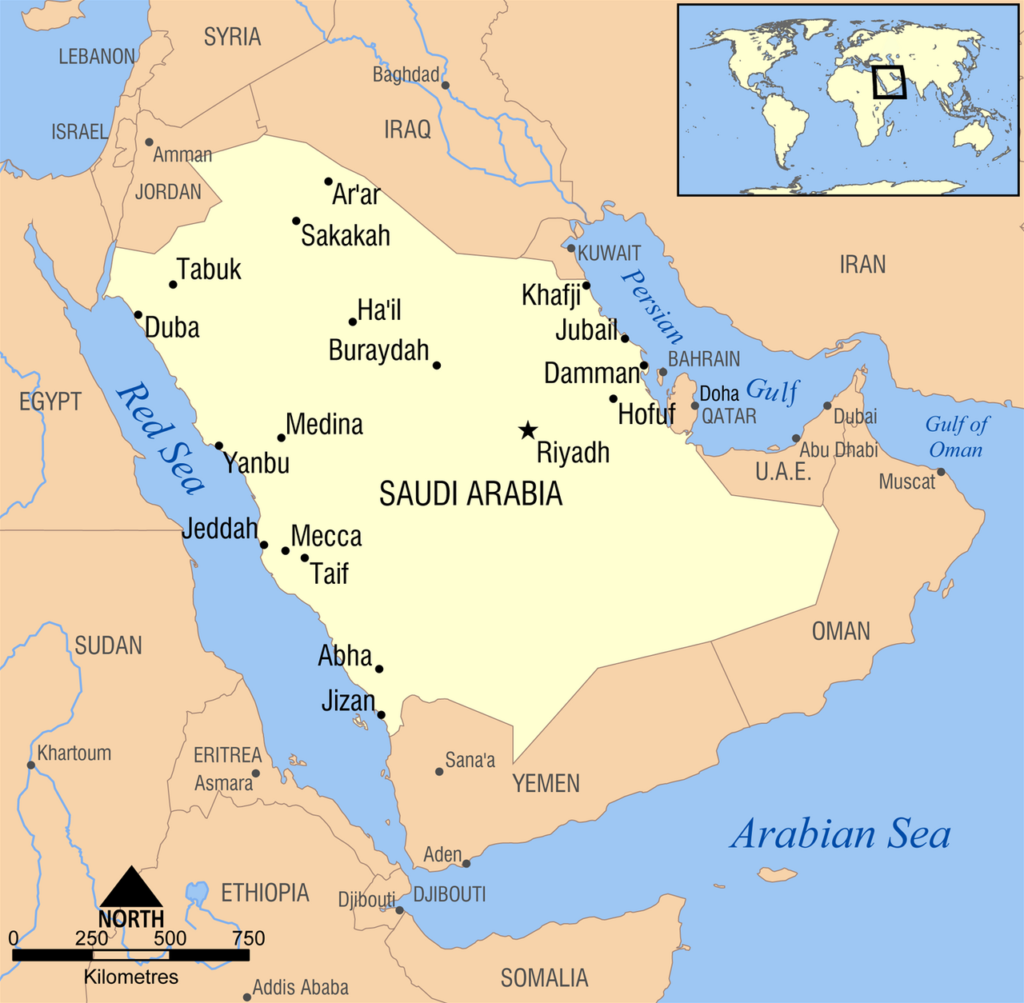
To the east, it is the Arabian (Persian) Gulf that worries Riyadh. For now, this front is in a state of uneasy dormancy, but Saudi Arabia expects that, should the conflict between Iran and the United States resume, missile and drone attacks will once again target the country’s nerve centres, including energy sites, airports and military bases. Saudi Arabia also expects attacks by the Iranian navy via the Arabian Gulf, in the form of waves of warships of various sizes assaulting its coastline.
On its border with Yemen to the south, the danger comes from the Iran-backed Shia Houthi rebels. Clashes along the rugged border between the two countries have been going on for a long time. Saudi defence in this sector relies largely on foreign mercenaries paid by the Saudi state, but with little motivation.
For their part, the Houthis are steadily building up their forces in the provinces of al-Jawf, Saada (the Houthi stronghold) and Hodeidah, a major Houthi-controlled port on the Red Sea.
Even more worryingly, recent Arab intelligence reports have mentioned the arrival of Iranian personnel on Yemen’s west coast, near the Bab el-Mandeb Strait.
According to these reports, members of the “Quds Force”, the elite unit of the Islamic Revolutionary Guard Corps responsible for external operations, have arrived in Houthi-controlled areas of Yemen, alongside foreign experts of unknown nationality. Some of them are said to have entered via unofficial ports in Hodeidah province aboard smuggling boats from the Horn of Africa, while others have deployed to areas such as Hodeidah, Hajjah and Kamaran Island.
The arrival of “Quds Force” members in the area with the aim of disrupting shipping has not only military implications but also major economic and maritime repercussions, particularly for Saudi Arabia.
According to the US Energy Information Administration, the Suez Canal, the Red Sea, the SUMED pipeline and the Bab el-Mandeb Strait are strategic routes for Saudi oil and gas shipments. In the first quarter of 2026 alone, around 2.9 billion cubic metres of natural gas passed through the strait each day, compared with around 400 million cubic metres a day over the same period in 2025.
In the north, the situation is no better than in the south. The long border between Saudi Arabia and Iraq is porous. On the other side of the border, the Iraqi regions are controlled by pro-Iranian Iraqi Shia armed groups. Even formerly Sunni areas, such as Anbar, have been violently emptied of their inhabitants by Shia militias in order to settle Shia families there. Iraqi Shia armed groups regularly fire missiles and kamikaze drones towards Saudi Arabia and Kuwait.
To date, these Shia armed groups, which played a crucial role in the fight against Daesh, have for the most part been incorporated into the Iraqi security forces, further complicating the situation. That is why the Kingdom of Saudi Arabia is currently strengthening its armed forces and preparing for scenarios involving multi-front land and naval attacks.
Translated from French. The French original prevails.