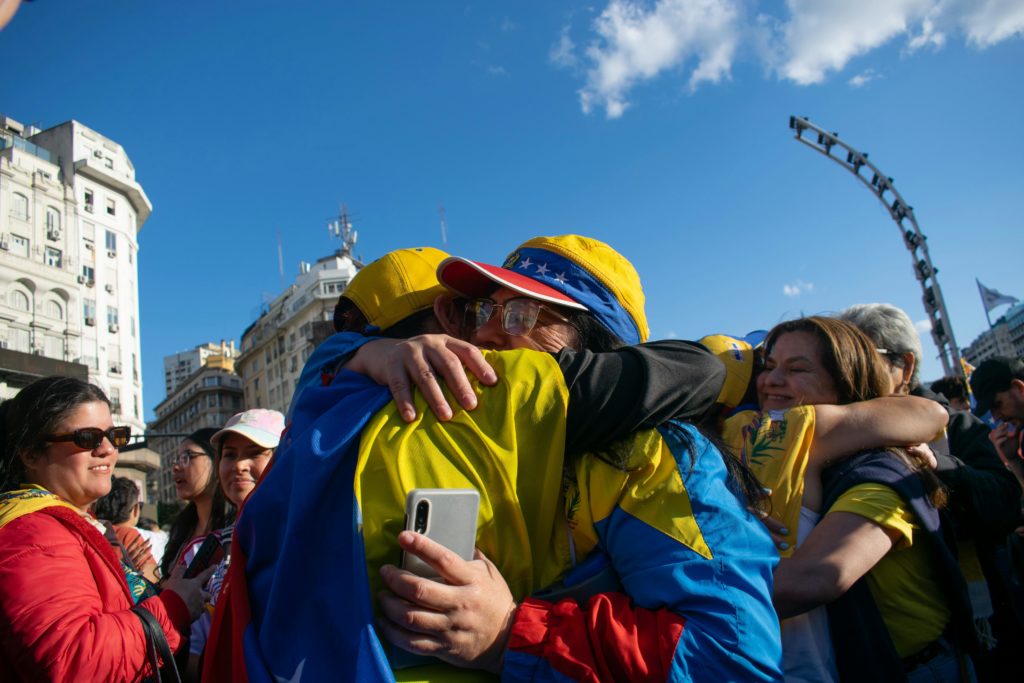
In Caracas, the joy was short-lived after the abduction of President Maduro, as it changed nothing in the Chavista regime’s repressive apparatus.
Venezuela’s repressive state apparatus remains operational despite the capture of former President Nicolás Maduro by members of United States special forces on 3 January, according to independent United Nations investigators.
Since early January, the former Vice-President, Delcy Rodríguez, has been Venezuela’s interim President. “The structures that carried out persecution for years have not been dismantled, and no state policy has been announced to begin that process,” the Independent International Fact-Finding Mission on the Bolivarian Republic of Venezuela said in a statement published this week.
At least 87 new politically motivated detentions since Nicolás Maduro’s capture, according to Human Rights Council investigators in Geneva
The mission was set up to assess alleged human rights violations committed in Venezuela since 2014. Since Mr Maduro’s capture on 3 January, the investigators appointed by the United Nations Human Rights Council in Geneva have received reports of at least 87 new politically motivated detentions, indicating that the practice of silencing all dissent continues under the current government.
“These new cases of human rights violations are a stark reminder that the vast legal and institutional apparatus that facilitated the commission of gross human rights violations and international crimes remains intact,” stressed the independent expert María Eloisa Quintero.
“No sign” of change
Government and military officials previously identified by the UN investigation as responsible for crimes against humanity continue to wield power. “There is no indication that the current authorities intend to bring these individuals to justice,” said Alex Neve, another expert on the mission.
“Venezuela cannot be said to be genuinely on the path to human rights reform as long as this repressive apparatus has not been dismantled,” stressed Ms Quintero.
An amnesty law, aimed at granting immediate clemency to people imprisoned for taking part in political demonstrations or criticising public figures, was passed on 20 February and “welcomed” by the UN panel of experts.
The amnesty is intended to promote peace, democratic coexistence and national reconciliation in the South American country.
According to press reports, some 621 political prisoners were released between Mr Maduro’s capture and the beginning of March.
“Concern” over the amnesty law
Nevertheless, a large number of people remain in detention on political grounds, and “concern persists over the lack of transparency with which this process is being conducted”, said Ms Quintero.
The Mission noted that the legislation had been passed without inclusive public consultation and lacked essential mechanisms for truth, accountability and reparation.
“It is incumbent upon the authorities to provide detailed information on the number and identity of the prisoners and of those released. We call for the immediate release of all remaining political detainees, including dozens of foreign and dual nationals,” the Mission said.
The investigators also expressed concern at the continued mobilisation of armed civilian groups, as well as the ongoing harassment of opposition figures and journalists.
“A crucial moment for victims”
“The international community must keep its attention on Venezuela in order to ensure a transition in the country that leads to genuine institutional reforms and puts an end to the culture of fear,” the Mission said. With more than 8.7 million Venezuelans – including thousands of refugees – now living outside the country, “this is also a crucial moment for victims”, the investigators stressed.
“Today more than ever, it is necessary to advance this investigative work and to identify the modus operandi, actors, institutions and alleged perpetrators associated with these violations,” said Ms Quintero.
Translated from French. The French original prevails.