Naim Qassem, Secretary-General of Lebanon’s Hezbollah.
“We allowed the Lebanese state, through its institutions, to ensure the deployment of the Lebanese army south of the Litani; fifteen months of diplomacy have achieved nothing and Israel has made no commitment. The authorities are making concession after concession, and I urge them to reverse these dangerous decisions.” These words from Hezbollah’s Secretary-General, Naim Qassem, on 24 May, are clear and leave no doubt about the intentions of the Shia movement, which is entrenched in southern Lebanon and acts as a proxy for Iran.
“I call on the Lebanese government to reverse the decisions it has taken aimed at restricting the possession of weapons to the state. The recent American sanctions are intended to exert pressure, reflecting an inability to achieve their objectives. The Lebanese authorities are responsible for the sovereignty and protection of the country. Are they, then, respecting the provisions of the Constitution on this matter?” Disarmament, then, is out of the question. But Naim Qassem goes further. He is prepared to bring down the Lebanese government.
“If this government is incapable of ensuring sovereignty, let it go. The weapons will remain in our hands until the Lebanese state is able to fulfil its duty. Direct negotiations are totally unacceptable. Abandon the direct negotiations, do not give in to the demands of the United States and return to national consensus, because you will get nothing.”
US Secretary of State Marco Rubio responded immediately to Naim Qassem’s remarks:
“We condemn Hezbollah’s reckless call to overthrow the democratically elected Lebanese government. Hezbollah has ignored the Lebanese government’s calls to respect the ceasefire and is seeking to plunge Lebanon back into chaos and destruction.
Hezbollah and Israel want to continue the war
Hezbollah has continued to fire on Israeli positions and to move fighters southwards.
The United States says it stands alongside Lebanon’s legitimate government in its efforts to restore its authority and build a better future for all its citizens. “Hezbollah’s violent threats or its attempts to overthrow the government will not be tolerated. The era in which a terrorist group held an entire country hostage is coming to an end.”
In Damascus, Naim Qassem’s threats against the Lebanese government are being taken very seriously.
Damascus is not prepared to let Beirut once again become a card in Tehran’s hand. Consequently, any domestic adventure could open the door to a wider explosion, in Lebanon and Syria alike, and as far as Iraq, the consequences of which would be difficult to control.
Is Naim Qassem’s statement intended to derail the talks between Iran and the United States and reignite the Middle East? The Iranian regime may not share Naim Qassem’s hardline stance, or it may be more aware of the danger to Hezbollah. Seeking to save its Lebanese proxy, Tehran claims that any agreement would also cover Hezbollah.
The United States, for its part, says that the disarmament of Hezbollah and of Iran’s proxies are matters to be discussed in “secondary negotiations”.
Hezbollah’s disarmament will be achieved through a “parallel strategy” to the efforts of the Lebanese state
Efforts to disarm Hezbollah will be independent of any US-Iranian nuclear deal. It is clear that the United States wants to give Israel a free hand to eliminate the security threat posed by Hezbollah.
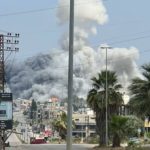
Israeli Prime Minister Benjamin Netanyahu and Naim Qassem both want to continue the fighting, regardless of the disastrous consequences for Lebanon. Emboldened by the green light given by Donald Trump to annihilate Hezbollah, Netanyahu ordered the launch of Operation “Arrows of Fire”, announcing that it would be the largest military operation against the Lebanese Shia militia. The operation will target commanders and influential figures in a series of continuous strikes lasting several days. The operation will be powerful and its stated aim is to crush Hezbollah once and for all. The army has also begun mobilising reservists to step up its operations in the Land of the Cedars.
Translated from French. The French original prevails.