SMG International. A view of Shanghai at night.
From transport networks powered by artificial intelligence (AI) to digital twins and parks designed to withstand flooding, cities are embracing technology on an unprecedented scale. But as innovation accelerates, experts warn that inclusion, trust and security will determine who really benefits.
At a major urban planning exhibition in Baku, visitors stopped in front of huge digital screens showing flood simulations, metro management systems and virtual replicas of entire neighbourhoods.
Across the exhibition space, cities presented a vision of urban life shaped by artificial intelligence, digital infrastructure and real-time data — a glimpse of what many governments now describe as the “city of the future”.
The example of Shanghai
Few cities embody smart-city ambitions as clearly as Shanghai. At the China pavilion at the thirteenth session of the World Urban Forum in Baku, officials showed how the metropolis is drawing on big data and artificial intelligence to develop what it describes as a “unified single-network management” platform — a vast system integrating transport, infrastructure, emergency response and public services.
The city also says it wants to bridge the digital divide. Through its “One-stop Government Service” portal, residents can access more than 3,500 public services online.
Shanghai’s transport network offers another glimpse of this city of the future. The metro — one of the largest in the world, with more than 800 kilometres of lines and over 400 stations — relies on AI-powered monitoring systems, 5G communications and weather-related predictive technologies to improve safety and limit disruption.
Several lines already run fully automated, driverless trains. AI systems monitor the tunnels to detect cracks, water seepage and structural weaknesses, while vast flows of passenger data are analysed in real time to anticipate disruption across the entire network.
Perhaps one of the most emblematic projects is the Lingang Starry Sky Sponge Park. Covering 54 hectares, it combines a space-inspired landscape with advanced flood-management infrastructure. Permeable surfaces, underground filtration systems and smart drainage enable the park to absorb, purify and reuse up to 15,000 cubic metres of rainwater a day.
Putting people at the centre
UN-Habitat, which is organising the forum alongside Azerbaijan, warns that cities today face multiple crises — housing shortages, the spread of informal settlements, climate shocks and deepening inequality.
Its Executive Director, Anacláudia Rossbach, believes new technologies can play a key role in tackling these challenges.
“We really need to make the most of the technologies we have,” she said, pointing out that cities remain on the front line of climate change, conflict and rapid urbanisation. But, she stressed, technology alone will not be enough.
“The most important aspect of our work is that smart cities must be truly people-centred,” she said, adding that human rights, inclusion and equity must remain at the heart of the digital transformation.
She also warned of the risks of digital exclusion. During the COVID-19 pandemic, many residents of informal settlements were cut off from education, essential services and remote working for lack of an internet connection and access to digital tools.
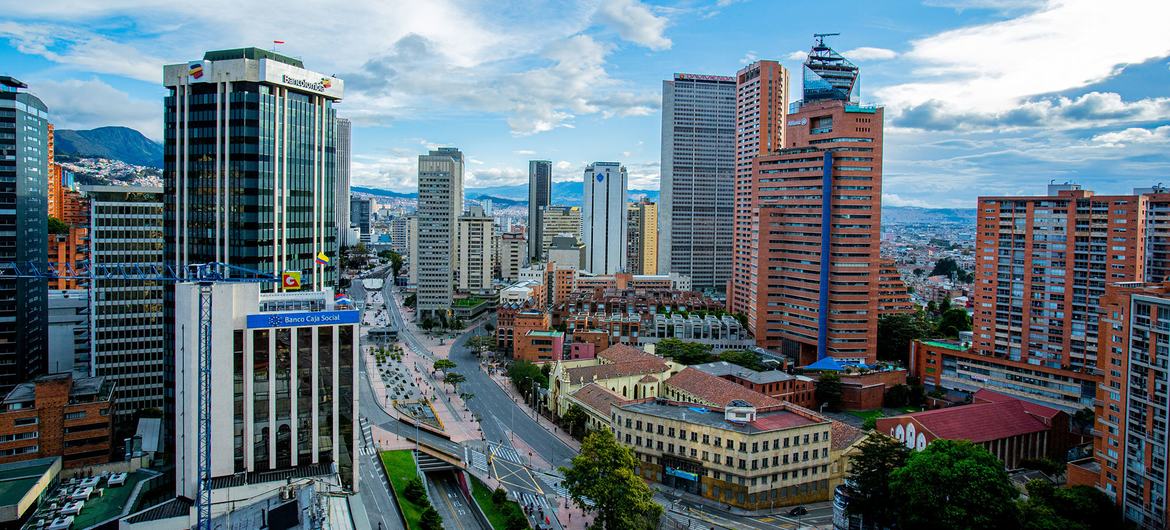
© Bogotá City Hall / Cristia Bogotá, Colombia, is recognised as a leader in smart city initiatives, with a focus on digital transformation, mobility and urban sustainability.
Who really benefits from smart cities?
Even as cities accelerate their adoption of artificial intelligence and digital infrastructure, some researchers warn against a vision too focused on the technology itself.
“Most people see a smart city as primarily a technological project,” explained Gynna Millan, a Colombian architect and urban planning researcher.
In her view, technology can either empower people or become “a tool of control”, depending on how it is used.
For many cities in the Global South – particularly in informal settlements that often lack basic infrastructure or reliable internet access – the real question is not only whether these cutting-edge technologies exist, she stressed, but whether they make a tangible difference to residents’ daily lives.
AI moves into city management
Yining Zhao, of the International Telecommunication Union, outlined five major technological trends now shaping urban life:
- “world models”, AI systems capable of simulating how cities and infrastructure behave in real-world conditions;
- “agentic AI”, based on autonomous digital agents capable of planning and acting independently;
- the integration of AI into the physical world, through robots, drones and intelligent machines;
- immersive virtual environments for work, learning and collaboration;
- “digital twins”, virtual replicas of cities that allow scenarios to be tested in real time.
Moscow already operates one of the largest digital twin systems in the world. Updated twice a year using aerial photography, the system comprises more than 9,000 analytical layers used to model traffic, infrastructure and future development projects.
The hidden risks of the connected city
But as cities become more connected, they also become more vulnerable.
In Azerbaijan, the authorities say that cybersecurity now plays a central role in urban development, alongside the roll-out of smart technologies.
“Cyberattacks are not just a technical problem,” Aytaj Khalafli told us. In her view, cybersecurity must be built into urbanisation “from the foundations”.
Her agency protects critical infrastructure, monitors threats and carries out penetration tests on government systems.
“If an attack occurs, chaos can quickly take hold in the country,” warned Ms Khalafli, noting that transport systems have already been targeted in cyber incidents.
Throughout the discussions in Baku, UN experts stressed that trust, transparency and security must advance at the same pace as innovation.
“Today, trust is no longer a luxury, it is infrastructure,” said Nicholas You.
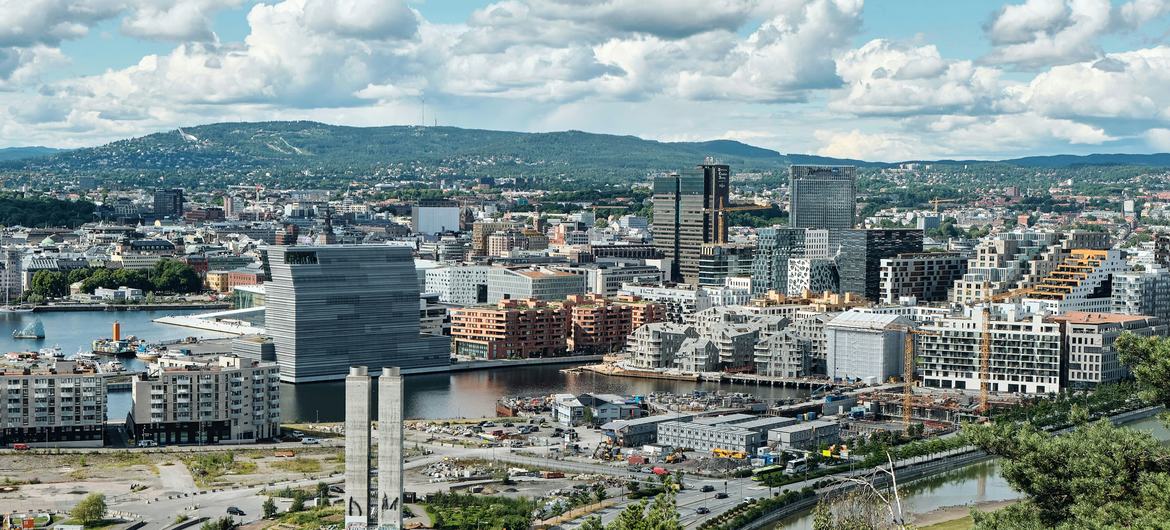
© Unsplash/Oscar Daniel Rangel Norway’s cities, such as its capital Oslo, are largely powered by renewable energy.
Smart, but for whose benefit?
For UN officials, the future of smart cities will not be determined by those with the largest data centres, the most sensors or the most powerful AI systems.
“Smart does not always mean digital, or even technological. Sometimes it is simply a matter of good planning, clear priorities and an understanding of how infrastructure is interconnected,” stressed Dmitry Maryasin of the United Nations Economic Commission for Europe.
By way of example, he cited urban greening, the conversion of motorways into public spaces and the development of “active mobility”, which gives priority to pedestrians and cyclists.
Ultimately, the real question may not be how smart cities can become, but rather whose interests they will serve.
Translated from French. The French original prevails.