Almost six months after the political crisis triggered by the martial law imposed by Yoon Suk Yeol on 3 December 2024, South Koreans return to the polls on Tuesday 3 June to elect their new president.
On 4 April 2025, South Korea’s Constitutional Court upheld the impeachment of the former conservative president Yoon Suk Yeol. This historic event had galvanised South Koreans, who took to the streets in their masses to show their desire to see Yoon disappear from the political landscape. The weeks that followed were devoted to the primaries, the selection of the candidates standing in the snap election. The Democratic Party, “Minju”, campaigned throughout April in Seoul to promote its candidates, starting the day after the Constitutional Court’s ruling.
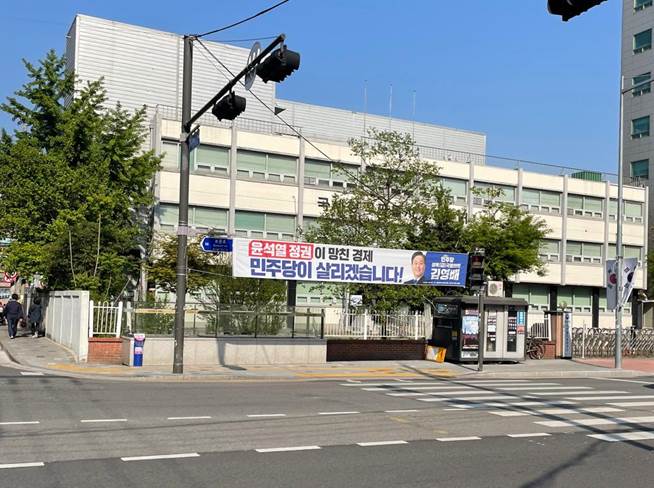
Photo: campaign poster for the Minju Democratic Party in the streets of Seoul following the Constitutional Court’s confirmation of Yoon Suk Yeol’s impeachment. Source: Alice Jourdan, Seoul, April 2025.
Nevertheless, rallies in support of the impeached president were held from time to time, accompanied by placards bearing the slogan “YOON AGAIN”, directly inspired by Donald Trump’s “Make America Great Again”.
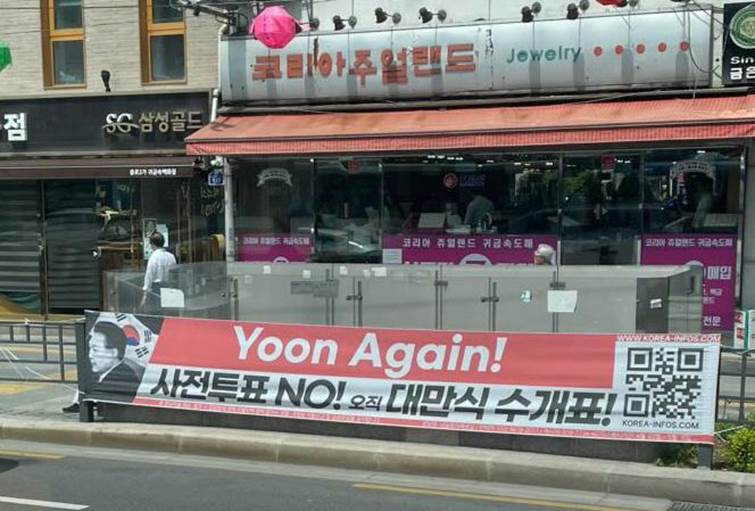
Photo: Banner in support of Yoon Suk Yeol, “Yoon Again”, the slogan of the former president’s supporters, calling for his return and challenging the Constitutional Court’s ruling. Source: Alice Jourdan, Seoul, April 2025.
Lee Jae Myung of the Democratic Party (Minju) is the frontrunner in this presidential election, followed by Kim Moon Soo of the conservative People Power Party (PPP), the party of former president Yoon Suk Yeol, with Lee Jun Seok of the centrist Reform Party in third place.
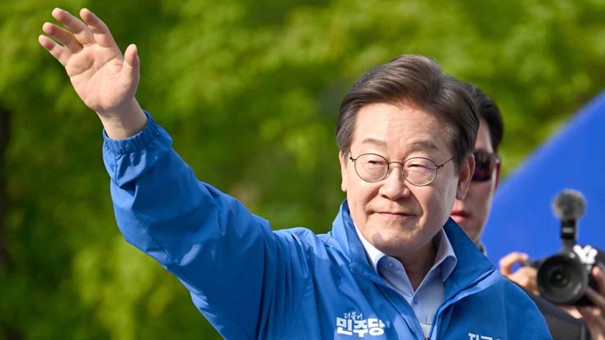
Photo: Lee Jae Myung, Democratic candidate. Photo by Mayumi Tsumita. Source: https://asia.nikkei.com/Spotlight/South-Korea-election/Lee-Jae-myung-returns-to-political-hometown-for-final-election-push
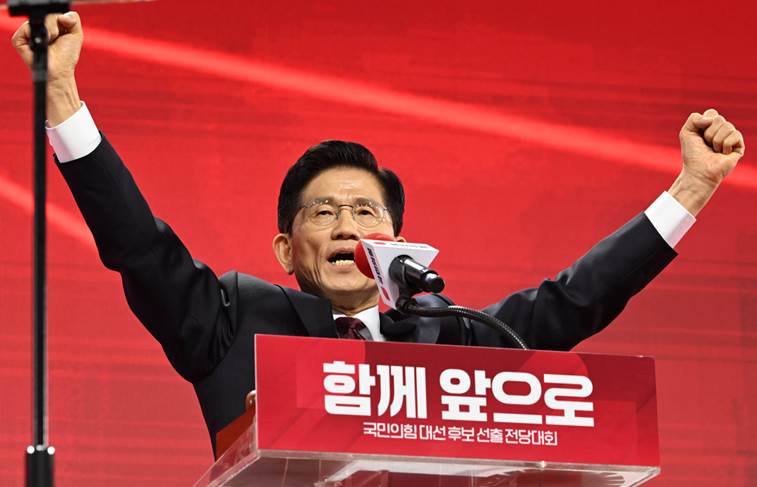
Photo: Kim Moon Soo, candidate of the conservative People Power Party. Source: National Assembly pool via Newsis, https://www.koreaherald.com/article/10484594
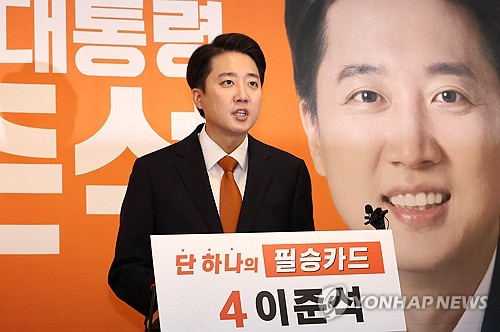
Photo: Lee Jun Seok, candidate of the centrist Reform Party. Source: Yonhap News Agency.
These historic elections are of paramount importance. They mark the end of a major political crisis, and the outcome of the vote will determine the political course to be followed over the next four years. Inter-Korean relations, as well as relations with China and the United States, hinge on the result of these elections. Moon Jae In, Yoon Suk Yeol’s predecessor and a member of the Minju party, took a fairly favourable stance towards rapprochement with North Korea and the easing of tensions. When Yoon Suk Yeol came to power, this trend was reversed and relations with North Korea rapidly deteriorated.
Relations with the United States are also strained because of Trump’s trade policies, which have soured ties between the two countries even though they are bound by strategic agreements, military ones in particular. The United States has a military presence in South Korea and provides a nuclear umbrella against the North Korean threat.
These elections will be decisive for the balance of power in the region at a time of tensions in East Asia, with Korea caught in a vice between China, North Korea and the United States.
Translated from French. The French original prevails.