Geneva, 19 March 2025 – 2024 will go down as a worrying turning point in the global climate crisis, having crossed the symbolic threshold of 1.5°C above pre-industrial levels for the first time, the World Meteorological Organization (WMO) revealed today in its new annual report.
The global mean temperature in 2024 stood at 1.5°C above the 1850-1900 average, confirming an alarming trend: the past ten years (2015-2024) now all rank among the ten warmest years on record.
The WMO report highlights several worrying findings that demonstrate the dramatic acceleration of climate change:
- Record greenhouse gas concentrations: the atmospheric concentration of carbon dioxide reached in 2023 a level unprecedented for at least 800,000 years, at 420 ppm, or 151% of the pre-industrial level.
- Accelerating sea-level rise: the rate at which the oceans are rising has accelerated considerably, now reaching 4.7 mm a year, compared with 2.1 mm a year when satellite observations began in 1993.
- Dramatic glacier melt: the past three years (2022-2024) have seen the fastest and largest loss of glacier mass ever observed.
- Drastic shrinking of polar ice: minimum sea ice extent in both the Arctic and the Antarctic has reached historically low levels, with lasting impacts on ecosystems and the global climate.
These phenomena, amplified by the El Niño climate phenomenon, represent climatic transformations that will be irreversible for hundreds or even thousands of years, underlining the immediate urgency of acting to contain the consequences to come.
The year 2024 was marked by a series of particularly destructive extreme weather events: major hurricanes Helene and Milton in the United States, deadly floods in South-East Asia, notably in Viet Nam and the Philippines, and persistent droughts that worsened food crises in several regions of the world.
These extreme events triggered population displacement on a scale unseen since 2008, caused colossal economic damage and increased the pressure on health systems and access to essential resources.
The WMO Secretary-General, Celeste Saulo, is calling for early warning systems to be strengthened immediately. “We must invest more in weather and climate services to protect our communities and reduce the human and economic losses caused by these disasters,” she insists.
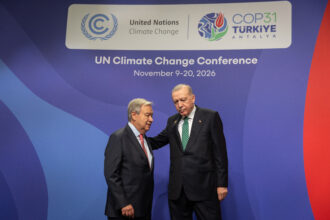
The United Nations Secretary-General, António Guterres, for his part urges world leaders to respond without delay: “Limiting global warming to 1.5°C is still possible, but only with ambitious, immediate and coordinated global action.”
The WMO report, the product of an international collaboration bringing together numerous experts, is a wake-up call in the face of the climate emergency. It comes just ahead of World Meteorological Day on 23 March, which aims to raise awareness among governments and civil society of the crucial importance of acting without delay.
Translated from French. The French original prevails.