Source: UN
As local elections make halting progress, the head of the United Nations political mission in Libya is calling for collective action to bring to an end almost 15 years of post-Gaddafi transition.
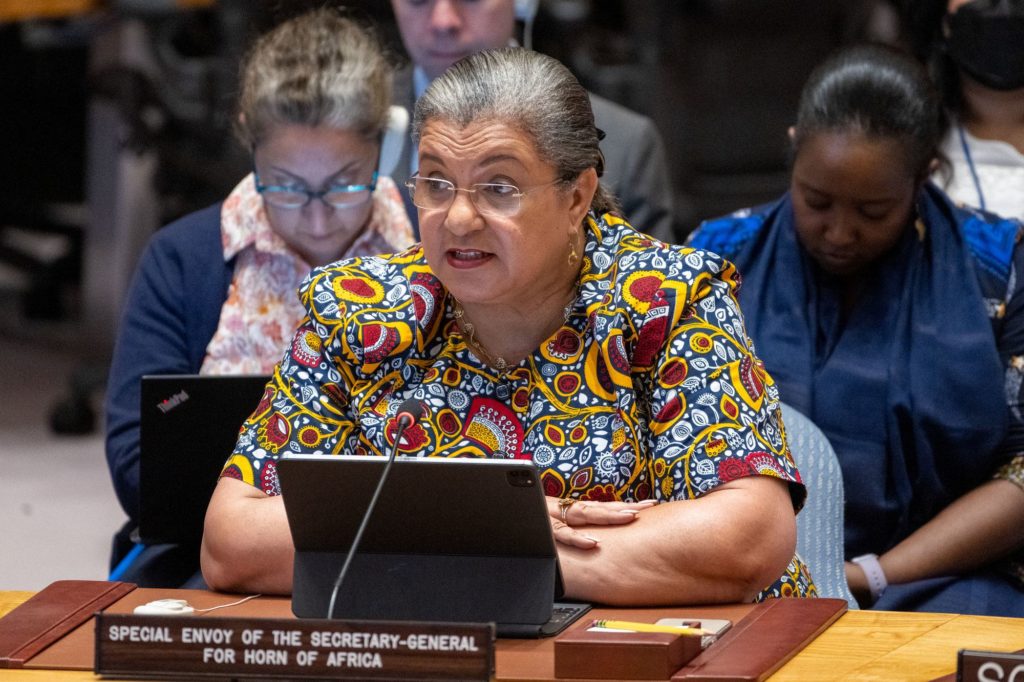
Since the fall of Muammar Gaddafi’s regime in 2011, Libya has struggled to emerge from a multidimensional crisis. It is a situation that the UN Secretary-General’s Special Representative, Hanna Serwaa Tetteh, sums up as follows: “Inaction will cost more than change.”
Since taking office in February, Ms Tetteh has held wide-ranging consultations across the country. While views differ on the way forward, a consensus is emerging on one point: “Everyone recognises the need to hold elections”, she told a meeting of the UN Security Council on Thursday. A sensitive question remains to be settled: should a constitutional framework be established first, or should the process go ahead without delay?
At the heart of the political deadlock lies a fierce struggle for power, fuelled by institutional fragmentation and intense competition for economic resources. The absence of a unified national budget is worsening the imbalances: persistent inflation, a shortage of foreign currency and the depreciation of the Libyan dinar.
Tensions over the management of public resources are mounting, particularly following a recent currency devaluation. Several local voices are calling for an independent audit to be entrusted to one of the major international firms. For its part, the United Nations Support Mission in Libya (UNSMIL) is working with experts to identify financial governance reforms.
There are nonetheless some signs of progress. Ms Tetteh welcomed “the halt, since 1 March, of crude-oil-for-fuel swaps by the National Oil Corporation, a step towards greater transparency”, while calling for a fairer distribution of revenue and tighter oversight of public spending.
As the second phase of the municipal elections approaches in 62 localities, more than 570,000 voters have already registered, nearly a third of them women. For Hanna Tetteh, this is an encouraging sign: “These elections are crucial for establishing democratic governance at local level.”
But the reality on the ground is jeopardising this momentum. In Harawa, the winners of the vote were replaced by de facto authorities. Elsewhere, the redrawing of constituency boundaries in the middle of the process prompted accusations of interference. These failings undermine the credibility of the vote and underline the urgent need to strengthen institutions.
Despite the 2020 ceasefire agreement, the security situation remains tense. In Tripoli, recent mobilisations by armed groups from the west are fuelling fears of a return to violence. In the south, in Qatroun, deadly clashes broke out following a reorganisation of forces affiliated with the Libyan National Army.
UNSMIL is seeking to create the conditions for a dialogue on security by facilitating the establishment of joint border centres. But, the Ghanaian diplomat warns: “Stability will remain illusory as long as there is no political will to unify the security forces around a common vision.”
Another source of concern is human rights violations, which are multiplying with impunity. “One of the most tragic consequences of the institutional division is that some armed groups continue to commit abuses without being held to account”, Ms Tetteh said.
Arbitrary arrests, unlawful detention and violence against migrants are commonplace. The growing stigmatisation of foreigners, fuelled by hate speech, has led to mass arrests, deaths and the suspension of humanitarian operations. “The targeting of NGOs, migrants, refugees and asylum seekers must stop immediately”, she insisted.
Against this backdrop, Ms Tetteh is calling for the swift adoption of the law on protecting women from violence, which has already been approved in committee but is still awaiting a parliamentary vote. At the same time, UNSMIL is supporting, together with the African Union, a reconciliation process centred on the rights of victims.
The future of Libya’s transition now rests on the ability of the actors involved to build an inclusive consensus. “There must be the political will to compromise in order to draw up a common roadmap capable of leading Libya out of the impasse”, Ms Tetteh said.
Achieving this will depend crucially on the involvement of regional powers. Following a diplomatic tour of Algeria, Egypt, Tunisia and Turkey, the diplomat is calling for concerted international action: “Despite diverging interests, the international community must work around a common plan.”
In a Libya torn apart by armed rivalries, political paralysis and social exhaustion, the status quo is no longer a viable option.
Translated from French. The French original prevails.