In his latest book, “Maroc, la force de la stabilité”, published by Le Cherche Midi, the geopolitical analyst Sébastien Boussois, a specialist in the Middle East and the Arab world, looks ahead to the World Cup quarter-final between France and Morocco by examining the long-term strategy Rabat has put in place to extend the reach of its football beyond its borders. While the sport has become a genuine instrument of national cohesion, it is also a strategic lever for the Sharifian Kingdom.
A few hours before the quarter-final between France and Morocco, passions will naturally be focused on the sporting result. Yet behind the ninety minutes of play lies a reality that is more interesting still. For some fifteen years, the Kingdom has turned football into a genuine instrument of power. Far from being limited to the performances of the Atlas Lions, this policy forms part of a long-term strategy in which sport contributes as much to national cohesion as to the country’s international standing.
Football as public policy
Morocco understood before many others that football was no longer simply a popular spectacle. It has become a lever of public policy. In a country where young people make up a substantial share of the population, investing in infrastructure, training academies, women’s football and national competitions also means investing in social cohesion, regional development and a sense of national belonging.
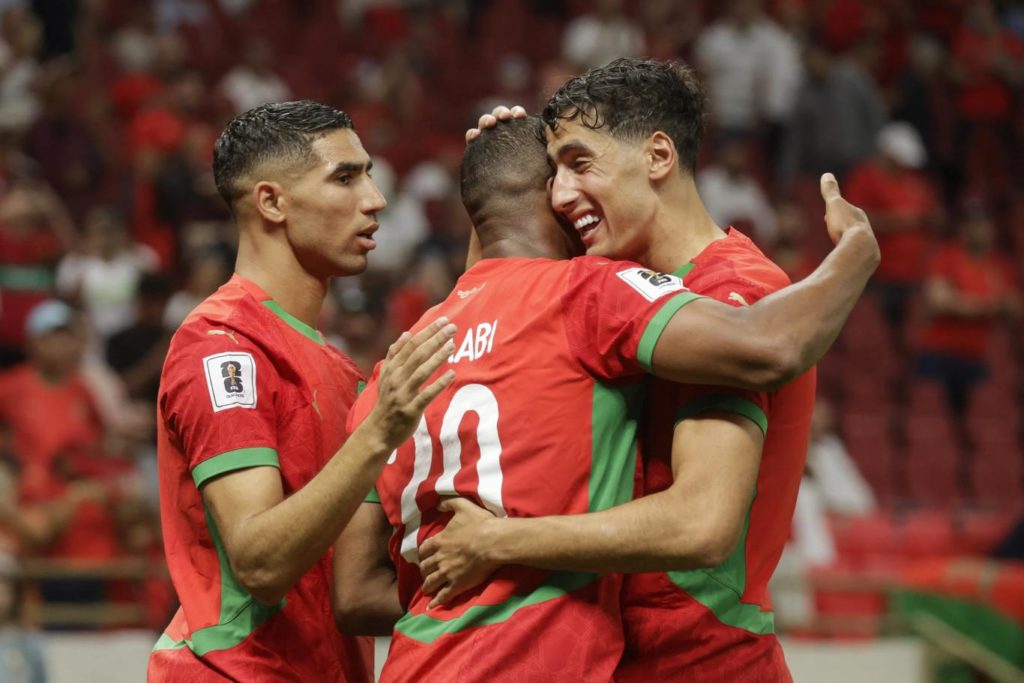
The 2022 World Cup in Qatar dramatically accelerated this momentum. By reaching the semi-finals, the Atlas Lions gave the Kingdom a moment of unity rarely seen. The celebrations in Rabat, Casablanca, Tangier and Laayoune found an immediate echo among the Moroccan diaspora, from Paris to Brussels and from Montreal to Amsterdam. Football has thus become a remarkable bridge between Morocco and its millions of nationals living abroad. Few public policies manage to forge such a powerful sense of belonging between a state and its diaspora.
An unabashed strategy of power
But Rabat did not stop at this national dimension. The Kingdom has fully grasped that football is now an instrument of international influence. In a world where image counts as much as economic or military might, hosting major events, nurturing talent and boasting world-class infrastructure become a powerful source of credibility. For states that invest in sport, hosting a World Cup is today one of the strongest demonstrations of soft power, on a par with the Olympic Games.
As I show in Maroc, la force de la stabilité, published by Cherche Midi, this success rests on remarkable strategic continuity. For more than fifteen years, investment has never been called into question as governments have come and gone. It reflects a vision championed at the highest level of the state and implemented by the Royal Moroccan Football Federation.
The finest symbol of this ambition is the Mohammed VI Football Complex, located in Maâmora, near Rabat. Inaugurated in December 2019 by King Mohammed VI after several years of construction, it is home to the national teams, the headquarters of the Royal Moroccan Football Federation and FIFA’s Africa office. Far more than a state-of-the-art training centre, it has become the heart of a strategy aimed at making Morocco a continental benchmark in training, organisation and sporting excellence.
Sport in the service of the Kingdom’s global standing
Since then, the 2030 World Cup, which Morocco will co-host with Spain and Portugal, extends this long-term vision. For Rabat, these competitions go far beyond sport. They are demonstrations of stability, professionalism and organisational capacity. They also reinforce the Kingdom’s position as an essential sporting hub between Africa, Europe and the Arab world.
The effects of this strategy now extend far beyond the football pitch. It is boosting the country’s economic appeal, stimulating tourism, fostering partnerships with African federations and enhancing the Kingdom’s diplomatic standing. Football has thus become a natural extension of Moroccan foreign policy, alongside economic, academic and cultural cooperation. In a world where influence is built as much through image as through power, Morocco has understood that the most important victories are not won on the pitch alone.
Translated from French. The French original prevails.