On 22 April 2025, the Baisaran Valley, in the Pahalgam area of Indian-administered Jammu and Kashmir, was struck by an attack of unprecedented violence. Gunmen opened fire on a group of tourists, killing at least 28 people. The tragedy immediately reignited tensions between India and Pakistan, against a backdrop of a long-standing historical dispute and growing instability in this strategic region.
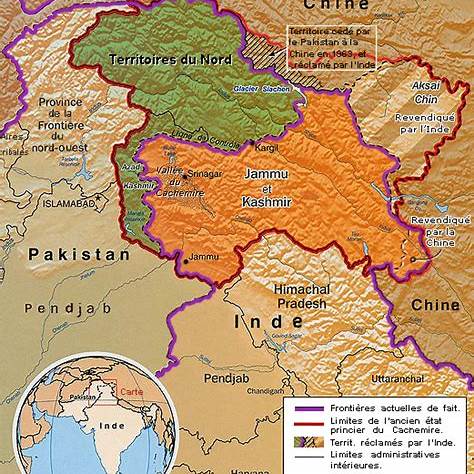
On 22 April 2025, the peaceful Baisaran Valley, near Pahalgam in Indian-administered Jammu and Kashmir, was the scene of a terrorist attack of a brutality not seen in years. Five gunmen, dressed in military fatigues and armed with assault rifles, opened fire on a group of tourists, killing at least 28 people and wounding more than 20 others. The attackers specifically targeted non-Muslim men, checking their religion before executing them. The Islamist group The Resistance Front, affiliated with Lashkar-e-Taiba, claimed responsibility for the attack, citing its opposition to demographic changes in the region since the revocation of Jammu and Kashmir’s special status in 2019.
The attack sent shockwaves through India and around the world. Prime Minister Narendra Modi cut short his visit to Saudi Arabia to return to India and vowed to bring those responsible to justice. Intensive search operations were launched to hunt down the attackers, and tighter security measures were put in place across the region.
India swiftly accused Pakistan of backing the terrorists involved in the attack, albeit without making any evidence public. In response, India suspended the Indus Waters Treaty, a crucial agreement governing the sharing of water resources between the two countries, and restricted visas for Pakistani nationals. Pakistan denied any involvement but retaliated by closing its airspace to Indian airlines, suspending bilateral trade and warning that any interference with its rights to the waters of the Indus would be considered an act of war.
The attack has also had repercussions for the local population of Kashmir. Kashmiris have reported suffering reprisals and discrimination in other parts of India, heightening communal tensions. The tourism sector, vital to the local economy, has been dealt a heavy blow, with numerous trip cancellations and a significant fall in bookings.
The Pahalgam attack comes against a backdrop of persistent tensions between India and Pakistan, two nuclear powers that have already fought several armed conflicts since Partition in 1947. India’s revocation of the special status of Jammu and Kashmir in 2019 heightened tensions, notably by allowing non-residents to acquire land in the region, which some see as an attempt to alter the local demographic make-up.
The attack in Pahalgam on 22 April marks a major escalation in the Kashmir conflict, with far-reaching implications for regional security and relations between India and Pakistan. As the two countries trade retaliatory measures, the international community is calling for restraint and a resumption of dialogue to avert a fresh conflagration in an already unstable region.
Translated from French. The French original prevails.