In the heart of Geneva, the Palais des Nations, the European headquarters of the United Nations, is undergoing a sweeping transformation. Launched in 2017, the renovation of this historic symbol of global diplomacy was originally due to be completed in 2024. But the project, unprecedented in scale, has fallen behind schedule and seen its costs soar. Caught between necessary modernisation, budgetary constraints and logistical challenges, this overhaul is stirring as much hope as concern.
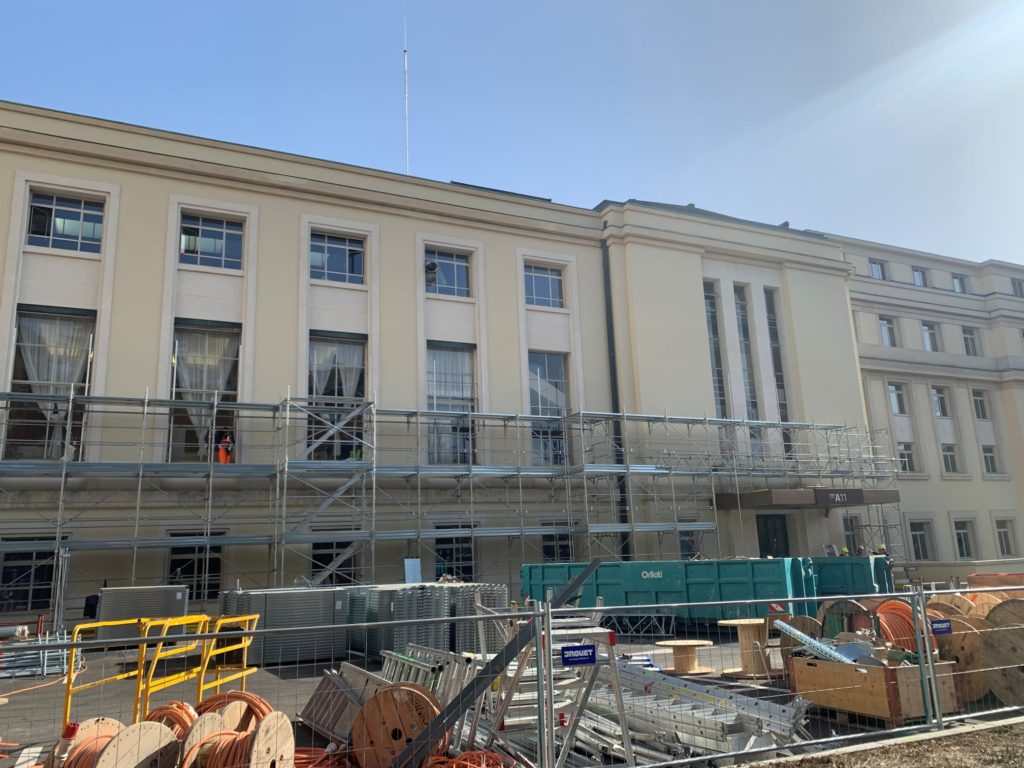
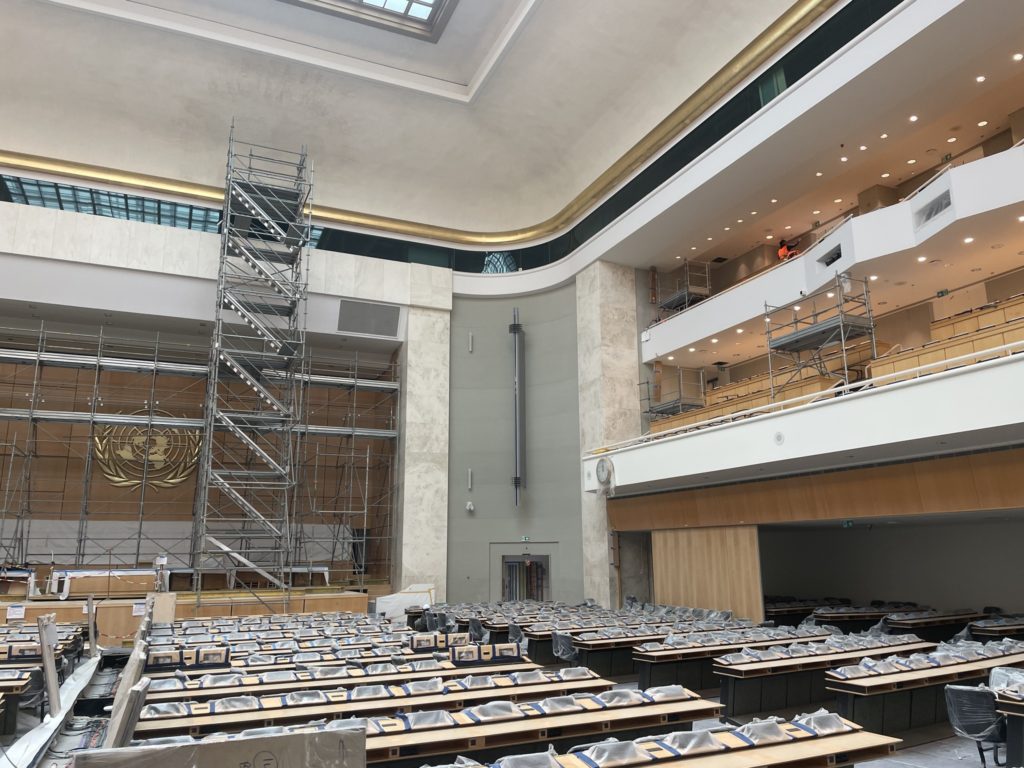
Designed in the 1930s to house the League of Nations, the forerunner of the UN, the Palais des Nations was no longer fit for the demands of the 21st century. Its ageing infrastructure – ventilation, heating, electrics – needed a complete overhaul. The “Strategic Heritage Plan” (SHP) was therefore launched with a twofold aim: to modernise the building while preserving its architectural heritage. The ambition was also environmental: the UN has pledged to drastically reduce its carbon footprint and to make the Palais des Nations a model of sustainability.
But behind these noble intentions, the project has proved more complex than expected. Initially estimated at 837 million Swiss francs (around 880 million euros), the budget has been revised upwards and now stands at almost one billion Swiss francs. The increase is due to several factors: the health crisis, which disrupted the works and lengthened timescales, soaring material costs, and the need to adapt the renovations to discoveries made along the way. Restoring a listed building while bringing it into line with modern safety and accessibility standards has turned out to be a colossal challenge.
According to a report by the Fifth Committee of the United Nations, published in 2019, an initial budget overrun of 33 million Swiss francs had already been flagged, bringing the total cost to around 870 million Swiss francs. But with further delays and rising construction costs, some recent estimates suggest that the final bill could exceed one billion Swiss francs. “We must strike a balance between the necessary modernisation and keeping spending under control,” a UN spokesperson said, acknowledging the project’s difficulties.
The delays are mounting, and the new spaces are not expected to be fully handed over before 2026, or even 2027. The setback directly affects the officials and diplomats working on site, who are forced to juggle temporary buildings and makeshift meeting rooms. For Geneva, the world capital of multilateral governance, this never-ending project raises concerns about the UN’s ability to maintain its operational effectiveness.
The situation is reminiscent of the renovation of the United Nations Headquarters in New York, which also saw costs soar, rising from $1.2 billion to more than $2 billion over the years. It is a finding that is fuelling the debate over the financial management of major UN projects.
Despite these difficulties, the renovated Palais des Nations promises to become a model of innovation and energy efficiency. Once completed, it is expected to meet the strictest sustainable development standards, with solar panels, an optimised heating system and more efficient waste management. But as deadlines are pushed back and costs rise, one question remains: will the game be worth the candle?
Translated from French. The French original prevails.