The UN Resident Coordinator in Cuba, Francisco Pichón, speaks to civil defence officials in Santiago de Cuba. Photo: UN Cuba
The UN warned this week of a possible humanitarian “collapse” in Cuba, following Washington’s attempt to block oil supplies bound for the island. The United States has threatened to impose tariffs on any country supplying oil to Cuba, piling further pressure on the island, which has already been under a trade embargo for decades and was hit by the capture of Venezuelan leader Nicolás Maduro by the United States last month.
Venezuela was Havana’s main oil supplier, but Washington has stepped up pressure on Cuba in recent weeks, notably through an executive order issued at the end of January threatening to impose additional tariffs on countries that sell oil to Cuba, including Mexico.
“I can tell you that the Secretary-General is extremely concerned about the humanitarian situation in Cuba, which will worsen, if not collapse, if its oil needs are not met,” UN spokesperson Stéphane Dujarric said this week.
The UN chief recalled that the United Nations General Assembly has been calling for the US embargo to be lifted for more than thirty years: “The Secretary-General urges all parties to pursue dialogue and to respect international law.”
Fuel crisis
The fuel crisis has driven up food prices for Cubans and caused severe fuel shortages and major power cuts across the country. “What we are seeing at the moment, especially after the recent events in Venezuela, is a mix of emotions,” said Francisco Pichon, the most senior United Nations official in Cuba, describing “a mix of resilience, but also of grief, sadness and indignation, and a certain anxiety about how the regional situation will develop”. Thirty-two Cubans were killed in Venezuela on 3 January during the US operation to capture Mr Maduro.
© Photo UNICEF
UN humanitarian action in Cuba
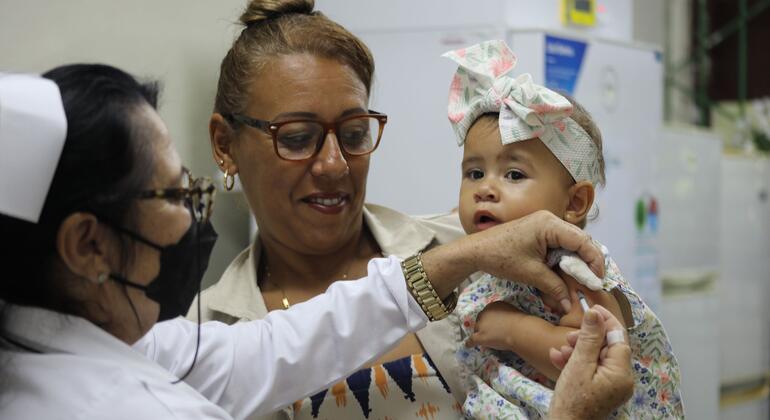
The UN team on the ground said the vast majority of Cubans are affected by rolling power cuts, at a time when the number of people in vulnerable situations has risen considerably.
Even before the latest regional developments, the UN was working with the Cuban government to develop ideas and support development, including ways of diversifying the Cuban economy.
“The energy transition is a major priority because of reduced access to fuel and infrastructure difficulties,” said Mr Pichon, stressing that investment needs remain an obstacle. Urgent changes are needed.
“The past two years have been particularly difficult,” he added, stressing that urgent changes are needed to sustain the Cuban social model “amid severe economic, financial and trade sanctions”.
Cuba’s economy, which has always relied on tourism as its main source of hard currency, was severely disrupted by the COVID-19 pandemic and remains well below 2018 levels.
As the Cuban economy deteriorates, the country’s social indicators – such as universal health coverage, education for all and extensive social safety nets including subsidised healthcare and food rations – are coming under severe strain.
“All of this is taking place against the backdrop of the US embargo against Cuba,” Mr Pichon said, noting that Cuba has also been put back on the United States’ list of State Sponsors of Terrorism.
“From the United Nations’ point of view, our guiding principles remain unchanged: to be present, to support, and to act on the basis of cooperation, in keeping with international law and the values of the United Nations.”
Hurricane Melissa
Hurricane Melissa struck Cuba as a Category 3 storm on 29 October. For the first time in the country, anticipatory action was taken thanks to the release of funds from the United Nations Central Emergency Response Fund (CERF), making it possible to pre-position supplies such as water purification units, food, hygiene kits, generators, medicines, medical equipment and shelter.
The United Nations has launched a $74 million action plan to support national recovery and assist more than 2.2 million people affected by the destruction caused by the storm. To date, some $23 million has been mobilised, targeting the one million most vulnerable people.
“Not a single life was lost as a direct result of the hurricane,” Mr Pichon stressed. This is due in particular to the strong capabilities of Cuba’s civil defence, although reconstruction needs remain enormous, notably the rebuilding of tens of thousands of homes.
Cooperation Framework
The United Nations’ long-term engagement in Cuba is underpinned by a Cooperation Framework aligned with Cuba’s National Development Plan and the 2030 Agenda for Sustainable Development. The framework rests on four key pillars:
- Institutional : The UN has supported the drafting of some thirty laws following the 2019 constitutional reform, promoting equity, inclusion and the rights of women, children, LGBTQ+ people, people of African descent and persons with disabilities.
- Economic : The focus is on productive transformation and access to finance, against a backdrop of ongoing sanctions and Cuba’s inclusion on the US list of State Sponsors of Terrorism. The Joint SDG Fund is being used to help the country finance projects linked to the Sustainable Development Goals.
- Environmental : Disaster risk management and climate resilience are paramount, particularly given Cuba’s exposure to hurricanes such as Melissa. UN support for prevention and response aims to protect lives and livelihoods.
- Social: Social protection systems and addressing specific needs are central concerns, with the aim of leaving no one behind, including vulnerable groups such as people living with HIV/AIDS, the LGBTI community, children, adolescents, women and older people, who make up a significant share of the population in an ageing society.
Translated from French. The French original prevails.