
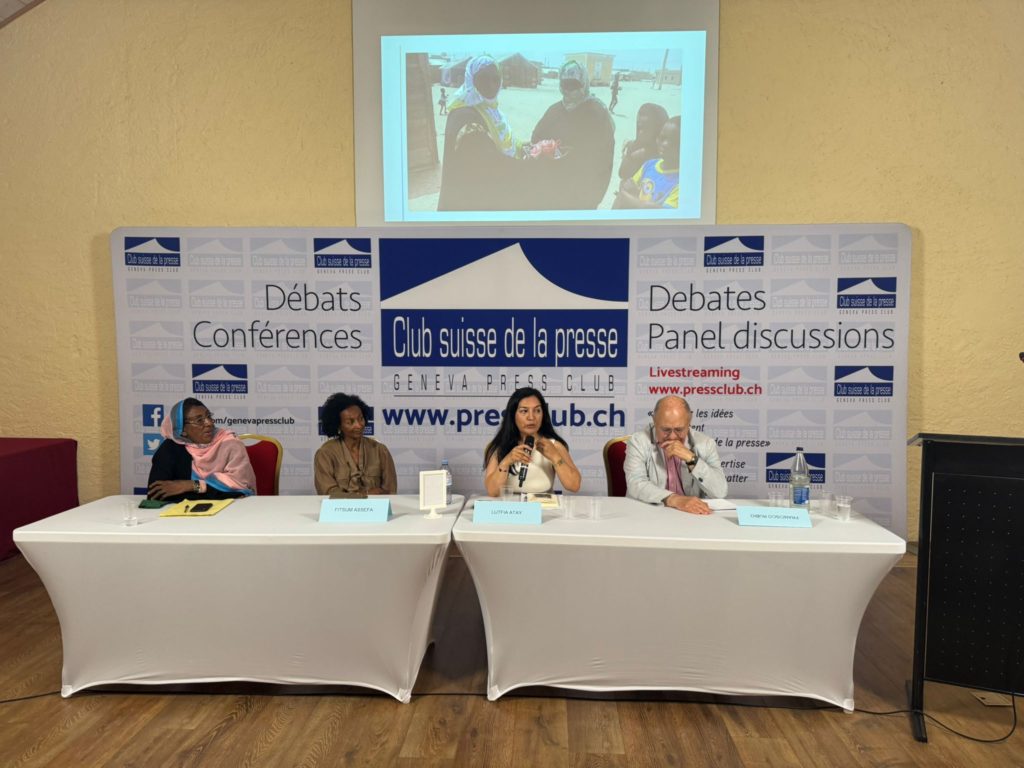
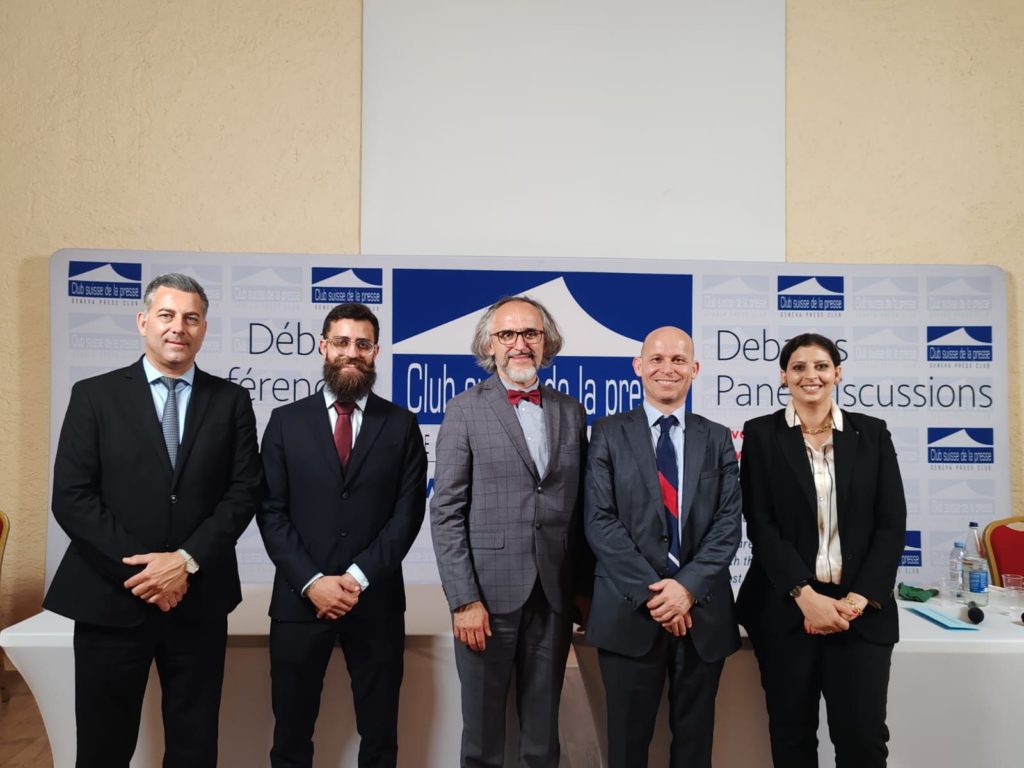
On 30 June, a symposium organised by the NGO MIM was held at the Geneva Press Club on an issue that is still too often relegated to the margins of humanitarian action: mental health. Entitled “Mental Health in Humanitarian Action”, the event brought together experts, field practitioners and human rights defenders to shed light on the psychological impact of armed conflict, particularly on women. In this context, Imen Chaanbi’s address cast a powerful light on the invisible trauma and the journeys of resilience of women in Mali, Libya and Sudan.
Healing invisible scars: mental health and women’s resilience in conflict zone
The cases of Mali, Libya and Sudan
“When the guns fall silent, women’s wounds go on bleeding in silence.”
In war zones, the stories often revolve around the dead, cities in ruins and front lines. Yet beyond the roar of the bombs, another form of destruction takes hold, quieter but just as devastating: the destruction of minds. Mental trauma, often invisible, haunts survivors long after the fighting has ended. And among those hardest hit, women pay a particularly high price, one too often ignored in reconstruction strategies.
According to the World Health Organization (WHO), one in five people living in a conflict zone suffers from a mental disorder, yet fewer than 10% of them receive psychological support. Behind these statistics lie shattered lives, stifled voices and wounds that people refuse to see.
In this article, we shed light on the journeys of resilience of women in Mali, Libya and Sudan, three countries scarred by violent and protracted conflicts. These women, at once victims and agents of change, are fighting to survive, to heal and to give meaning back to their lives, in extreme conditions.
Mali: between war, exile and solidarity among women
Since 2012, Mali has been mired in an armed conflict that has internally displaced more than 400,000 people. A majority of them are women and children, often left to fend for themselves, and often scarred by the loss of a loved one, a home or an entire community.
The psychological consequences are severe: post-traumatic stress, depression, anxiety disorders. Women in particular face sexual violence, sometimes used as a weapon of war. In the camps for displaced people, living conditions are precarious and unsafe, and often traumatic in their own right.
Yet in spite of adversity, forms of resistance are taking shape. Support groups are emerging. Culture, in its simplest forms – song, crafts, storytelling – is becoming a lever for rebuilding. “When everything is taken from you, you still have your voice, your story, your memory,” says a woman who has found refuge in the centre of the country.
These collective practices are far from trivial. They play an essential role in restoring self-esteem, in reclaiming an identity and in passing on a living memory. They are acts of survival, but also acts of silent resistance.
Libya: violence, confinement and the trauma of migration
Since the fall of Muammar Gaddafi in 2011, Libya has been mired in chronic instability. The country has become both a battlefield and a transit territory for thousands of migrants, many of them from sub-Saharan Africa.
For migrant women, Libya often means confinement, abuse and psychological distress. Some are imprisoned in detention centres, while others fall prey to trafficking networks or sexual violence. Even those who manage to escape to Europe or neighbouring countries carry the scars of trauma with them.
The damage runs deep: chronic pain, insomnia, panic attacks and a sense of extreme isolation. Yet mental health services remain largely out of reach. Language barriers, stigma and mistrust make any form of support difficult.
Fortunately, spaces of solidarity are also emerging: local associations, community centres and support groups. It is in these places, often set up by women for women, that a little listening, a little hope and the beginnings of healing can be found.
Sudan: a recent war, old wounds
Since April 2023, Sudan has been ravaged by a war of extreme violence. More than 14 million people have been displaced, most of them women and children. The accounts emerging from Darfur and Khartoum are horrifying: gang rapes, abductions, family separations, hunger and isolation.
In this context, mental health is an invisible emergency. NGOs such as Médecins Sans Frontières report a surge in cases of mental disorders. In the first quarter of the year, the organisation treated 659 survivors of sexual violence in Darfur alone.
Yet even in these circumstances, forms of recovery are emerging. In refugee camps in Chad and Egypt, embroidery, writing and storytelling workshops are being set up. These simple activities become outlets and symbols of resilience. There, women regain a sense of purpose, a collective identity and a connection with life.
Lasting peace requires healing minds
A country cannot be rebuilt without rebuilding the people who live in it. And there can be no talk of peace while minds remain at war. The mental health of women in conflict zones is not a secondary issue: it is a central pillar of reconstruction and a fundamental human right.
That is why there is an urgent need:
To integrate mental health into all emergency humanitarian plans;
To fund psychological support programmes from the earliest stages of a conflict;
To train local female support workers, drawn from the communities themselves, to assist women in a culturally appropriate way;
To break the taboo surrounding mental suffering through the media, education and community spaces.
“What war destroys in silence, listening and solidarity can rebuild.”
The women of Mali, Libya and Sudan are not asking for charity. They are demanding justice, recognition and dignity. Investing in their mental health means investing in the future of peace.
Translated from French. The French original prevails.





