For much of the 20th century, conflicts between powers were essentially fought out on the battlefield. Armies, military alliances and shows of force were the principal instruments of strategic dominance. Today, the geopolitical landscape has changed profoundly. International rivalries now play out in far more diffuse arenas: financial markets, legal infrastructure, digital networks and globalised economic channels.
In this environment, a less visible but formidably effective threat is emerging: systemic corruption. Corruption should no longer be understood as a mere administrative or moral failing. In certain contexts, it has now become a strategic tool capable of weakening states over the long term.
This transformation is largely explained by financial globalisation. Capital now moves at unprecedented speed and on an unprecedented scale, allowing misappropriated resources to cross several jurisdictions in a matter of seconds. This mobility makes illicit money harder to trace and eases its integration into the global economy.
Yet behind these abstract flows lie very concrete consequences for ordinary people. When public resources vanish into opaque financial channels, essential services deteriorate. Access to healthcare comes to depend on informal intermediaries, schooling requires connections or hidden payments, and personal safety becomes a negotiated service.
Systemic corruption, then, is not measured solely in economic indicators or international rankings. It is above all visible in the daily lives of citizens. that the conflicts of the 20th century rested chiefly on direct military confrontation, contemporary rivalries increasingly draw on indirect instruments, notably financial and legal ones. Alongside armies and conventional shows of force, a more diffuse threat is gradually taking hold: systemic corruption and the financial channels that sustain it. In this analysis, corruption is considered in its transnational dimension, notably through the illicit financial flows that it generates and mobilises.
Behind these abstract flows, the consequences are concrete. Systemic corruption is measured less in international indices than in the daily lives of ordinary people. Access to healthcare depends on a middleman, getting a child into school requires connections, personal safety is up for negotiation. When the state becomes the interface for private or transnational interests rather than the guarantor of the public good, it is not only its legal sovereignty that is weakened, but social cohesion itself. The true barometer of stability should not be the performance of the markets, but the resilience and well-being of peoples, all too often marginalised by the logic of power.
Illicit financial flows are therefore not merely an isolated criminal phenomenon. In certain contexts, their exploitation by national elites, criminal networks or external actors can produce strategic effects comparable to those of indirect coercive pressure. They make it possible to capture institutions, influence regulatory decisions and reshape the balance of power. A strategic question therefore arises: how does systemic corruption, when embedded in transnational financial circuits, become a lever of asymmetry that contributes to the lasting erosion of international security?
To answer this, the analysis will first show how corruption becomes a tool of power asymmetry. It will then examine, through a typology focused on the MENA region and Latin America, how the alliance between the illicit and the political fragments sovereignty. The study will highlight the ambivalence of the international system, whose normative gaps facilitate such criminality, before setting out the limits of multilateral governance in the face of geopolitical stakes. Finally, it will put forward recommendations for placing financial integrity back at the heart of global security.
Corruption as an instrument of power asymmetry
In the context of contemporary international rivalries, corruption can no longer be understood as a mere ethical lapse or a bureaucratic pathology. It has become a genuine instrument of asymmetry, enabling transnational actors to wield a covert influence whose effects can, in certain contexts, match those of military coercion. These actors inject hidden capital into decision-making structures. Their aim: not merely to secure a one-off advantage, but to reshape the balance of power for the long term.
Hijacking the sovereign functions of the state: an analysis of “state capture”
The concept of state capture refers to an advanced stage of institutional decay. Far from being confined to isolated bribes, it steers legislation, regulation and the judiciary towards private interests over the long term. This dynamic was notably brought to light in South Africa during the presidency of Jacob Zuma, when business networks, in particular the Gupta family, were accused of influencing the appointment of ministers and the award of strategic public contracts, revealing how the capture of institutions can redefine power relations within the state itself.
This dynamic reduces the state to an instrument of rent-seeking. In 2001, Hellman and Kaufmann showed how elites capture institutions in transition in order to consolidate their power. The World Bank report (Seize the State, Seize the Day, 2000) confirms this finding: systemic capture is not merely a financial offence; it is a form of political sabotage that disregards the public interest.
In fragile institutional settings, this dynamic rests on deeply entrenched social patterns. Corruption there functions less as an anomaly than as a means of gaining access to resources. The injection of outside capital does not create these patronage networks; it strengthens them by linking them to transnational circuits. The public interest gives way to the logic of capture. This process undermines the autonomy of the state and neutralises its authority. This erosion is far from theoretical: it translates into a sharp deterioration in health and education capacity, marking the shift from a crisis of governance to a human crisis.
“Polarisation from above” and the breakdown of the social contract
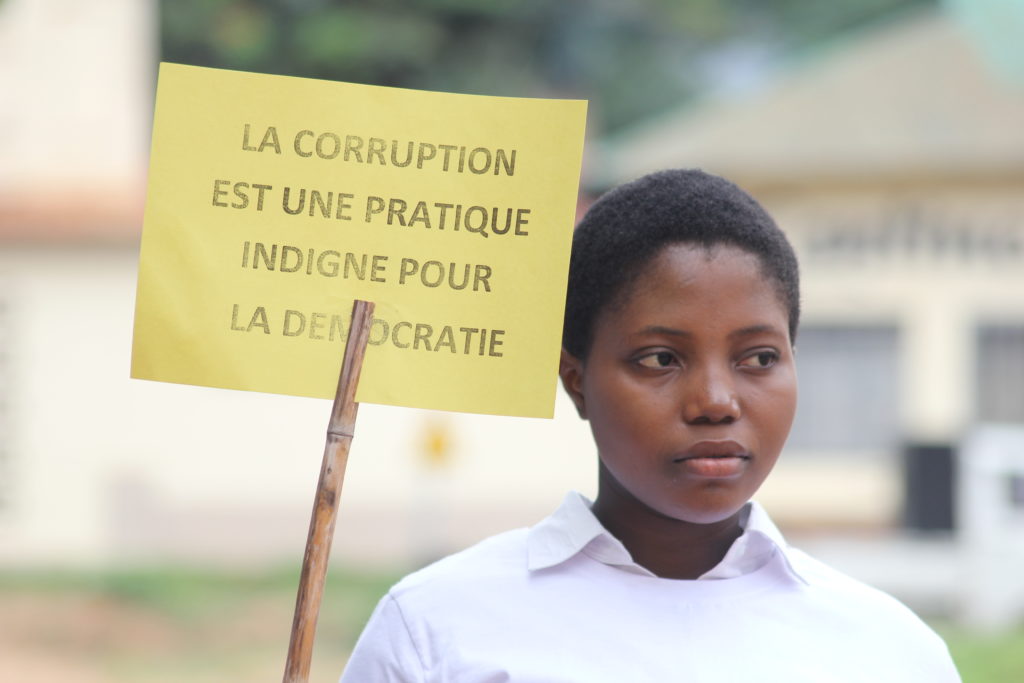
This systemic corruption is not confined to the corridors of power; it fragments everyday life. Faced with a failed state in which access to healthcare and justice has been privatised by patronage networks, citizens turn away from official institutions. United Nations reports on South Sudan thus show that the diversion of basic services does not merely create poverty: it drives people to turn to informal or armed structures in order to survive. In several regions of the country, the appropriation of budgets earmarked for the salaries of civil servants and the security forces has fostered the emergence of local loyalty networks, turning the distribution of public resources into an instrument of political and military control.
The sense of injustice gives rise to what is known as “bottom-up polarisation”: citizens shift their loyalty to community, sectarian or militia structures. Corruption then becomes a “total social fact”: it shapes practices, perceptions of authority and the management of personal security. The administration is no longer seen as a source of protection, but as an obstacle to be circumvented.
The instrumentalisation of illicit flows is therefore not merely an accounting deduction, but an act of structural violence. By reducing the state’s redistributive capacity, it condemns the most vulnerable to chronic insecurity. As a result, formal sovereignty coexists with a fragmented lived sovereignty. This erosion of trust creates a structural vulnerability that hostile powers can now exploit as a lever for interference.
A lever of hybrid warfare
The strategic instrumentalisation of corruption, when it relies on illicit financial flows, reaches a critical threshold once the security apparatus itself is affected. Institutional loyalty may come to compete with transactional logics. In this configuration, national security does not formally disappear but becomes partly fragmented. It is important to stress that these effects stem first and foremost from institutionalised corrupt practices, of which illicit financial flows are the operational vehicle.
The financing of parallel networks of loyalty undermines the neutrality of the state’s sovereign functions. While institutions retain their formal appearance, their chains of command are partly hijacked by outside financial interests. National security then tends to fragment, governed by transactional logic rather than a collective strategy. In this configuration, corruption is no longer a marginal flaw but a structuring strategic factor. It redraws the lines of conflict, which no longer lie solely on geographical terrain but at the very heart of financial circuits.
A typology of state vulnerabilities: case studies (MENA & Latin America)
Corruption does not unfold uniformly: it adapts to social, institutional and geopolitical contexts. It turns state structures into fragmented networks, in which formal sovereignty coexists with predatory practices. Far from causing immediate collapse, it reshapes everyday life, exposing the most vulnerable to structural insecurity.
Lebanon and Iraq: “rentier consociationalism”, or institutionalised predation
In the Middle East, Lebanon and Iraq illustrate the failure of confessional power-sharing. Originally designed to secure civil peace, these systems have drifted towards a patrimonial management of institutions. The explosion at the port of Beirut on 4 August 2020 marked the culmination of this drift: it was not merely a stockpile of nitrate that exploded, but the very image of a state unable to protect its population because of administrative negligence fuelled by clientelism. Public resources have become a tool for the reproduction of elites. According to World Bank analyses, corruption and tax evasion deprive Lebanon of vital budgetary resources, aggravating an economic collapse whose scale ranks among the most severe observed since the mid-19th century.
This dynamic is illuminated by Ibn Khaldun’s notion of asabiyya (group solidarity): when central authority weakens, loyalty to the clan takes precedence over allegiance to the state. When citizens had to clear their own streets in 2020 in the face of the authorities’ inertia, the social contract unravelled. Ministries then function as centres of redistribution to communal networks. When the state ceases to be a protector, confessional loyalty becomes the citizen’s only “life insurance”, completing the dilution of national sovereignty into fragmented interests.
Venezuela and Puerto Rico: from mafia state to financial asphyxiation
In Venezuela, the security apparatus has gradually become intertwined with certain transnational criminal networks, a phenomenon often described as “functional criminalisation”. International investigations have pointed in particular to networks involving military officers linked to the “Cartel de los Soles”, accused of facilitating the transit of cocaine to Central America, illustrating how certain institutions can become conduits for an illegal economy while retaining the outward appearance of the state. This mechanism allows institutions to capture illicit flows, notably from drug trafficking, to secure their financial survival on the margins of the international system.
Puerto Rico, by contrast, illustrates an erosion of sovereignty through regulation. The fiscal oversight regime established by the PROMESA Act (2016) saw its limits exposed when Hurricane Maria struck in 2017. The disaster revealed that the collapse of the energy infrastructure, following decades of opaque management, could turn a natural hazard into an unprecedented humanitarian crisis. By describing the island as a “systemically corrupt” entity to justify the slow delivery of federal aid, notably under the Trump administration, the authorities established a “governance by suspicion” that delegitimised local institutions. For Puerto Ricans, corruption became synonymous with a deadly wait for an electricity generator that never arrives. By substituting external oversight for the island’s own authority, it turned a budgetary impasse into a major crisis of political confidence.
Resource interdependence in Africa: the circuits of dependency
In Africa, systemic corruption is crystallising around critical minerals (cobalt, lithium), particularly in the Democratic Republic of the Congo, which accounts for more than 70% of global cobalt production. Access to deposits is secured through covert influence over elites, turning corruption into a tool for securing industrial supply. According to the African Union, illicit financial flows (IFFs) deprive the continent of nearly $88 billion every year. In the mines of Lualaba, this predation takes the form of a stark divide between ultra-secure extractive enclaves and the mud of the artisanal tunnels where unprotected “diggers” lose their lives.
These misappropriations fuel capital outflows that vanish into the opacity of international legal regimes. This mechanism encourages the emergence of extractive enclaves, where the authority of the state is supplanted by private interests or foreign powers. Sovereignty then becomes a physical fence: the state ends where the barbed wire of private mining concessions begins. A vicious circle sets in: the flight of resources deprives the state of the means to carry out its core functions, forcing it to rely on private security companies. Sovereignty thus becomes fragmented, subordinated to economic interests rather than to a central authority.
The archipelago state as the new norm
These case studies point to a common conclusion: corruption turns the state into an “archipelago” of partly autonomous islands of power. Formal sovereignty endures, but it no longer corresponds to any real capacity to take decisions. From Beirut to San Juan, citizens no longer see the administration as a bulwark but as an obstacle to be circumvented. When this fragmentation becomes structural, citizens seek protection from alternative actors, durably undermining international stability.
Yet this dynamic of local predation could not persist without global financial receptacles capable of absorbing these flows. This is where the ambivalence of the international system comes into play.
The ambivalence of the international system: between regulation and facilitation
Global financial centres act as revealers of systemic corruption. By capturing resources that ought to fund local public services, these capital havens deepen the fragility of states in the Global South. Banking secrecy is therefore not merely a technical grey area; it is a political lever that deprives populations of vital resources, eroding governments’ capacity to meet basic social needs.
The systemic complicity of financial centres: the North–South asymmetry
The proceeds of corruption frequently flow to international financial centres shielded by complex legal structures. The Panama Papers revelations notably exposed the widespread use of offshore shell companies, involving more than 214,000 companies registered in several jurisdictions. This shift of resources can limit states’ capacity to fund certain essential public services.
Economic interference manifests itself here in the persistence of financial structures that encourage the siphoning-off of national wealth at the expense of local development.
As a result, some populations have to turn to informal channels to meet their basic needs. Families, community networks and local structures then become supplementary sources of support. Sovereignty suffers: the resources available shrink, and the perceived legitimacy of institutions may be weakened.
“Reputation laundering” and the clash of honour cultures
Safely stashed capital gives elites an additional lever of power. They can extend their influence through social, political or philanthropic networks. This can contribute to the emergence of alternative hierarchies in which access to certain services or forms of protection depends more on personal connections than on the state.
In this way, patterns of loyalty and patronage can develop on a small scale. Corruption becomes less a one-off cost than a structuring factor in social relations and in certain governance practices.
Normative asymmetry: the human cost of technical opacity
The asymmetry of the international system is not confined to the contrast between the instantaneous nature of financial flows and the slowness of legal frameworks. Above all, it lies in the disconnect between the movement of capital and its social impact. The transit of illicit funds through opaque jurisdictions conceals their origin, neutralising states’ capacity to respond to social emergencies.
This “normative asymmetry” entrenches the confidentiality of transactions at the expense of the public interest. As the United Nations FACTI Panel (2021) points out, tax evasion and corruption siphon off resources vital to health and education policies. In fragile states, then, the shortfall in public services reflects not an absolute lack of resources, but a structural failure of global financial integrity.
Ultimately, financial opacity acts as a veil that conceals the real consequences of plunder for populations. By making traceability impossible, it deprives decision-makers of the levers needed to implement effective public policies.
This disconnect between financial flows and social needs underlines the urgency of global regulation, which is currently hampered by multilateral frameworks whose technical powerlessness often masks a lack of political will.
Multilateral governance caught between technical powerlessness and strategic cynicism
The diagnosis is shared, but the response remains incomplete. The fight against corruption and its financial ramifications suffers from a persistent gap. On the one hand, ambitious normative frameworks. On the other, implementation hampered by divergent geopolitical priorities. This tension limits the capacity of current instruments to stem illicit financial flows.
The failure of conventional frameworks: technical tools versus power
The United Nations Convention against Corruption (UNCAC, 2003) forms the bedrock of judicial cooperation and asset recovery. Its effectiveness, however, is hampered by the absence of a binding mechanism and by disparities in national capacity. In practice, the transposition of financial transparency standards remains patchy. All too often, the fight against corruption is sacrificed on the altar of immediate geopolitical priorities, leaving populations with no recourse against predation.
In practice, many states have yet to fully transpose the provisions of UNCAC into national law, or have not put in place the institutional tools needed to apply the standards on financial transparency and international mutual assistance. There has been progress, but also delays and persistent gaps in the effective implementation of these standards. This reality reflects a tension between the letter of the texts and implementation that is fragmented according to countries’ interests and capacities.
In some cases, states tacitly tolerate poor governance practices because doing so serves geopolitical or economic priorities deemed more important than the fight against corruption. This selective tolerance erodes the credibility of normative instruments and helps to sustain zones of financial lawlessness.
The humanitarian dilemma: feeding people or financing predation?
The global humanitarian system is facing a structural shortfall, marked by a growing mismatch between needs and resources. In 2023, donors covered only around 40% of funding appeals for food security and health (OCHA, 2024). This chronic underfunding is the direct corollary of the drain on national resources: the capital siphoned off through corruption is sorely lacking in vital sectors.
This situation leaves humanitarian organisations at an operational impasse. Navigating between limited resources and the diverging priorities of donor states, they face a permanent dilemma: should they confine themselves to meeting immediate emergencies, or invest in stabilising unstable political structures? This tension exposes the inability of multilateralism to put together a coherent budgetary response to crises in which financial predation drains funds long before they reach the people they are meant for.
Neutrality put to the test: corruption as a political weapon
The fight against corruption now lies at the heart of geopolitical rivalries. Accusations of financial irregularities are sometimes seen as tools of pressure or instruments of “strategic narrative”. In this context, certain legal mechanisms also make it possible to target directly individuals involved in corrupt practices at international level. This is notably the case with the Global Magnitsky Act, which authorises the imposition of financial sanctions and visa restrictions on officials accused of corruption or serious human rights violations.
As the OECD (2024) points out in its integrity outlook, the exploitation of these structural vulnerabilities has become a lever of power. This “politicisation” of integrity creates zones of avoidance in which compliance with standards is sacrificed to immediate strategic interests.
Recommendations: towards global integrity security
To respond lastingly to the erosion of sovereignty caused by illicit financial flows, security policies must go beyond a strictly technical or accounting approach. Financial integrity is now a cross-cutting component of national and international security, in the same way as cybersecurity or institutional resilience. As such, it must be systematically integrated into frameworks for conflict prevention, stabilisation and state reconstruction.
Integrating the “integrity” variable into Security Sector Reform
Security Sector Reform (SSR) programmes still tend to view corruption primarily through the lens of internal discipline or professional ethics. Yet in many fragile settings, corrupt practices directly undermine the cohesion, loyalty and operational effectiveness of the security forces.
There is a clear need to make financial integrity criteria core indicators of Security Sector Reform processes. International military assistance and defence partnerships could be made conditional on stronger mechanisms for tracing financial flows, notably through the digitisation of payroll and procurement systems. Such measures would help to curb patronage within security hierarchies and to restore a chain of command based on institutional rather than transactional criteria.
Transparency diplomacy: the end of financial anonymity
Beneficial ownership transparency must become a pillar of international stabilisation. The anonymity of beneficial owners facilitates capital flight and deprives fragile states of their sovereign resources. With this in mind, the creation of interoperable registers would be a decisive means of control.
The aim is to place financial integrity at the heart of peace processes. Access to the global financial system should be conditional on full transparency about the sources of funding of the parties involved. By aligning economic incentives with the imperatives of stabilisation, this approach would turn financial transparency into a genuine instrument of conflict resolution.
Sanctioning the enablers: shifting the burden of responsibility
The effectiveness of sanctions depends on precise targeting. The focus must now turn to the financial and legal intermediaries who enable illicit capital to flow.
Closer cooperation between INTERPOL and development banks (such as the AfDB) would make it possible to strike at the infrastructure of facilitation, rather than solely at the visible actors. By combining strict due diligence obligations with genuine criminal liability, the cost of risk will become a deterrent. This shift is essential to restore the credibility of international sanctions and to turn financial integrity into a genuine pillar of social peace.
Translated from French. The French original prevails.