The Geneva AI Governance Institute presents itself as a “facilitator” serving businesses and states.
By Inès Armand
At the end of March, Yaoundé will host the 14th Ministerial Conference of the World Trade Organization (WTO), a decisive meeting for the future of the international trading system. Against a backdrop of technological rivalry, regulatory fragmentation and accelerating digital transformation, one issue is now emerging as among the most far-reaching for global trade: artificial intelligence.
It is on this ground that the Geneva AI Governance Institute (GAIGI) intends to stake its claim. The Geneva-based foundation, a member of the International Telecommunication Union (ITU), will be in Yaoundé to champion, before the delegations, a vision that is gaining ground in international debates: the construction of a global architecture of trust for artificial intelligence.
AI, the new infrastructure of international trade
Long absent from trade discussions, artificial intelligence is now establishing itself as one of the drivers transforming global trade. It already plays a central role in several strategic sectors – logistics, finance, cybersecurity, critical infrastructure, health and supply chains. But beyond these sector-specific applications, AI is tending to become an invisible infrastructure of the global economy.
Business process automation, optimisation of international transport, predictive market analysis, data flow management: artificial intelligence systems are gradually redefining the very organisation of international trade. This rapid transformation, however, runs up against a major obstacle: the absence of coherent international governance.
Regulations are proliferating. Europe is pressing ahead with the AI Act, the United States favours more flexible, risk-management-based approaches, while several Asian countries are developing their own regulatory frameworks. For companies operating on a global scale, this fragmentation creates growing legal uncertainty and additional compliance costs. It is precisely in this strategic space that GAIGI intends to step in.
A Geneva initiative at the crossroads of trade and AI
Founded in Geneva in 2025, the Geneva AI Governance Institute has set itself the mission of structuring international governance frameworks for artificial intelligence, particularly for the most sensitive systems — those likely to affect critical infrastructure, security or fundamental rights. The institute is also a member of the International Telecommunication Union (ITU), the specialised agency of the United Nations responsible for information and communication technologies.
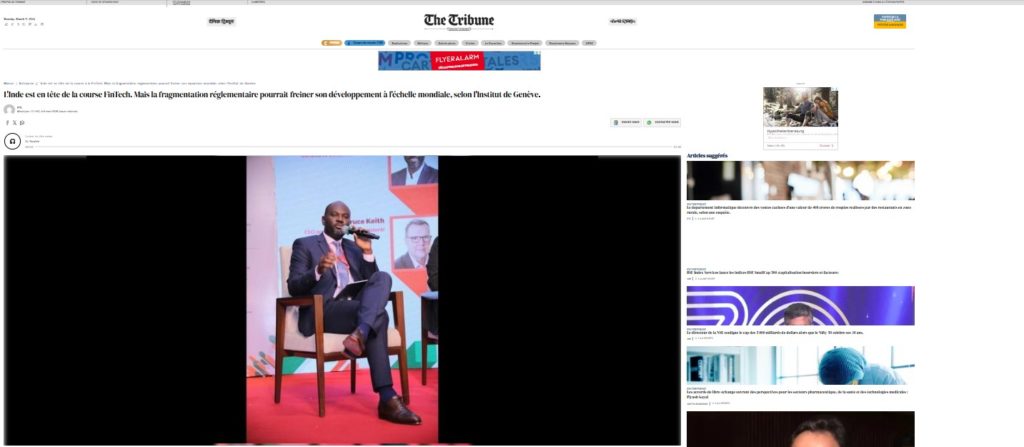
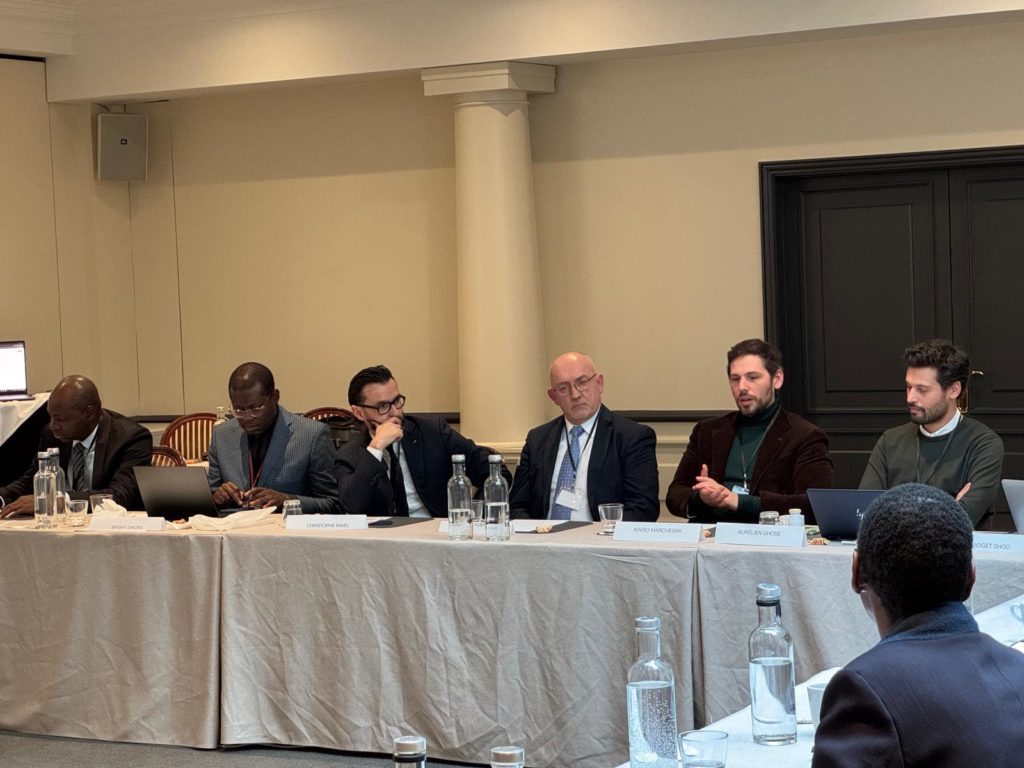
Within a few months, the institute has established itself as an emerging player in the international debate. Last February, it held the first Geneva AI Trade Forum in Geneva, bringing together diplomats, international organisations, businesses and experts to explore the interplay between global trade and AI governance.
The discussions identified several priorities in the run-up to the WTO Ministerial Conference in Yaoundé:
• developing interoperable digital infrastructure
• promoting mutual recognition between national regulations
• supporting innovation while ensuring regulatory compliance
• strengthening international cooperation in the face of regulatory fragmentation
For its founder, Axel Mazolo, this pragmatic approach responds to a central challenge of the moment.
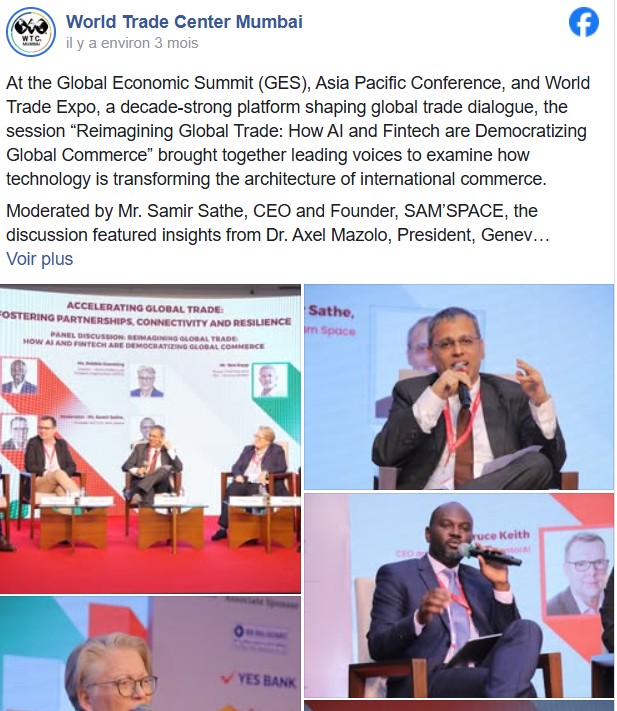
“Artificial intelligence cannot become a sustainable engine of global growth if each region develops rules that are incompatible with those of others. The real challenge is not only technological: it is institutional,” he explains.
https://www.facebook.com/profile/100080375808105/search/?q=mazolo
Interoperability, the key to viable global governance
Rather than promoting the idea of a single global regulator – often politically unrealistic – GAIGI advocates an approach based on the interoperability of regulatory frameworks. The aim is to create links between the various existing regulations so that businesses and institutions can operate more easily in an increasingly complex legal environment.
With this in mind, the foundation recently published an open-source framework mapping the correspondences between several major regulatory frameworks, including the US NIST framework, the European AI Act, ISO standards and the OECD principles. The tool, named Sovereign Interoperability Mapping, aims to ease multi-jurisdictional compliance and reduce regulatory friction for organisations operating internationally.
“Regulatory interoperability has become a central issue for the digital economy. Without bridges between legal systems, we risk fragmenting innovation and holding back international investment,” says Axel Mazolo.
Geneva, a laboratory for technology governance
The choice of Geneva as the GAIGI’s base is no accident. The city is home to a unique concentration of international organisations, including the International Telecommunication Union (ITU), the World Intellectual Property Organization and the WTO.
As a member of the ITU, the Geneva AI Governance Institute is firmly part of this international ecosystem devoted to technology regulation and cooperation. This institutional proximity allows the institute to engage directly with the players in global technology governance.

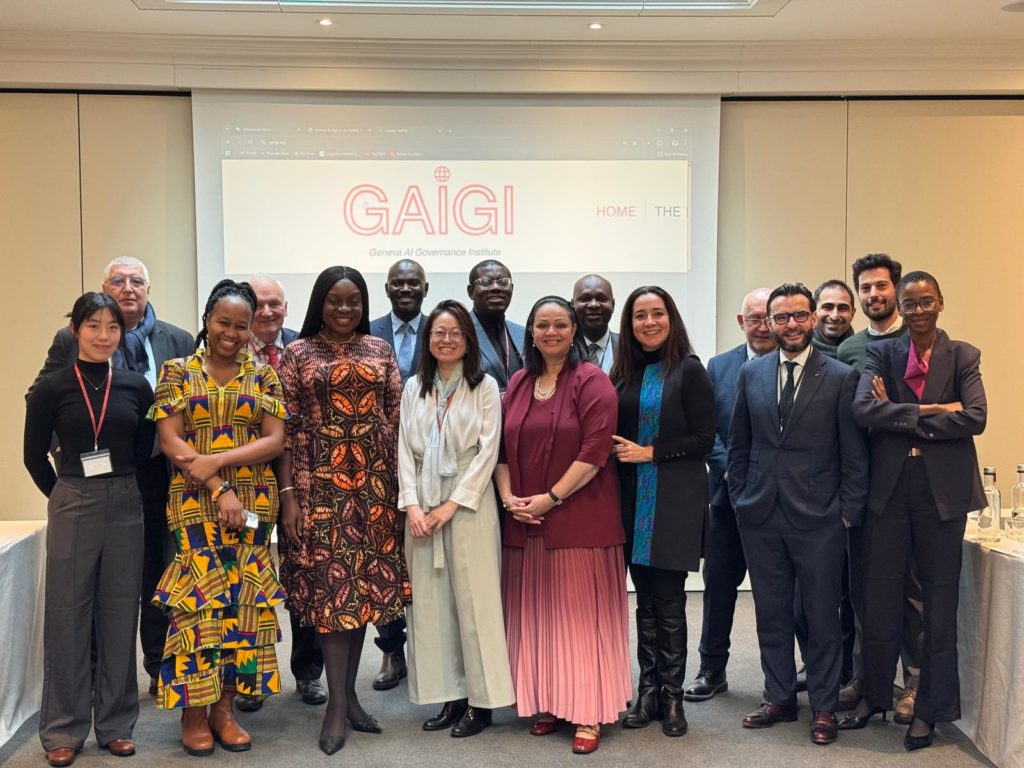
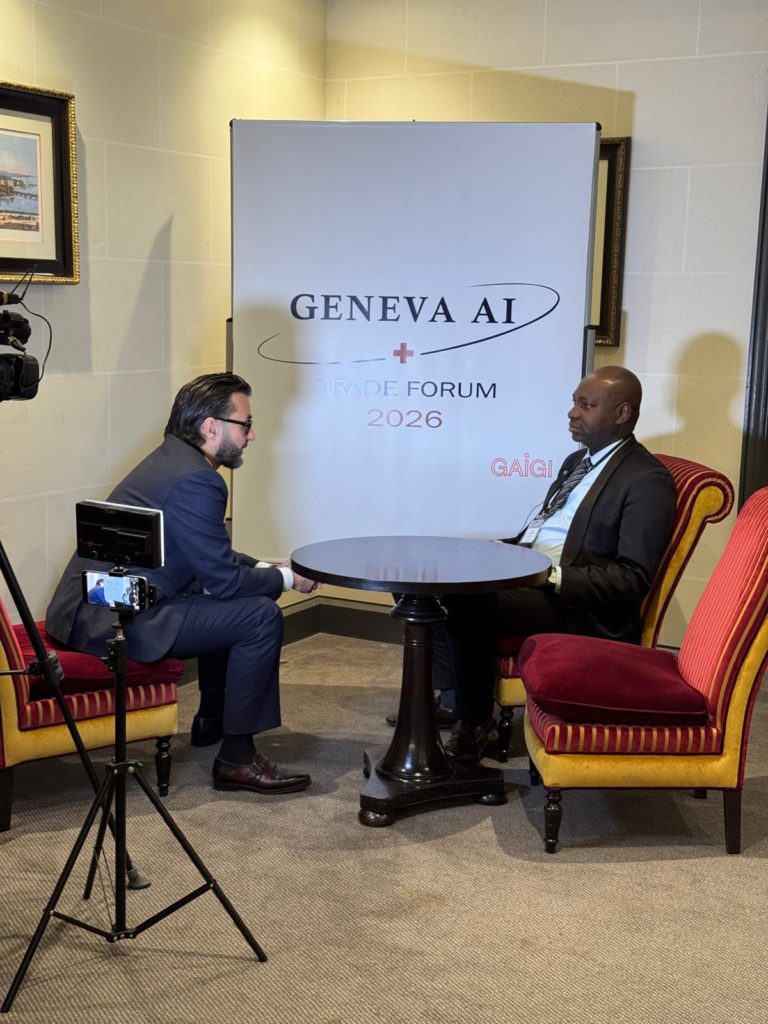


This institutional density makes Geneva a prime location for the emergence of new technology governance initiatives.
“Geneva has a unique asset: an ecosystem in which science, diplomacy and the economy can engage with one another. In a world marked by technological rivalry, we need neutral spaces capable of building trust,” says Axel Mazolo.
This ambition is part of a broader Geneva tradition: that of a city which, for more than a century, has served as a laboratory for international governance.
Towards a global architecture of trust
For its founder, GAIGI is more than a think tank. The institute intends to help build a genuine trust infrastructure for artificial intelligence. Its model rests on an original approach: rather than certifying AI systems directly, the foundation plans to accredit certification bodies around the world, on the basis of technical and ethical standards developed in Geneva.
This “neutral layer” architecture aims to reconcile two imperatives often seen as contradictory: respect for the sovereignty of states and the need for international coherence.
“AI governance cannot be imposed from above. It must emerge from a dialogue between states, companies and international institutions. Our role is to create the mechanisms that enable these actors to cooperate effectively,” explains Axel Mazolo.

Yaoundé, a milestone in a global realignment
GAIGI’s presence at the WTO Ministerial Conference in Yaoundé is part of a broader strategy to strengthen Geneva’s role in international debates on artificial intelligence. As several major powers seek to impose their own regulatory models, technology governance is becoming a major geopolitical issue.

In this context, initiatives capable of building bridges between differing regulatory visions could play a decisive role in shaping the global digital economy.
“In the century of artificial intelligence, real power will not lie in technology alone. It will also be measured by the ability to build the architectures of trust that will allow this technology to flow on a global scale,” concludes Axel Mazolo.
In Yaoundé, where trade ministers will attempt to redefine the rules of international trade for the digital age, this message could strike a particular chord.
Translated from French. The French original prevails.