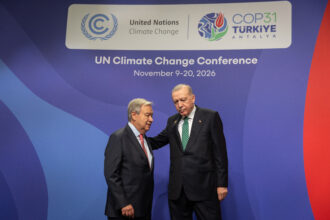
On Wednesday 15 January, António Guterres, Secretary-General of the United Nations, set out his priorities for 2025 before the General Assembly. With his customary pragmatism laced with metaphor, he likened the current crises to a veritable “Pandora’s box”. Out of this imaginary box has come a host of modern scourges, among them persistent conflicts, widening inequalities, the climate crisis and technology out of control. Yet, according to Guterres, one rare and precious thing remains: hope. A hope he promises to mobilise “through action”. But beyond the commitment and the speeches, can concrete progress really be expected?
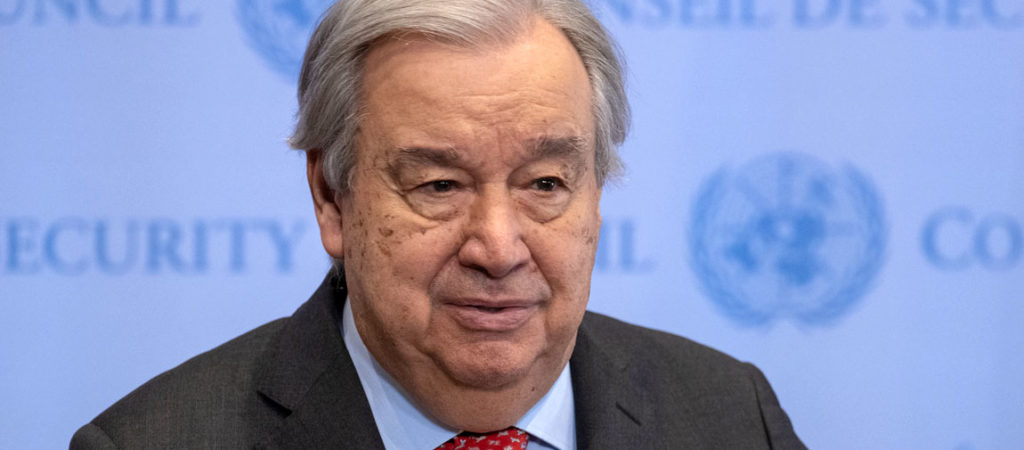
António Guterres acknowledged the gravity of conflicts around the world, citing among others Ukraine, the Sahel and Haiti, where the situation appears desperate. He nonetheless welcomed recent progress in certain areas, such as Gaza and Lebanon. He hailed the final negotiations towards a ceasefire in Gaza and the end of the political deadlock in Lebanon, which he regards as “an open window for stability”. These developments nevertheless remain fragile, and the colossal challenges in Syria, Myanmar and the DRC show that peace, in many cases, remains a mirage. This disparity raises questions about the United Nations’ real capacity to influence complex conflicts dominated by geopolitical interests.
Ever-deepening inequalities
One of the most damning findings is the rise in inequality, which the Secretary-General described as the symptom of a “deeply broken” system. He urged nations to unite to achieve the Sustainable Development Goals (SDGs), stressing that only 20% of them are on track with five years to go before the deadline. While these appeals are justified, they nonetheless have a familiar ring: for several years, the UN has been warning of the funding gap for the SDGs ($4 trillion), without any real mobilisation following. Despite the summits and pacts announced, the issue looks increasingly like an endless cycle of starting over.
On the climate crisis, António Guterres did not mince his words. Describing Los Angeles as a “theatre of disasters”, he spoke out against collective inaction in the face of an increasingly critical situation. With 2023 the hottest year on record, the United Nations insists on the need to cut global emissions by 60% by 2035 in order to meet the 1.5-degree goal set by the Paris Agreement. . While the ambitions are on display, firm commitments from the major polluters are still awaited. Here again, hope seems to rest more on aspirations than on results.
Technology: between opportunity and excess
At a time when technology is emerging as a key lever but also a threat, Guterres is calling for global governance of artificial intelligence (AI). He is pleading for a use of AI that “benefits humanity” while safeguarding human rights. This laudable statement nonetheless highlights a major challenge: in a world dominated by tech giants, who will take responsibility for regulating tools capable of revolutionising (or destabilising) societies?
António Guterres ended his address by recalling that, even amid chaos, “hope” remains the ultimate good. It is a stance that underlines his tireless optimism, but also the structural limits of the United Nations in turning such declarations into tangible action. With global challenges of this magnitude, the UN will find it hard to succeed alone without an accumulated political will of If the image of Pandora’s box catches the eye, it would be worth asking: is hope enough to build a world in which multilateral cooperation seems to be eroding in the face of national interests and struggles for influence? In 2025, as ever, inspiring speeches must be followed by decisive action.
Translated from French. The French original prevails.