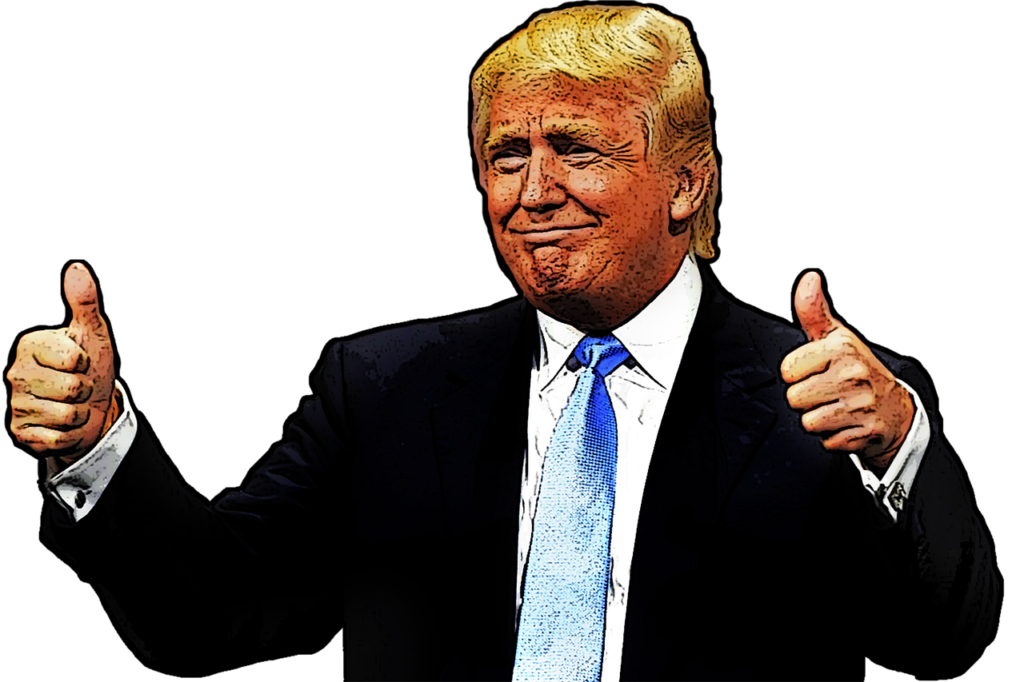
The US President, Donald Trump, said on Friday that the United States and Iran had reached an agreement in principle aimed at ending several weeks of tensions and indirect clashes in the region.
“We officially ended the war today. They have agreed never to acquire nuclear weapons,” the White House leader said in remarks devoted to the talks between Washington and Tehran.
According to information released by the parties involved in the negotiations, the text provides in particular for the immediate reopening of the Strait of Hormuz, a strategic passage for global oil and gas trade, without the introduction of any new transit fees for merchant vessels.
The agreement also provides for a gradual easing of the economic sanctions imposed on Iran, conditional on Tehran honouring its nuclear and security commitments.
Ceasefire extended by sixty days
The declaration of intent concluded between the two countries provides for the ceasefire to be extended for a period of sixty days. The measure would apply not only to direct relations between Washington and Tehran, but also to several regional flashpoints, notably in Lebanon.
During this period, the two sides are to begin a new round of negotiations on Iran’s nuclear programme. The talks will cover in particular the fate of Iran’s stockpiles of enriched uranium, as well as international monitoring and verification mechanisms.
The nuclear issue at the heart of the talks
Under the terms of the compromise put forward by Washington, Iran would undertake not to seek to acquire nuclear weapons and to cooperate with international actors to resolve the question of its stockpiles of enriched uranium.
The Trump administration is also said to have approved a framework for gradually reducing the level of uranium enrichment in Iran under international supervision. The United Nations could play a central role in monitoring and verifying the process.
Meanwhile, several sources close to the matter say that the Israeli Prime Minister, Benjamin Netanyahu, recently held talks with representatives of Donald Trump’s entourage to seek clarification on the content of the ongoing discussions.
Tehran urges caution
Despite the optimism displayed by Washington, the Iranian authorities were quick to temper the American statements.
The spokesman for the Iranian Ministry of Foreign Affairs said that no final agreement had yet been approved by the authorities of the Islamic Republic. In his view, reports mentioning a date or venue for a signing remain premature.
Although much of the negotiations is said to have produced a consensus, several sensitive issues remain unresolved, notably the future of Iran’s civilian nuclear programme, the permitted level of enrichment and the precise arrangements for lifting US sanctions.
Mohsen Rezaei reaffirms Iran’s demands
In this delicate diplomatic context, statements by Mohsen Rezaï, an influential adviser to the Iranian leadership and a former commander of the Islamic Revolutionary Guard Corps, served as a reminder that deep differences persist.
In a public address, he reiterated one of Tehran’s main demands: the withdrawal of US forces from the Persian Gulf and the Middle East.
“One of Iran’s essential conditions is the complete withdrawal of the United States and its bases from the Gulf and the region,” he said.
His remarks contrast with the more conciliatory signals sent in recent days by some officials involved in the negotiations, and illustrate the enduring influence of Iran’s conservative camp.
Guarantees still at the heart of talks
According to several observers, Tehran is still demanding solid guarantees before making a definitive commitment. In particular, the Iranian authorities are seeking assurances regarding their national security, as well as concrete commitments on the effective lifting of economic sanctions.
The Islamic Republic says it will not cross any of its “red lines” and that a final decision will be taken only after a thorough examination of the guarantees on offer.
Qatar, key mediator in the rapprochement
The agreement in principle announced by Donald Trump was reportedly secured thanks to active mediation by Qatar. Doha is said to have coordinated several weeks of indirect talks between the two capitals, in close cooperation with the Iranian Minister of Foreign Affairs.
While this declaration of intent paves the way for a major de-escalation in a region marked by high tensions, many observers stress that the real test will begin when the announced commitments are implemented.
At this stage, the agreement looks more like an important diplomatic milestone than a definitive settlement of the disputes that have divided Washington and Tehran for several decades.
Translated from French. The French original prevails.