The Islamic Revolutionary Guard Corps, which claims to have seized control of power, is not a unified organisation.
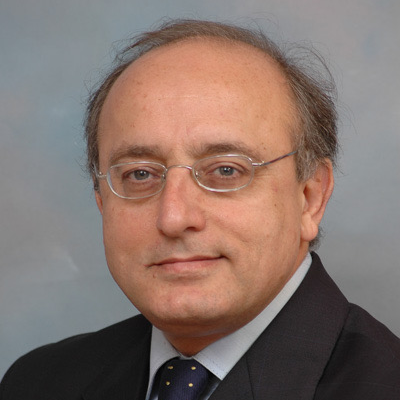
Mohsen Sazegara, founder of the Islamic Revolutionary Guard Corps, was imprisoned four times in Iran and now lives in exile in the United States.
“The Islamic Revolutionary Guards are like a seven-headed dragon,” says Mohsen Sazegara, founder of the Revolutionary Guards, quoted by Emmanuel Razavi. “Each head operates independently.” On the one hand, there is the Intelligence Organisation, which functions like the KGB; its elite unit, the Quds Force, and the structures linked to it behave like terrorist organisations; there are also missile, nuclear and conventional military divisions. Another part of the Revolutionary Guards is engaged in commercial activities and business operations. Some of their forces are also involved in drug production and trafficking (…). These various leaders claim to head the Revolutionary Guards and assert that they control government decision-making. In fact, they behave more like warlords or gang leaders, condemned to isolation from one another by the need to hide in deep bunkers and to forgo the use of telecommunications in order to evade assassination attempts by the American and Israeli armed forces.”
Faced with them, Araghchi, Qalibaf and Pezeshkian have no decision-making power, and any agreements they might sign carry no weight in the eyes of the Revolutionary Guards’ commanders. It is they who hold the enriched uranium in bunkered shelters, and they are unlikely to give it up. Yet the handover of the enriched uranium, or its neutralisation under international supervision, is the foremost of Donald Trump’s demands.
It appears that the new Supreme Leader, Mojtaba Khamenei, is no longer alive, or at the very least is no longer capable of taking decisions. In his place, it is these commanders of the Islamic Revolutionary Guard Corps who are running affairs, claiming to do so in his name. And they see war as the only means of their survival, and in particular of holding on to the wealth they have amassed.
What authority do these warlords, commanders of the Islamic Revolutionary Guard Corps or senior army officers, have over their troops? The question is worth asking, for the resentment felt towards them by their subordinates runs very deep. They accuse them of hiding with their families in safe areas far from the bombing, while they themselves, the junior officers and the rank-and-file soldiers, are kept on bases they know to be targets for strikes. They feel they are being used as human shields. And woe betide any officers or soldiers who criticise their decisions. They run the risk of being accused of spying for the Zionist state.
It must be said, explains Mohsen Sazegara, that “a large proportion of the rank-and-file members of the Revolutionary Guards are conscripts. In Iran, men are required, once they reach the legal age, to complete two years of compulsory military service. Whether they serve in the regular army (known as the Artesh), the Revolutionary Guards or the police is not their choice; they are assigned through an allocation and lottery system. As a result, part of the Revolutionary Guards, including some specialised units, is made up of conscripts. (…).”
Finally, Donald Trump’s hesitancy and the multitude of ultimatums and ceasefire extensions have emboldened these self-styled warlords, leading them to believe that Iran is on an equal footing with America and that they still have the capacity to control the region, from Iraq to Lebanon. Not to mention the hatred they harbour towards the Gulf monarchies.
Translated from French. The French original prevails.