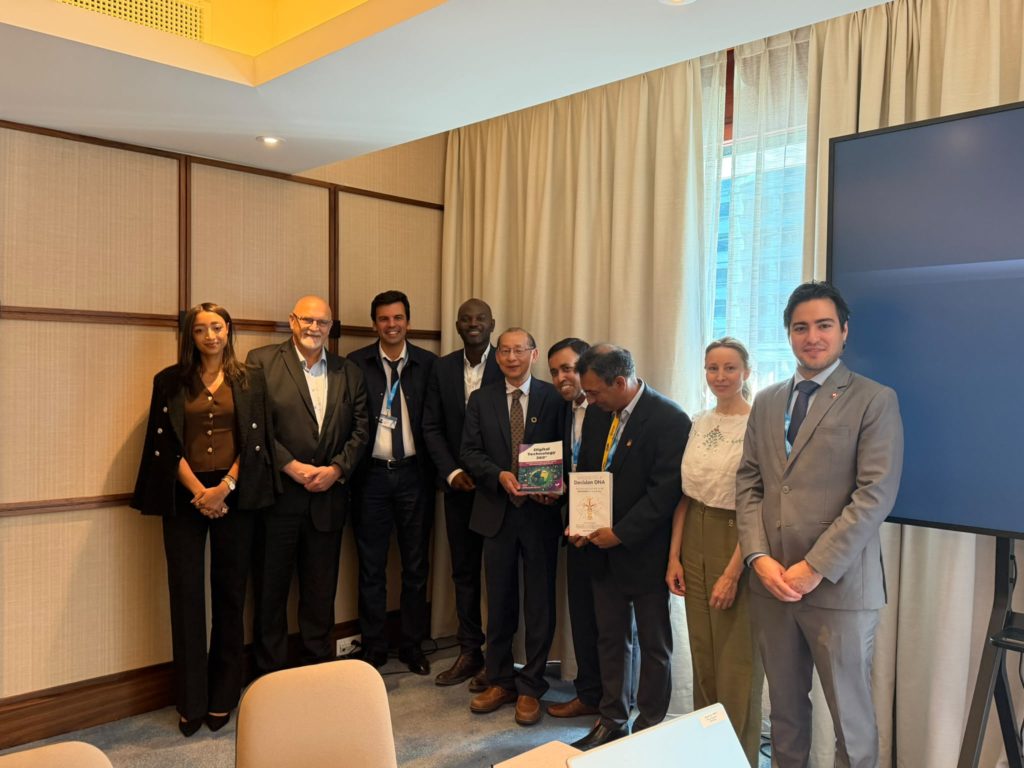
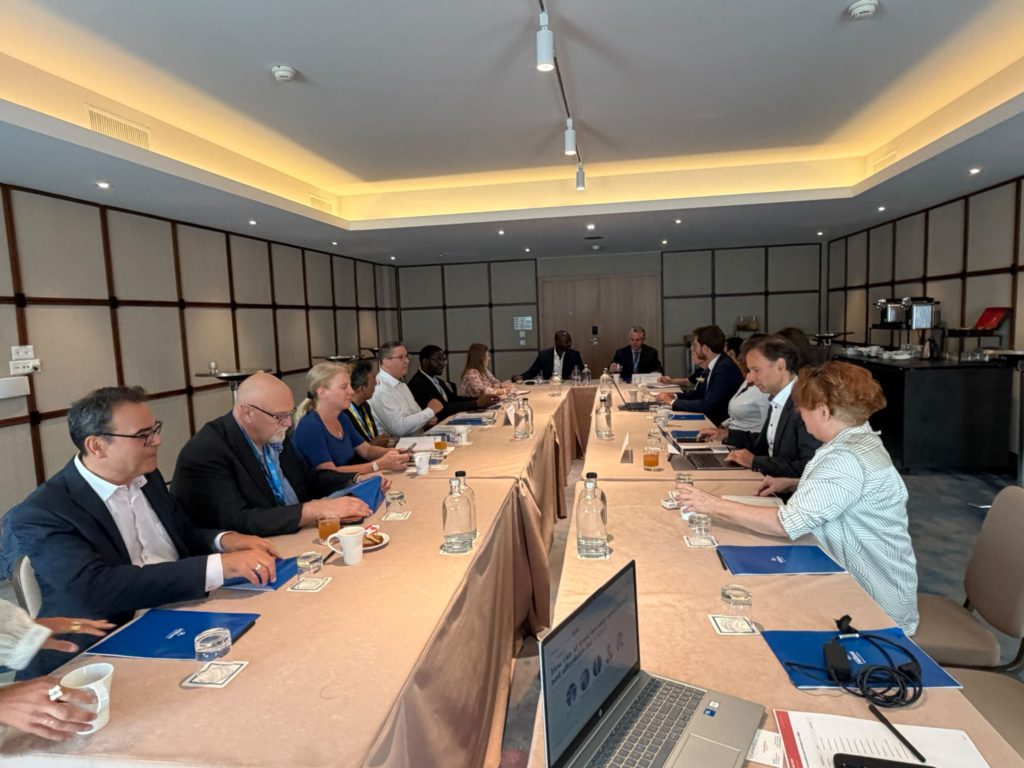
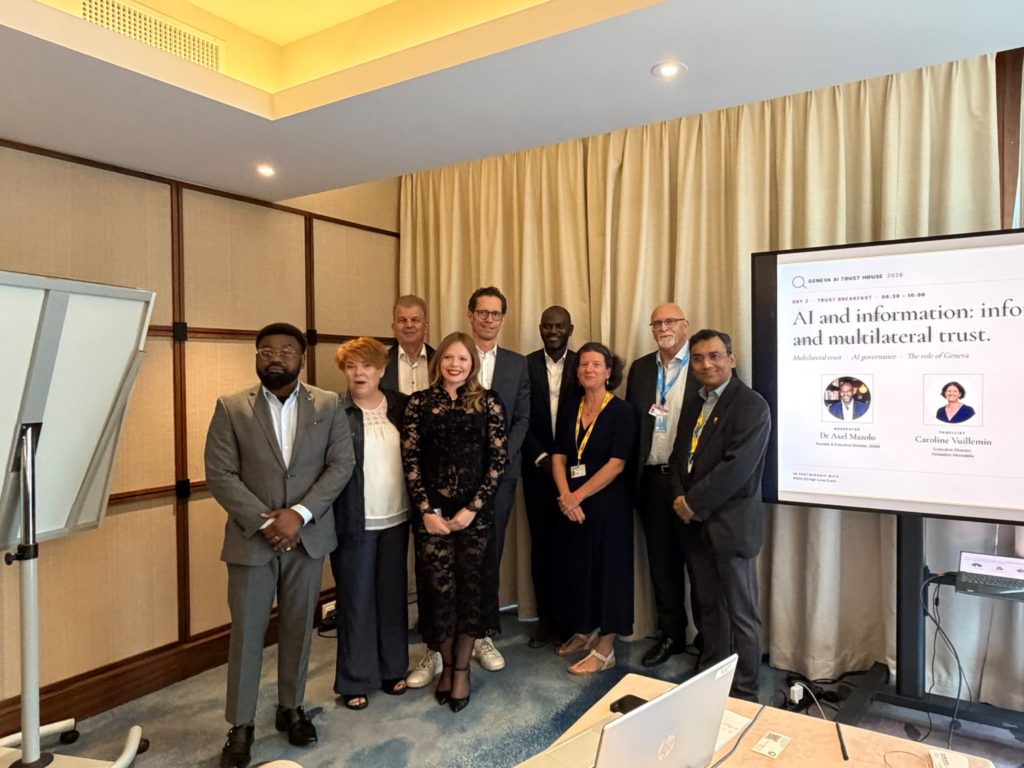
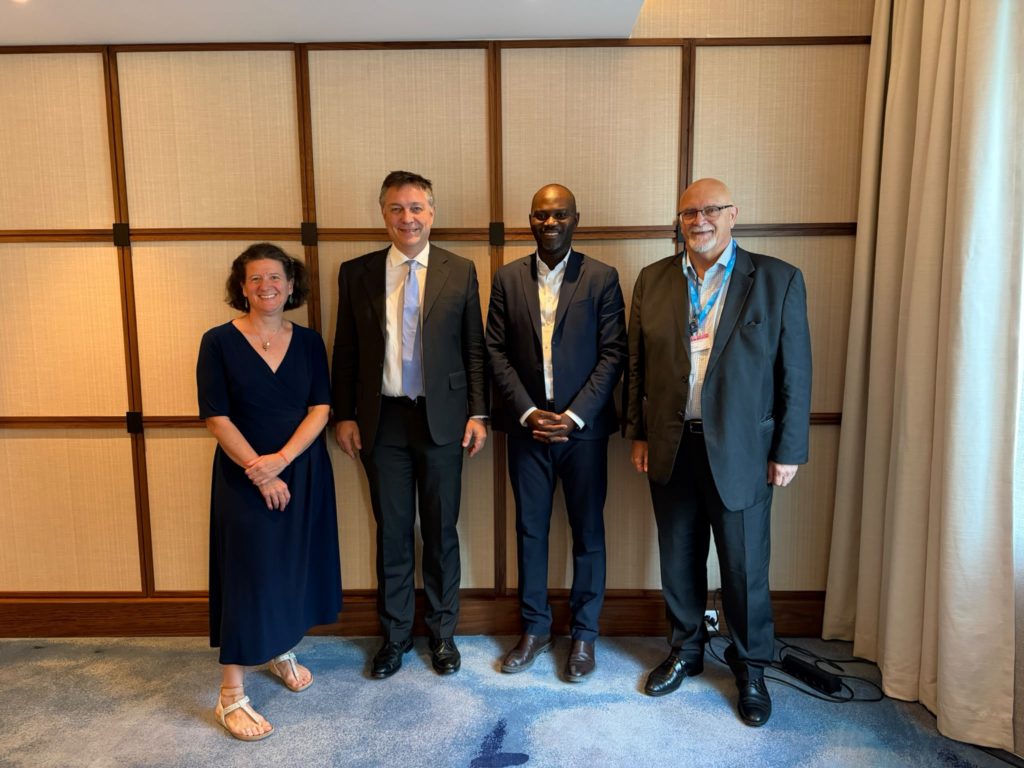
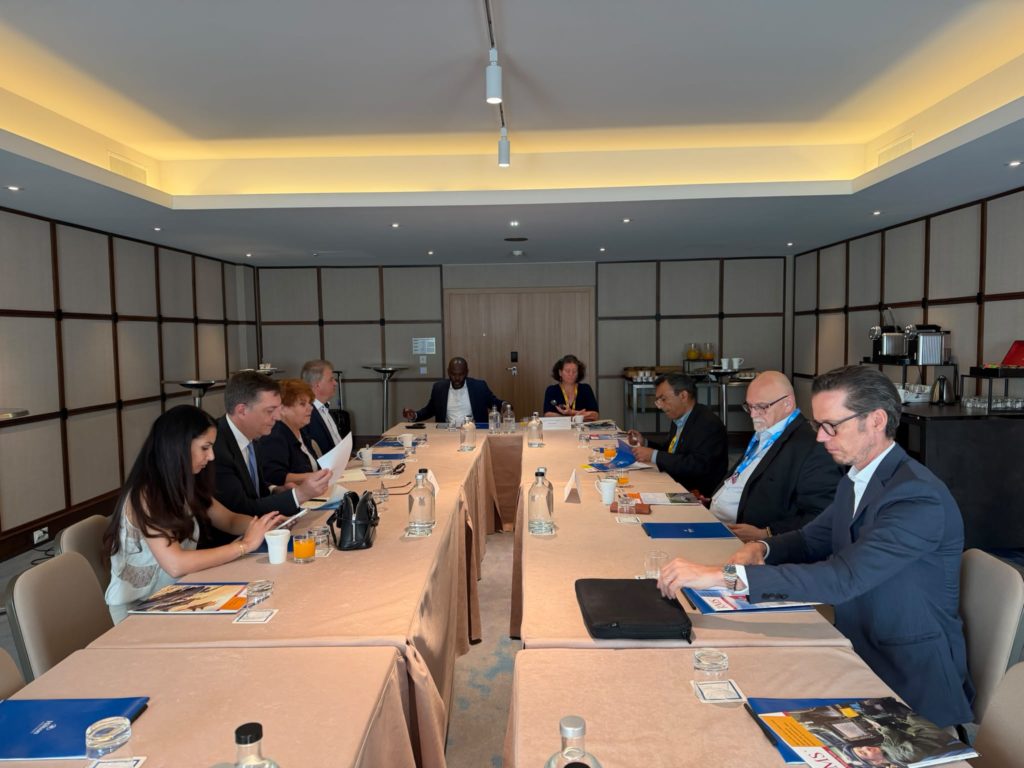
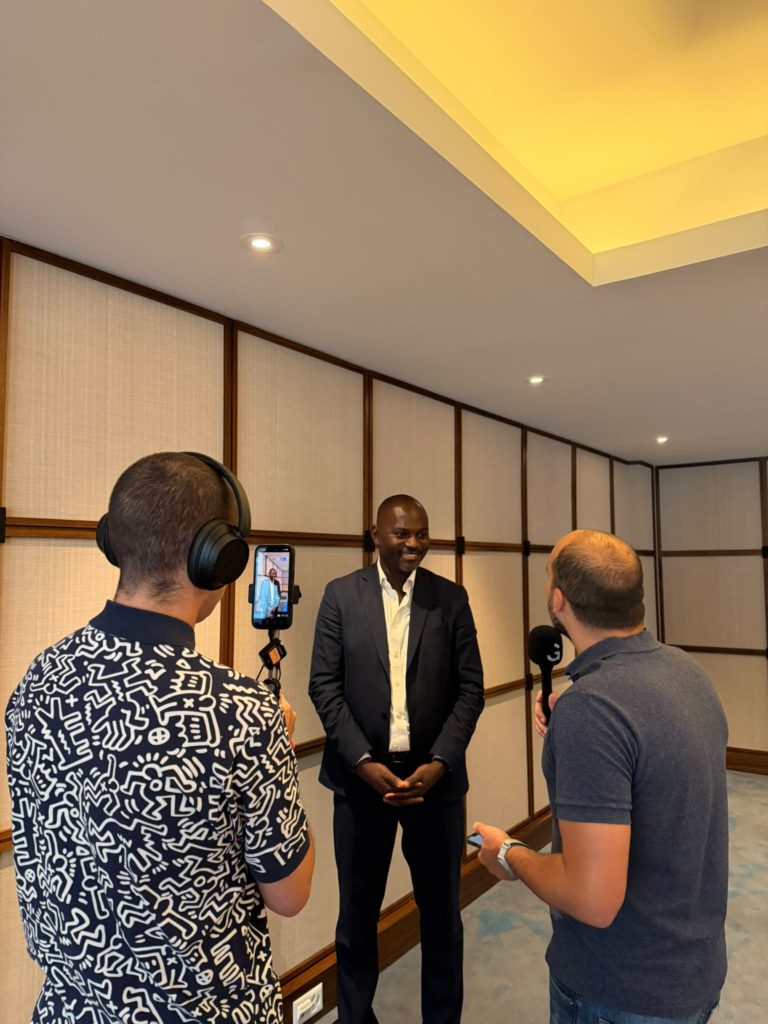
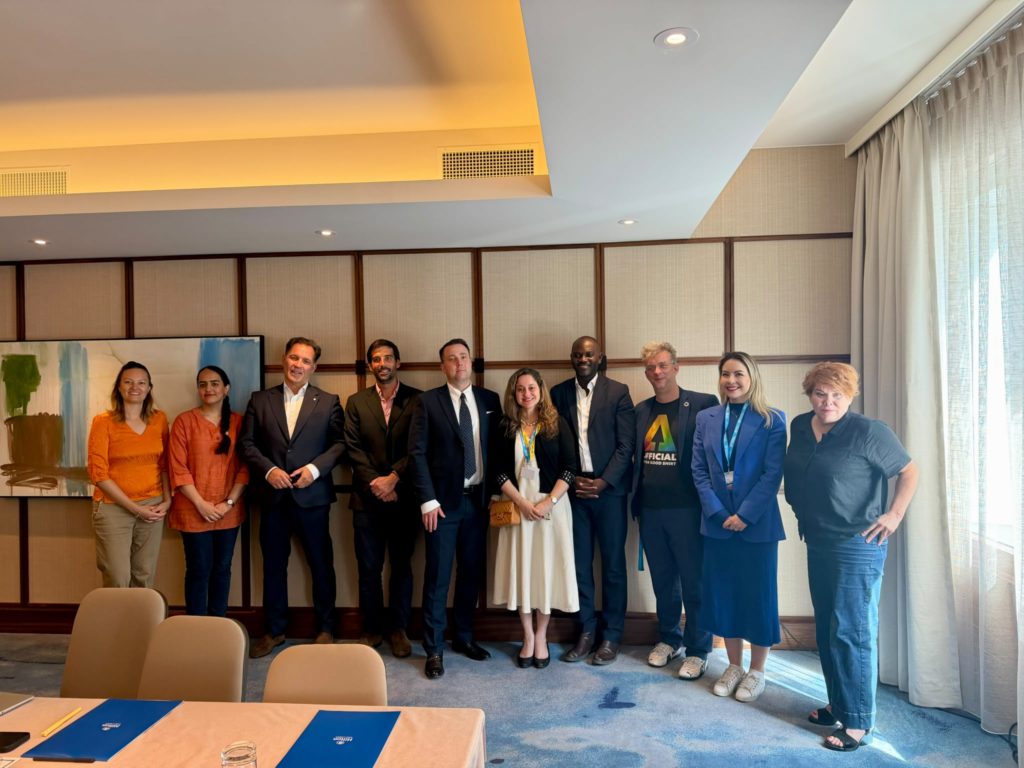
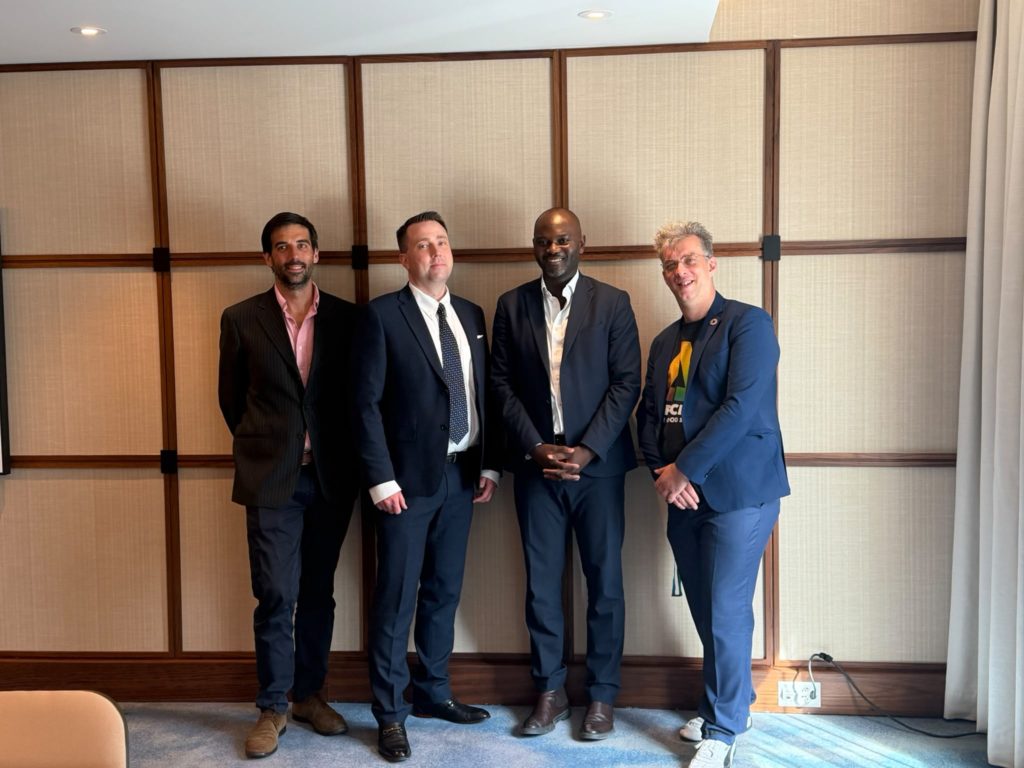
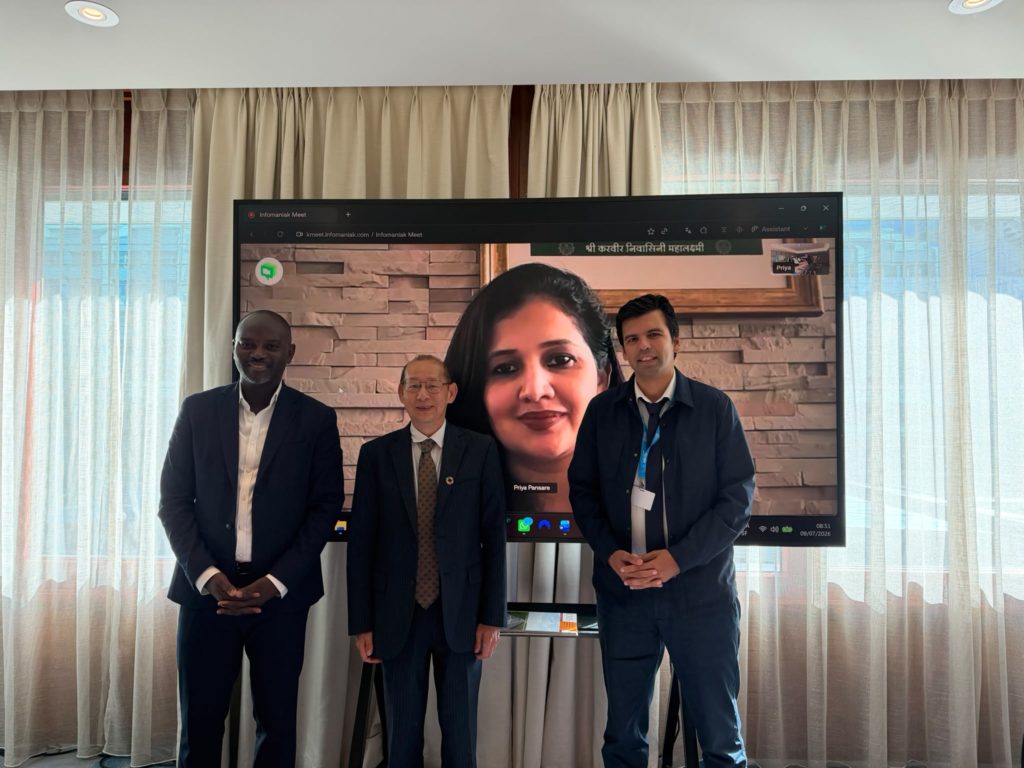
Following a press conference held on Friday to take stock of its participation in AI for Good, the Geneva AI Governance Institute (GAIGI) believes it has reached a milestone in its development. In five days, the young Geneva-based foundation brought together around a hundred participants and some twenty international speakers, and produced a string of audiovisual content. Beyond the figures, the week above all marks the rise of a player that intends to bring a more agile, collaborative and resolutely action-oriented approach to the global governance of artificial intelligence.
It was at the end of a particularly busy week that the Geneva AI Governance Institute (GAIGI)invited the media to a press conference to take stock of its activities on the sidelines of the AI for Good summit, held at Palexpo under the auspices of the International Telecommunication Union (ITU).
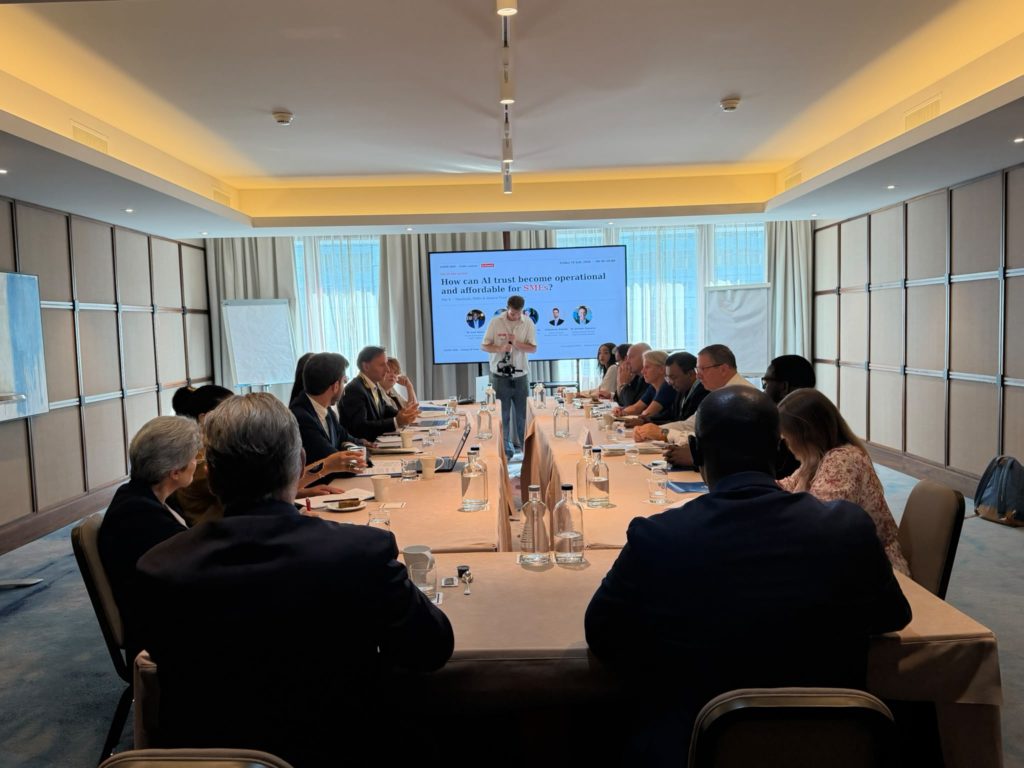
Addressing journalists, the foundation’s executive director, Axel Mazolo, looked back on five days of discussions that involved two teams: one tasked with covering the official event through interviews, reports and audiovisual productions, the other dedicated to running the Geneva AI Trust House (GAITH), which hosted a succession of debates, consultations and meetings between international experts.
In all, six thematic sessions brought together nearly a hundred participants and some twenty speakers to discuss the major issues in the governance of artificial intelligence.
“We held six sessions, bringing together around a hundred participants and some twenty speakers. The idea was to produce high-quality content in preparation for next year’s global summit, by gathering the concerns and expectations of this ecosystem,” Axel Mazolo explained.
A team that operates like a start-up
Above all, these results reveal a way of working.
Around Axel Mazolo, a small team spent several months coordinating the preparations for the week, simultaneously handling the organisation of the debates, the production of more than forty audiovisual pieces, interviews with international figures and exchanges with the various partners.
This lean organisation, inspired by start-up methods, is now one of the distinctive features of GAIGI.
In a field where technological developments follow one another at an unprecedented pace, the foundation is betting that it is possible to bring to international governance a capacity for adaptation, coordination and production far faster than that of traditional institutional mechanisms.
The aim is not to replace international organisations, but to create a space capable of quickly bringing stakeholders together, fostering convergence and producing concrete proposals.
“We have always positioned ourselves as a coordinator,” Axel Mazolo points out.
“What matters is bringing stakeholders together in order to identify their strengths and weaknesses, and to make the most of them. Our role is to gather people around the same table in order to produce quality content.”
Leading speakers
The credibility GAIGI has gained also stems from the calibre of the figures brought together during the week.
The various sessions brought together representatives of the Geneva authorities, the private sector, academia, international organisations and the media.
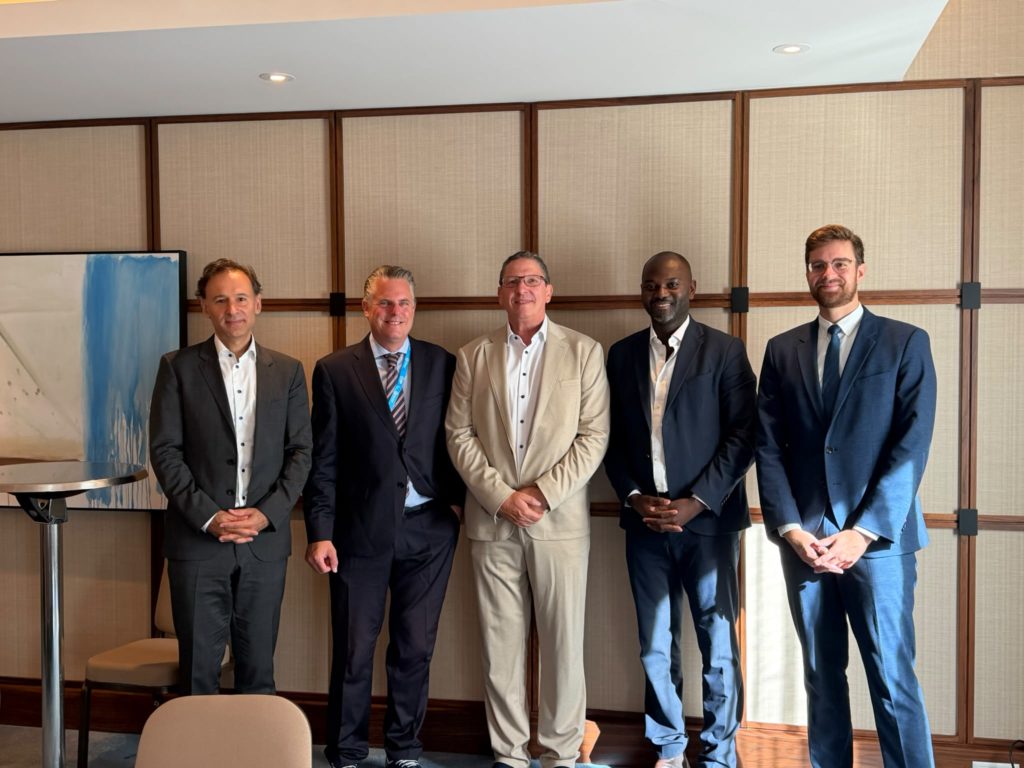
The main speakers included Vincent Subilia, Director General of the Geneva Chamber of Commerce, Industry and Services (CCIG), Alexandre Epalle, Director General of the Cantonal Office for the Economy and Innovation of the State of Geneva, Caroline Vuillemin, Director General of the Fondation Hirondelle, Alexandre Vautravers, Scientific Director of the Collège des hautes études de stratégie et de défense, Jérôme Duberry, a specialist in digital diplomacy at the Geneva Graduate Institute, and Dr Anino Emuwa, founder of 100 Women @ Davos, who came to share her experience of international governance and leadership issues.
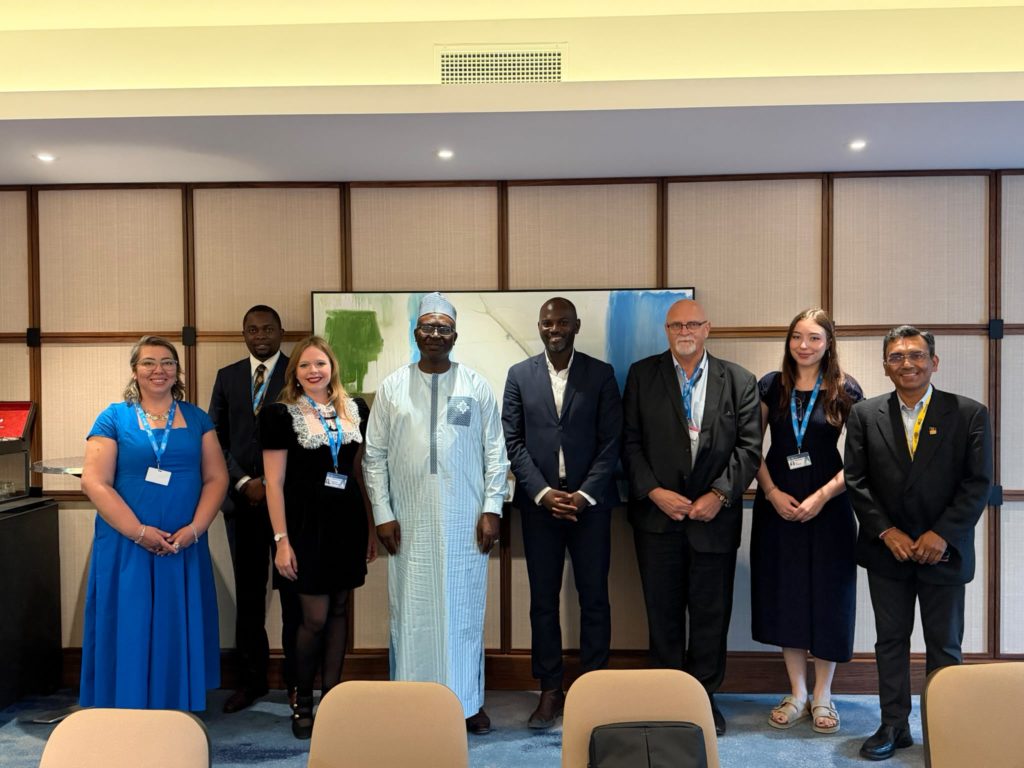
The sessions devoted to the Global South also heard from Priya Pansare, a member of the GAIGI advisory board and representative of the World Trade Center Mumbai, Mohammed Khalil, President of MoroccoAI, Professor Yale Li, Executive President of the World Digital Technology Academy, and Muhammadou M.O. Kah, Permanent Representative of the Gambia to the United Nations in Geneva.
This diversity of speakers reflects the foundation’s ambition to foster dialogue between worlds that have until now often worked in parallel: diplomats, technology companies, researchers, international organisations, the media and representatives of the Global South.
Producing solutions rather than declarations
The discussions held throughout the week brought out a widely shared conviction: international debates on artificial intelligence must now deliver tangible results.
“Everyone we heard from expressed the same wish: to arrive at a concrete deliverable,” stressed Axel Mazolo.
In his view, expectations vary from one stakeholder to another: companies want clearer rules, countries of the Global South are calling for more inclusive governance and international institutions are looking for more effective cooperation mechanisms.
The challenge now is to turn these expectations into practical proposals.
Institutional recognition marks a change of scale
The week was also marked by an important announcement for the development of GAIGI.
The foundation has officially obtained public-interest foundation status, a recognition that represents a major milestone in its development.
For a still relatively young organisation, this recognition goes well beyond the administrative. It reinforces the credibility it has built up in recent months with public authorities, international organisations and its partners.
“This week we had the good news of officially obtaining our status as a public-interest foundation. It is a mission that is particularly close to our hearts, because what we do has genuine public-interest value. We do it for Geneva, for International Geneva, but also for the rest of the world,” said Axel Mazolo.
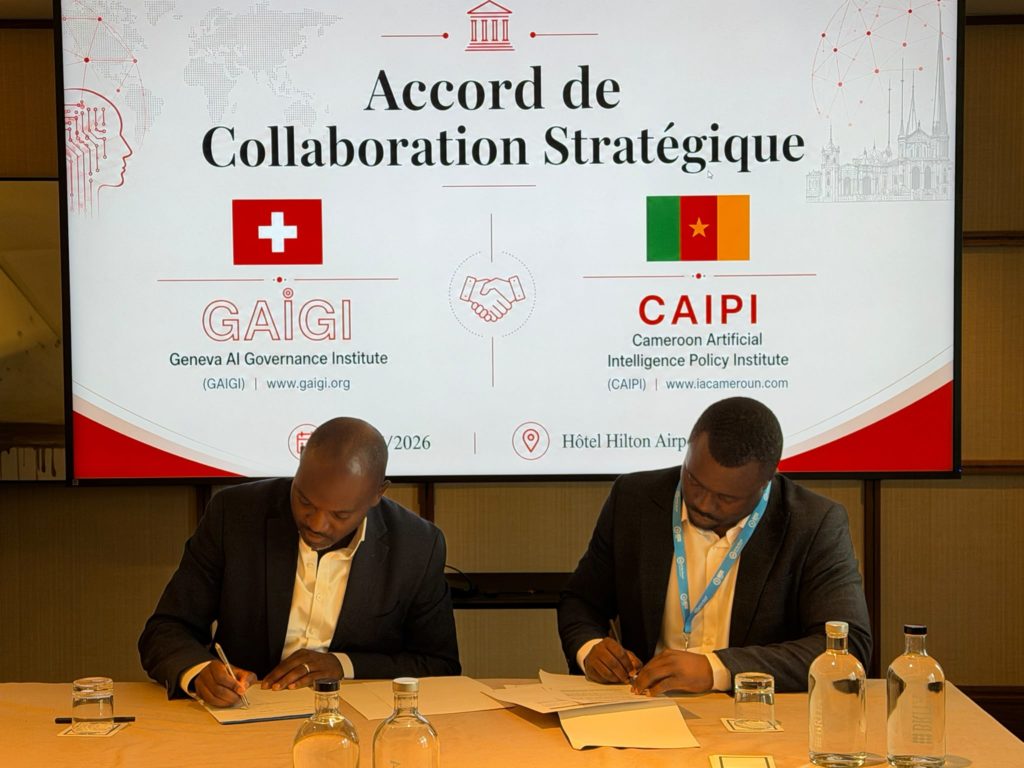
The move comes as the foundation gradually expands its international network. During AI for Good, GAIGI also announced the signing of a memorandum of understanding with a foreign organisation, the first step in a partnership set to deepen in the run-up to the 2027 Global Summit on Artificial Intelligence.
Momentum now turned towards 2027
For GAIGI’s executive director, the past week is above all the starting point for work that will continue until the Global Summit on AI to be held in Switzerland next year.
“Above all, we would like to make sure that coordination is as effective as possible and that Switzerland can genuinely position itself, after the summit, as a place where discussions on the governance of artificial intelligence continue.”
He added:
“There needs to be a formal venue where people can come to discuss governance.”
At a time when artificial intelligence is advancing at a pace that is upending traditional decision-making frameworks, GAIGI is betting that a lean, entrepreneurial structure able to bring expertise together quickly can usefully complement the conventional mechanisms of multilateral diplomacy.
Without claiming to replace international institutions, the young Geneva foundation appears to be gradually finding its place in a landscape where swift coordination, the ability to build bridges between stakeholders and the delivery of practical solutions are becoming essential conditions for building international governance of artificial intelligence equal to the challenges ahead.
La Tribune des Nations uses cookies to measure its audience with Google Analytics. They are set only with your consent, which you can withdraw at any time.
Your cookie preferences
Choose below which cookies you accept:
Essential cookies enable basic functions and are necessary for the proper function of the website.
Name
Description
Duration
Cookie Preferences
This cookie is used to store the user's cookie consent preferences.
180 days
Cookie Preferences
This cookie is used to store the user's cookie consent preferences.