On Monday 28 August, Evergrande, the former Chinese property giant, made its big return to the stock market. It was a disastrous comeback. After 17 months of suspension for failing to publish its financial results, shares in the heavily indebted Chinese developer plunged by 87%. By midday on that same 28 August, the developer’s market value had fallen to around 590 million dollars. At its peak, in 2017, the group had reached a market value of 50 billion.
A spectacular image of economic collapse, Evergrande’s fate is in reality just one illustration among many of contemporary China’s great malaise: the property crisis.
While property construction had until then accounted for more than 30% of its economy, hit by the effects of Covid-19 and a global context of recession, it is the Chinese economy as a whole that now threatens to collapse before the eyes of a political regime that has a great deal at stake.
Evergrande: the collapse of Hengda
“Great forever” is the literal translation of “Hengda“, the Chinese name of the property developer Evergrande. Founded in 1997 by a self-made man, the group would go on to enjoy a meteoric rise.
Riding on China’s double-digit growth in the 2000s, Evergrande Group rushed to diversify into tourism, electric vehicles and solar panels. Emboldened by the Chinese context, the group multiplied its property development programmes and sold flats, even before they had been built. The Chinese conglomerate is now paying the price for these delusions of grandeur.
In difficulty for more than two years, the former number one in Chinese property is leaving entire construction sites abandoned. Unable to pay its subcontractors, the empire faces a growing number of lawsuits. Protests organised by future homeowners have taken place in several provinces. They are still unable to move into the homes they were promised.
The indebted Chinese property empire filed a petition on 18 August for Chapter 15 protection.
A ticking time bomb: Chinese property, or the story of a speculative bubble
The Chinese authorities are still targeting 5% annual growth in 2023, despite the global economic recession. With unemployment steadily rising and exports falling, China would like to lean on its property sector. This support would allow it to boost its turnover.
Chinese property has indeed long been an essential engine of the country’s growth, accounting for a third of China’s GDP. By comparison, the French property sector accounts for only 11%. In the United States, it does not exceed 17%.
Today China cannot count on its “pet” sector. Economists had warned of this situation, but the Chinese authorities chose to ignore it. In the face of this denial, China’s property bubble burst and the Chinese property market collapsed. Yet the property sector had never before experienced a crisis.
Unpacking the property crisis?
To understand China’s property crisis, we need to look back.
China’s property sector has grown at breakneck speed since it was liberalised in 1998. In a country where borrowing is encouraged and owning property is a symbol of social success, property development seemed the ideal business proposition.
However, as property companies multiplied, the Chinese authorities quickly realised that the pace had to slow. The central bank and China’s housing ministry then set developers three red lines: a liabilities-to-assets ratio (excluding advance receipts) above 70%, a net debt-to-equity ratio above 100%, and a cash-to-short-term-debt ratio below 100%.
This policy U-turn would make it harder for developers to obtain credit. So, while demand for property nosedived against a backdrop of economic slowdown and demographic decline, a large proportion of China’s property developers would go out of business.
China’s economic slowdown: the CCP’s waking nightmare
China’s property crisis is also compounded by a social crisis that could have an impact on political power. Of all the forms of destabilisation China has experienced, the collapse of its main economic sector could bring about the fall of those in power. Quite literally, the entire world of China’s middle classes is crumbling…
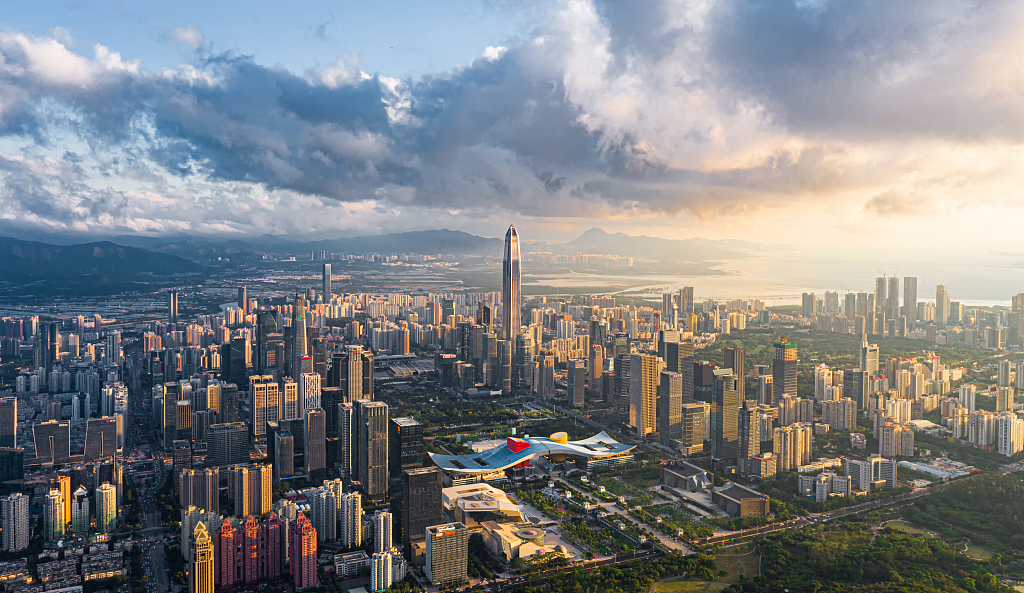
Indeed, until 2021 China had projected an image of vast developments, immense building sites and “ready-made” homes simply waiting for investors. Just two years later, Chinese households, three-quarters of whose wealth was invested in property, saw their fortunes shrink by a third in a matter of months. Chinese households no longer trust their investors.
Indeed, beyond the property crisis in the strict sense, the crisis is unfolding in a more systemic context. Above all, it calls into question the relationship of trust between the Communist Party and the population. For even in an authoritarian regime such as that of the Middle Kingdom, there is a social pact based on trust. While the Party undeniably still has the means to impose its will by force, social consent has been the driving force behind China’s economic take-off.
However, the economic slowdown risks alerting the population to the failings of its leaders’ economic planning, thereby endangering the CCP.
The quality of life of the Chinese has steadily deteriorated in recent years. Domestic consumption is being artificially boosted, and exports remain the engine of the Chinese economy.
While the Chinese authorities have so far remained silent on a possible stimulus package, this upheaval in the workings of the economy poses a grave threat to China’s political and social equilibrium. In reality, it raises serious questions about a headlong rush into an increasingly nationalist policy. With relations between China and Taiwan going through a difficult year, there is speculation that Chinese hostility over the Taiwan question could intensify. As is well known, the CCP regularly invokes a firm stance on matters of national unity as a source of legitimacy. It remains to be seen whether Xi Jinping, too, will dust off this old recipe.
Translated from French. The French original prevails.