Last week, the markets reacted instantly to Iran’s strikes on Qatar. Within hours, the price of gas had soared by more than 30%. At the same time, initial estimates point to a sharp fall in Qatari liquefied natural gas exports, of around 20 to 25% in the short term. This twofold shock, both financial and logistical, speaks volumes about the gravity of the situation. This is not merely a regional military episode. It is a direct destabilisation of a pillar of the global economy.
The Iranian strikes on the Ras Laffan gas facilities had an immediate and brutal effect. The markets’ reaction was by no means excessive. It reflects a simple reality: striking at the heart of Qatar’s gas system means hitting one of the world’s energy lungs. Behind the military strike, a global economic shock is being set in motion.
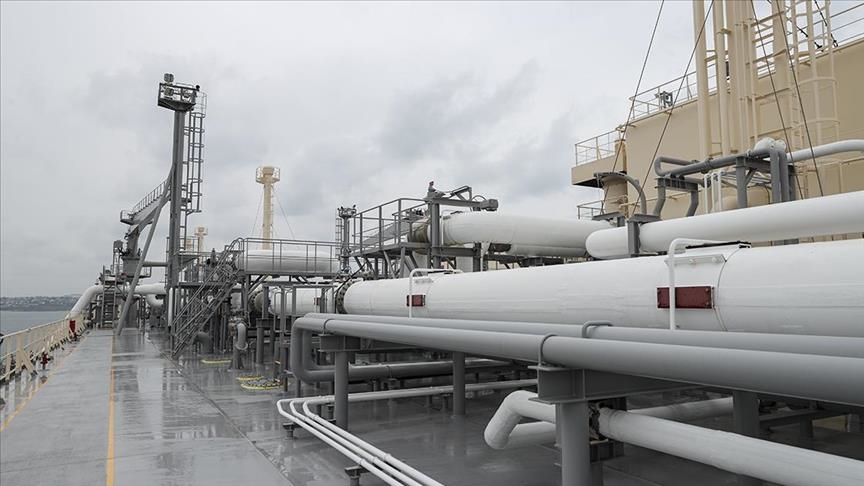
Today, an Iranian strike targeted the liquefied natural gas facilities at Ras Laffan, the strategic heart of Qatar’s energy apparatus. This site, among the world’s most important for the production and export of LNG, is not just another piece of infrastructure. It is a vital hub in the global energy balance. Striking it means crossing a threshold.
An attack on a pillar of global energy
The strike on Ras Laffan marks a turning point. This is no longer a regional show of force. It is an attack on a pillar of the global economy. For several days, the conflict between Iran, Israel and the United States has been changing in nature. By targeting Qatar, Tehran is widening the field of confrontation and openly embracing a strategy of global pressure.
The choice of target is strategic. Qatar is one of the world’s leading exporters of liquefied natural gas and a key supplier to Europe and Asia. Any disruption to its export capacity immediately translates into higher prices and strains on supply. The contraction in flows seen in recent days is direct proof of this.
Iran is pursuing what has become a familiar strategy: striking critical pressure points to make up for the limits of its conventional military capabilities. But this approach directly exposes the entire global energy system. With tensions running high in the Strait of Hormuz and infrastructure being targeted, the security of energy flows has been undermined. In this context, one point must be stressed. Despite the attack on Ras Laffan, Qatar has not chosen escalation. Since the start of the crisis, Doha has taken the opposite approach, one of restraint and de-escalation. Its decision not to retaliate is not a sign of weakness but a strategic choice to avoid a wider conflagration.
The risk is no longer merely regional. It is becoming systemic. In a global economy already under pressure, this escalation could trigger an uncontrollable domino effect. Weakening Qatar means closing one of the last remaining paths to de-escalation The significance of this strike goes far beyond the energy question. It targets an actor that has become central to regional mediation efforts. Qatar talks to everyone: to the United States, to Iran, to Islamist movements, to the Europeans. It has acted as an intermediary in major crises where no channel of dialogue remained. This position rests precisely on a consistent line: refusing to be drawn into the logic of direct confrontation.
Since the tensions began, Doha has held to this stance: no military response, keeping channels of discussion open, avoiding a spiral of escalation. This choice, often misunderstood, is nonetheless what still allows spaces for dialogue to be preserved in a region under extreme pressure. By targeting Ras Laffan, Iran is weakening one of the few actors capable of sustaining a minimum of dialogue. Yet without credible mediators, conflicts harden and become locked into a logic of direct confrontation.
The consequences are immediate. Less mediation, more tension. Exposed energy infrastructure, a vulnerable global economy. And a conflict that risks spilling permanently beyond its regional confines. There is still time to halt this spiral. But that means protecting the actors working towards de-escalation. Qatar is one of them, precisely because it refuses to be drawn into a logic of retaliation and, despite the attacks, maintains a policy of restraint. Otherwise, what is now playing out in the Middle East will be forced upon the rest of the world.
La Tribune des Nations uses cookies to measure its audience with Google Analytics. They are set only with your consent, which you can withdraw at any time.
Your cookie preferences
Choose below which cookies you accept:
Essential cookies enable basic functions and are necessary for the proper function of the website.
Name
Description
Duration
Cookie Preferences
This cookie is used to store the user's cookie consent preferences.
180 days
Cookie Preferences
This cookie is used to store the user's cookie consent preferences.