The conflict now ravaging the east of the Democratic Republic of the Congo (DRC) has its roots in a long and complex history of ethnic tensions, political rivalries and economic greed. Since the 1990s, this region rich in natural resources has been the scene of multiple wars, notably the First and Second Congo Wars (1996-1997, 1998-2003), which drew in several countries of the Great Lakes region. These conflicts, fuelled by struggles for control of minerals and land, have left a legacy of violence that endures to this day.
The emergence of the M23 in 2012, a rebel group made up mainly of former Congolese Tutsi soldiers, is part of this dynamic. The group accuses the government in Kinshasa of failing to honour the peace agreements concluded with the insurgents, particularly with regard to the reintegration of fighters into the Congolese armed forces. After a period of calm, the M23 took up arms again in November 2021, triggering a fresh wave of violence.
A Recent Escalation: The Capture of Minova
21 January 2025 marked a crucial stage in this crisis with the capture of Minova by the M23. This strategic town in South Kivu, located along the supply route to Goma, has become a focal point of the conflict. The capture of Minova represents a turning point not only for the region, but also for the balance of power in eastern DRC.
According to Congolese military sources, the Armed Forces of the DRC (FARDC) tried to contain the rebels’ advance, but intense fighting and a lack of reinforcements forced them to withdraw. One FARDC officer said: “The capture of Minova by the M23 reflects a strategic failing. We lack the means to face an enemy that enjoys foreign backing.”
Mass Displacement and the Humanitarian Crisis
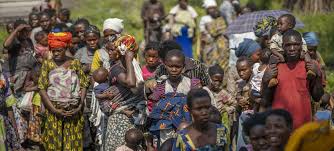
The capture of Minova has triggered waves of mass displacement. According to the United Nations, more than 178,000 people have fled their homes in two weeks. The displaced have sought refuge in the already overcrowded areas of Kalehe, Goma and Rusayo, where access to drinking water, medical care and food is extremely limited.
MONUSCO, although present in the region, finds itself in a delicate position. Its withdrawal from South Kivu in June 2024 left a security vacuum that the M23 is exploiting. Ndeye Khady Lo, spokesperson for the UN mission, stressed: “Our resources are concentrated on protecting Goma and its surroundings. We face an enormous challenge in ensuring the safety of civilians in other areas.”
Suspicions of Rwandan military support for the M23 continue to fuel tensions. According to credible reports, Rwanda has allegedly deployed troops to support the rebels, an accusation Kigali routinely denies. These allegations have led to a deterioration in relations between Kinshasa and Kigali, prompting the DRC to sever diplomatic relations with its neighbour in January 2025. This alleged interference illustrates the regional rivalries that further complicate the search for a peaceful solution. The European Union and the UN have called on Rwanda to end all support for armed groups operating on Congolese territory, but a response has been slow to materialise.
An Uncertain Future
As the conflict spreads, diplomatic efforts, notably those of the Luanda process, appear insufficient to contain the violence. The failure of international and regional actors to agree on a common strategy is making the situation worse. The recent history of eastern DRC shows that without a firm commitment from the international community and neighbouring states, the cycles of violence are likely to continue. The capture of Minova by the M23 is merely one more episode in a human tragedy that keeps getting worse. For local populations, hope lies in a swift and coordinated response that combines military solutions to counter the rebels with diplomatic initiatives to restore peace in the region.
Translated from French. The French original prevails.