The European Union has taken a historic decision: to accelerate the total ban on imports of Russian gas, whether delivered by pipeline or as liquefied natural gas (LNG). In Brussels, the measure is being presented as the “end of energy dependence on Russia”, while hardliners see it as a direct blow to the Kremlin’s financial and geopolitical power.
But while the political statements are forceful, the real economic impact could be far more nuanced. The effects of the ban could range from a severe shock to an essentially symbolic gesture. For decades, Europe was the main market for Russian gas. At its peak, Gazprom earned more than a third of its foreign-currency revenue from European customers, and gas deliveries were one of the Kremlin’s key sources of political leverage on the continent.
After the invasion of Ukraine, the energy relationship was profoundly upended. Through cuts in supply, political pressure and artificially engineered crises, Moscow repeatedly demonstrated its willingness to use energy as an instrument of coercion. The EU’s commitment to eliminating Russian gas entirely by 2027 is the direct response to that strategy.
Moscow would lose up to half of its pre-war gas revenue.
The European Commission insists that the ban is not merely economic: it is first and foremost a security measure. It aims to neutralise, once and for all, the use of gas as a tool of political blackmail. But the key question remains: can the ban really weaken Moscow?
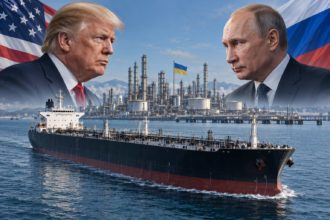
In the strictest scenario – in which the EU enforces the ban without any exemptions and Asia is unable to absorb the surplus of Russian gas – Moscow would lose up to half of its pre-war gas revenue. Such an outcome presupposes full enforcement of the ban, with no extensions for member states, notably Hungary and Slovakia. It also depends on the EU’s ability to diversify its imports completely, thanks to the United States, Qatar, Norway and African countries. A further condition is that Russia lacks the physical and technical capacity to redirect its gas rapidly to China and South-East Asia. Russia’s deployment of a shadow fleet has allowed it partly to evade sanctions, although some tankers have been destroyed by Ukraine or boarded.
Were these conditions met, the losses for the Kremlin would be considerable: the budget would be deprived of billions of dollars from gas exports, and the political influence built on energy blackmail would vanish almost entirely. The European ban, combined with falling domestic demand within the EU, could break the system on which Russia has relied for decades. But this scenario is not the most likely.
Other factors could indeed blunt the impact of the ban. Hungary is already threatening to challenge the decision in the courts. Even limited exemptions could allow Russia to retain part of its exports. China and India, for their part, are increasing their imports of Russian LNG. If Beijing signs long-term contracts, Russia will absorb some of the shock.
Some European distributors buy LNG originating in Russia but repackaged or blended, making it harder to verify its true origin. In the event of an LNG shortage, economic pressure could push some European players to oppose overly strict enforcement. In that case, Russia might lose only a negligible share of its revenue — a noticeable impact, but far from decisive.
A return to the old model is now impossible
Despite the uncertainties, one thing is beyond dispute: the era of Europe’s gas dependence on Russia is over. Even if some quantities of Russian gas continue to reach the European market by indirect routes, the EU’s long-term strategy no longer envisages any role for Moscow. Massive investment in renewable energy, LNG capacity, hydrogen and new African gas corridors is reshaping Europe’s energy landscape for good.
In other words, a return to the old model is now impossible, even if there is a change of government in Russia. The EU ban on Russian gas is not merely an economic decision; it is a major strategic break.
Russia will lose some of its revenue and influence, but the scale of the shock will depend as much on European discipline as on Moscow’s ability to adapt. In the short term, the Kremlin will feel a real but limited impact.
In the medium term, everything will hinge on the balance between European cohesion and Russia’s attempts to redirect its exports towards Asia.
One thing is clear: the geopolitics of energy in Europe has shifted, and Russian gas will never again regain the place it once held there.
Translated from French. The French original prevails.