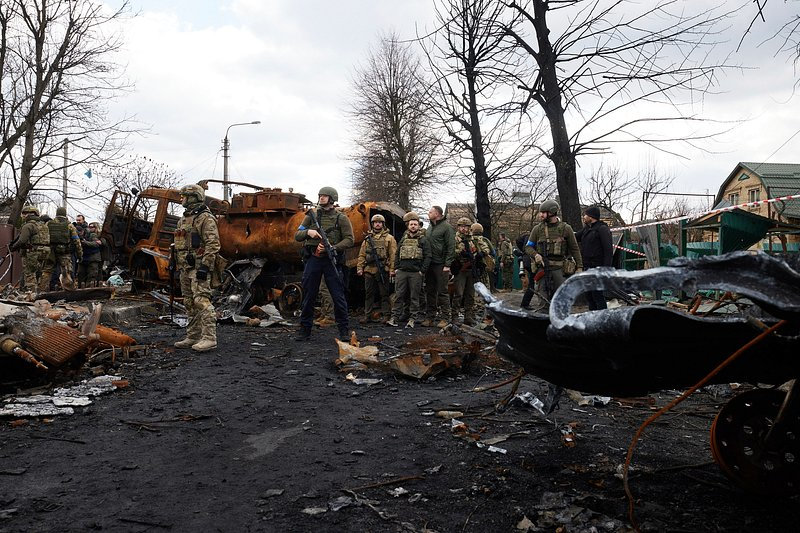
When Russian troops crossed the Ukrainian border on 24 February 2022, the Kremlin did not intend it to be the start of a long war. Russia entered Ukraine under the illusion that its adversary would be swiftly defeated — with a plan that looked more like a police operation than a war between two states. That illusion became the Russian leadership’s first and perhaps most fatal mistake.
According to Western intelligence, journalistic investigations and the testimony of Russian servicemen themselves, Moscow planned to take Kyiv in three days. The initial assault was designed around that scenario: an airborne landing at Hostomel and a rapid advance in columns from the north, banking on shock, chaos and the paralysis of Ukraine’s command system.
The Russian command’s overconfidence was so blatant that some units brought dress uniforms with them — not for combat, but to take part in a “victory parade” in the Ukrainian capital. This was later confirmed by Ukrainian servicemen and by international journalists who found uniforms among the equipment left at abandoned positions. The parade in Kyiv was to be the final act — the symbol of Ukraine’s return to the orbit of imperial Russia.
Yet Kyiv did not fall in three days. Nor in a week. Nor, indeed, at all. The Ukrainian government did not vanish. The president stayed in the capital despite Western offers to leave. The army did not disintegrate, and the civilian population took part in the defence en masse, forming territorial defence units and volunteer structures.
From that moment on, the war ceased to be a “special operation” and turned into a high-intensity war of attrition for which Russia was unprepared, both morally and organisationally.
One of the key reasons for Moscow’s failure was its profound misunderstanding of Ukrainian society. The election of Volodymyr Zelensky to the presidency in 2019 was seen not as an expression of democracy, but as a sign of a weak state.
In the distorted logic of Putin and his circle, Zelensky, who had no military experience and did not belong to the old political elite, appeared vulnerable. His rhetoric, which voiced a desire for peace, was interpreted as proof that Ukrainian society was weary of war and awaiting a “liberator”. In Russian imperial thinking, the “liberator” is always Russia itself.
The Kremlin mistook the desire for peace for a willingness to capitulate, a democratic change of government for a weak state, and criticism of politicians for a rejection of independence. That is why Moscow expected the Ukrainian government to flee, the army to disintegrate and the population to remain indifferent or to welcome Russian troops without resistance.
The reality turned out to be quite different. The failure of the “three-day” plan became a point of no return. What had begun as an attempted blitzkrieg turned into a protracted confrontation, in which the decisive factors were no longer parade columns but logistics, the economy, motivation and the support of society.
Russia launched a war in which fear and shock failed to work. Each passing month exposed the systemic weaknesses of ineffective command, limited resources and international isolation.
Ukraine, by contrast, bought time, consolidated its position and turned its initial resistance into a strategy of survival and gradual strengthening, in which resilience, adaptation and faith in the state played a key role.
From that moment on, Ukraine was not merely a country defending itself but the symbol of a global test. Two models of the world clashed there: one post-imperial, founded on force and coercion, and the other lawful, based on international treaties, sovereignty and the principles of human rights. Ukraine has shown how a democratic state with fewer resources can stand up to an aggressor.
Front line and resources: how Ukraine holds its defence
2025 was a year of positional warfare. Neither side achieved any major breakthroughs, and the front line remained almost unchanged, despite local Russian advances in certain areas. Russian troops attempted offensives in the Donetsk region, Zaporizhzhia and the north, but heavy losses and strong Ukrainian defences limited their success.
Ukrainian units held key positions and mounted local counter-attacks. Drones, modern artillery and air defence systems played a major role. This dynamic shows the limits of Russia’s offensive capability and the effectiveness of Ukraine’s defence, which is able to adapt rapidly to changes on the battlefield.
Modern combat is defined not only by the quantity of equipment or troops, but by the speed at which data is transmitted and the ability of commanders to react in real time. Logistics, communications and the protection of information systems are as critical as the line of trenches.
In 2025, the war remained gruelling. Ukraine, outnumbered, lost around 55,000 service personnel killed and thousands missing. It fights not with numbers of soldiers but with quality — the organisation of combat, the precision of strikes and the speed of adaptation. Flexible tactics — from local counter-attacks to strikes on logistics hubs — make it possible to contain Russia’s numerical superiority. A single digital picture of the front — integrating drones, artillery, reconnaissance and headquarters — making it possible to locate the enemy rapidly and deliver precise strikes.
According to the General Staff of the Armed Forces of Ukraine, Russia lost more than 418,000 service personnel in 2025 — the equivalent of nearly 35 divisions. Total losses since the start of the war exceed 1.15 million people. In November 2025, average daily losses reached around 1,100 people, according to a NATO official quoted by the BBC. These figures matter not as a statistical contest, but as indicators of the massive attrition Russia faces as it enters the fifth year of the war.
The fourth year of the war has finally shattered the illusion of “short modern conflicts”. The war in Ukraine has become a model of protracted 21st-century confrontation — with the mass use of drones, information operations and the full mobilisation of economies. It has become a testing ground for new military technologies — from automated fire-control systems to cyber-pressure tools.
Every month, both sides spend resources comparable to the budgets of mid-sized European countries.
How Ukraine sustains its resilience in wartime
In 2022, Ukraine’s GDP fell by almost 30%. A partial recovery began in 2023, but forecasts for 2025–2026 remain cautious — growth of 2 to 4% — as key industrial regions remain in the conflict zone or under constant threat of attack.
The defence economy has become a defining element of state policy: defence spending amounts to 25 to 34% of GDP. Every hryvnia of the budget is devoted to weapons, to supporting the army or to payments to service personnel.
Direct infrastructure losses exceed $176 billion, and total reconstruction needs are estimated at around $524 billion. The destruction of housing, industry, energy systems and transport is not a side effect but part of the strategy of pressure.
Western sanctions have considerably weakened the Russian economy, although Moscow is partly compensating by redirecting its energy exports to China and India. Ukraine, for its part, has redirected its exports to the European Union, strengthening integration with European markets and accelerating structural changes in the economy.
In 2025, Ukraine’s budget deficit reached 22.9% of GDP — a level that, in peacetime, would have signalled a severe macro-financial crisis. Public and publicly guaranteed debt stood at $213.3 billion. Despite this, the country has maintained financial stability thanks to strict fiscal policy, control of inflation, a stable banking system and the consistent fulfilment of its social obligations.
The economy has adapted to wartime conditions through flexible fiscal mechanisms, support for domestic production of essential goods and the mobilisation of financial resources for defence.
International assistance plays a key role. Loans, grants and deliveries of equipment not only close budget gaps but also form a system of deterrence against Russia. They keep the energy sector, transport, the social sector and defence running. International assistance has become a structural component of Ukraine’s military resilience.
The rise in debt is not the result of fiscal irresponsibility but the direct consequence of a high-intensity war. Ukraine is simultaneously financing defence, social spending and the reconstruction of critical infrastructure. In this context, debt is an instrument of survival and resource mobilisation, and macroeconomic stability is an indicator of effective management in extreme conditions.
The war is also driving the development of certain sectors — arms production, IT, energy and logistics. Under intense pressure, the state is rapidly creating new production chains and technological solutions that would have taken years in peacetime.
Ukraine has not only adapted its defence industry to the demands of modern warfare but is also gradually beginning to export its technologies. In 2026, ten Ukrainian drone production and export centres are planned in Europe; some lines are already operating or are being launched, notably in Germany and the United Kingdom. President Volodymyr Zelensky has stressed that Europe’s security “is being built today on technology and drones”, and these projects rely on Ukrainian expertise and developments. This is not merely an economic outcome, but part of the new European security architecture.
Russia’s economy: war as a driver of growth
After the start of the full-scale war, many experts predicted a swift economic collapse in Russia. It did not happen. The Kremlin redirected the economy towards war production, devoting a large share of public spending to military programmes.
Germany’s Federal Intelligence Service (BND) concluded in its analysis that the Russian Federation’s actual military spending far exceeds the officially declared figures. According to the BND, Russia’s actual defence spending is around 66% higher than that shown in public budget documents.
According to these estimates, Russia’s actual military spending in 2025 could reach some €250 billion — almost half of all public spending and around 10% of GDP. By comparison, at the start of the full-scale invasion in 2022, spending was estimated at around 6% of GDP, which points to a rapid and systematic militarisation of the economy.
The BND notes that a large share of spending does not appear under the “defence” heading but is spread across other budget sections — notably funding for military construction, dual-use IT programmes, logistics, administration and social programmes for service personnel and their families. The use of a narrow definition of defence spending makes direct comparison with NATO countries more difficult.
The report also stresses that the funds are being spent not only on the war against Ukraine but also on expanding military infrastructure along the borders with NATO countries. This points to long-term planning and to the strategic nature of the militarisation.
These findings were reported by the British newspaper “The Telegraph”, citing the BND’s analysis. The intelligence service stresses that the scale and structure of the spending demonstrate a growing threat to European security.
The Estonian Foreign Intelligence Service reported in 2026 that Russia has significantly increased its production of artillery shells, mines and missiles. In 2025, more than 7 million units of ammunition were produced, compared with 4.5 million in 2024. Since the start of the full-scale invasion, production has increased seventeenfold thanks to expanded capacity.
The Kremlin has reorganised the economy so that the defence sector has become one of the main drivers of growth. Losses are offset by resource rents and by cooperation with states that have not joined the sanctions regime. Without stronger sanctions pressure, the war remains economically manageable for Moscow.
The humanitarian front of the war
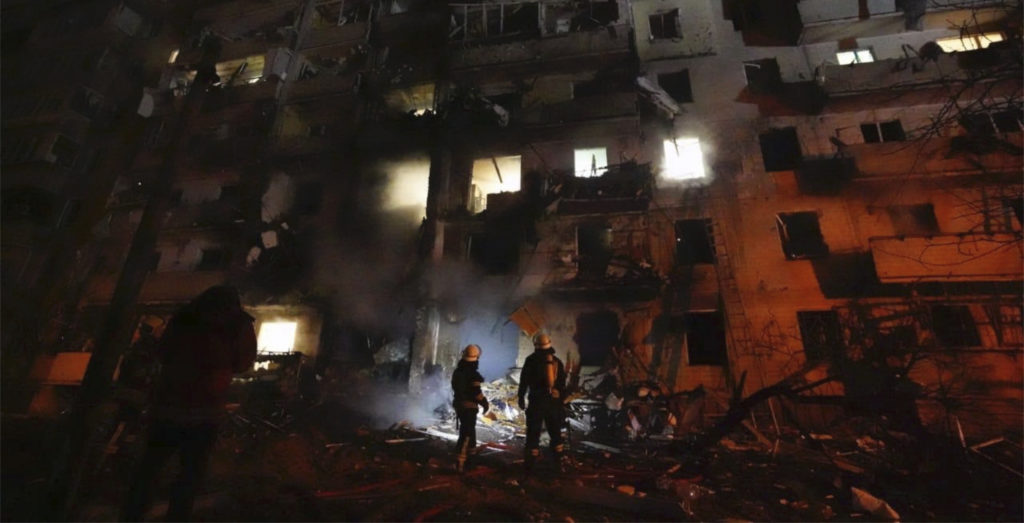
According to the UN Human Rights Monitoring Mission in Ukraine, 2025 was the deadliest year for civilians since the start of the full-scale invasion: 2,514 civilians killed and more than 12,000 injured. This was no accidental flare-up of violence, but the result of a systematic escalation of strikes on residential areas and civilian infrastructure.
The massive use of long-range missiles, wide-area munitions and armed drones has all but erased the line between the front and the rear. In today’s Ukraine, civilian life has become an integral part of the battlefield.
Some 97% of the casualties were in areas controlled by the Ukrainian government. June and July 2025 were the deadliest months.
The humanitarian dimension of the war has become systemic. A particularly critical element was the targeted destruction of energy and municipal infrastructure, especially in winter. Strikes on power stations, substations, heating networks and water mains deprived millions of people of essential services.
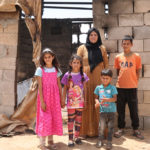
More than 6.9 million Ukrainians have become refugees abroad, and 3.7 million people have been internally displaced. Nearly a third of the population is therefore in a situation of forced displacement.
Winter is no longer merely a season — it has become a test of endurance. Life is planned around power cuts. In the major cities, including Kyiv, entire neighbourhoods have repeatedly been plunged into humanitarian crisis owing to a lack of electricity, heating and water. For a metropolis of millions during a severe cold spell, this poses a direct threat to life.
In the occupied territories, Russia is exerting systematic pressure on Ukrainian identity: deportations, the forcible transfer of children, the closure of Ukrainian schools, and persecution for using the language or for cultural activities.
As a result, more than 10 million people are in need of humanitarian aid, and society has suffered profound psychological trauma.
At the same time, sociological data point to a high level of resilience: around 65% of citizens are prepared to continue resisting even if the war drags on. According to the Kyiv International Institute of Sociology, in January 2026, 52% of Ukrainians categorically rejected ceding the Donbas to Russia in exchange for security guarantees, while 40% considered a compromise possible, while acknowledging its complexity.
Society is living with the reality of difficult choices, in which security, territorial integrity and peace are in a delicate balance.
The humanitarian crisis in Ukraine is not a temporary by-product of the war but one of its key fronts. It will determine the ability of the state to survive, of society not to break, and of the international community to prove that the protection of civilians is a genuine value rather than a mere declaration.
This war is not merely a geopolitical conflict or a struggle for spheres of influence. It is existential. For Ukraine, its outcome will determine not only where the borders are drawn, but the very existence of the state and the nation. This is not rhetoric: it is a confrontation with the Kremlin’s declared objectives, as set out in official statements (“denazification”, “de-subjectivation”), in texts issued by Russian state agencies (including programmes for the “re-education” of Ukrainians) and in practices in the occupied territories (the eradication of the language, the deportation of children, repression).
It is this existential nature of the war that explains the resilience of Ukrainian society, which often surprises outside observers. For most Ukrainians, defeat would mean not merely a change of government or policy, but the loss of fundamental rights, repression and forced assimilation. In this context, the will to endure the war is not an ideology but a form of collective self-defence.
The international dimension of the conflict
The war in Ukraine is a test for the international security system. It is putting to the test whether the global community can uphold the principles of sovereignty and territorial integrity in the 21st century.
Western support continues, but it is running up against domestic political constraints: electoral cycles, budget debates and growing public fatigue. The idea of “freezing” the conflict surfaces periodically in public debate, but a ceasefire without security guarantees risks being no more than a pause before a new phase of the war.
According to the European Council on Foreign Relations (ECFR), trust in the United States as an ally has declined in some European societies. In certain countries, only 10 to 15% of respondents regard the United States as an unconditional ally, while some see its policy as pragmatic or unpredictable. This is explained by domestic political processes in the United States and the shift in tone of its foreign policy.
Despite this global turbulence, the European Union remains Ukraine’s main strategic partner. In recent years, the EU has provided more than $162 billion in aid. For 2026–2027, a €90 billion package has been approved, around two thirds of it for defence and the remainder for budgetary and social support.
At the same time, efforts to speed up Ukraine’s integration into the EU are continuing, with the aim of gradually advancing the negotiation process up to 2027.
The talks in Abu Dhabi between Ukraine, Russia and the United States failed to produce a breakthrough on a peace process. Territorial questions and the status of the Zaporizhzhia nuclear power plant remain unresolved. Without clear and lasting security guarantees, diplomatic contacts are going nowhere. Ignoring the existential nature of this war breeds dangerous illusions. Compromises that would be acceptable in ordinary inter-state conflicts here amount to legitimising the destruction of a sovereign nation and show that aggression goes unpunished. That is why any decision that does not guarantee Ukraine’s security and survival as a state is unacceptable.
The war in Ukraine is already shaping the future security system of Europe and the world. If a state that has given up nuclear weapons can be attacked without consequences for the aggressor, the logic of non-proliferation collapses.
This war is undermining confidence in the international non-proliferation treaties, security guarantees for other states and the international community’s willingness to intervene in the event of aggression. The future security system will either include Ukraine as an element of deterrence or lose its credibility. “Grey zones” no longer exist — they merely provoke new conflicts.
Supporting Ukraine today is an investment in the security of Western countries: every year of aid reduces the risk of a direct confrontation between Russia and NATO and strengthens the international order.
The fourth year of the war has shown that Ukraine is capable of holding out even in the worst conditions. The question, however, is now a global one: is the world prepared to invest in a just and lasting peace, rather than in the endless management of the crisis? Ukraine has paid too high a price for this war to end in a “weary compromise”. The outcome will determine not only Ukraine’s future, but also the rules of the game in a world where war has once again become an instrument of policy. Without decisive support, the risk of turning Ukraine into a “frozen conflict” could set a dangerous precedent for the entire world, signalling that aggression against democracies can go unpunished.
If a country that has given up nuclear weapons can become the target of full-scale aggression without strategic consequences for the aggressor, this undermines confidence in the entire system of international guarantees.
Four years of war have dispelled any illusions. This is not a war for a temporary compromise — it is a struggle for survival. For Ukraine, quite literally. For the world, a test of principle: no nation may be destroyed by force.
The outcome of this war will determine not only Ukraine’s future but also the norms of international law in a world where war has once again become an instrument of policy.
Translated from French. The French original prevails.