Article by Céline Tabou in partnership with Chine Magazine
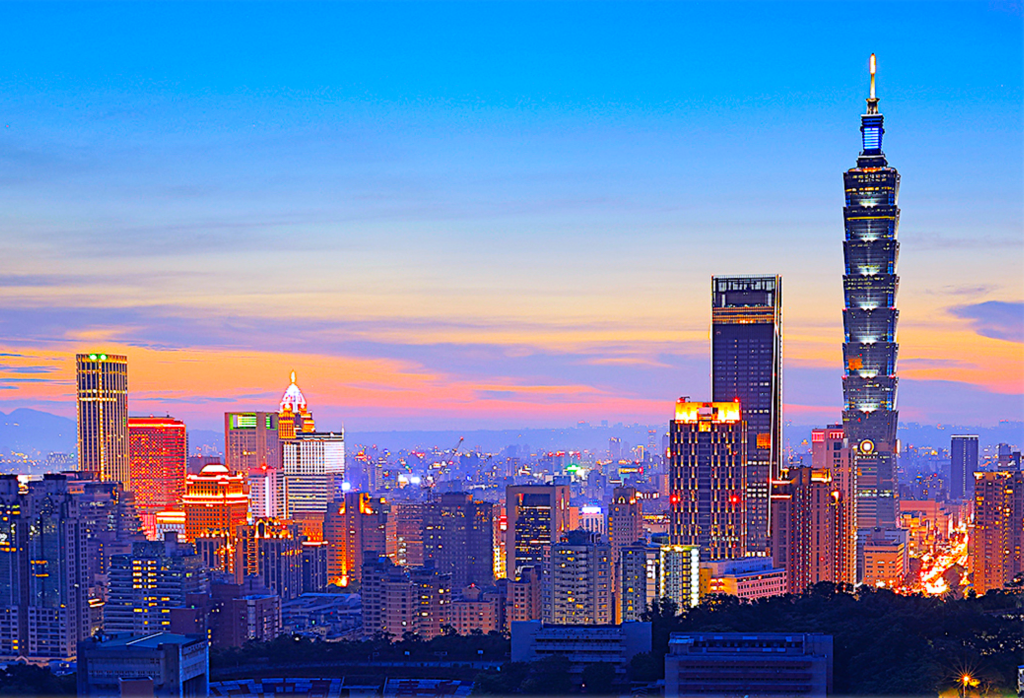
View of Taipei, the capital of Taiwan.
Since the end of the Second World War, Taiwan has occupied a special place in international relations. A small island in East Asia with a population of around 23 million, it lies at the heart of a major strategic confrontation between two great powers: the People’s Republic of China and the United States of America. Although Taiwan is a territory of limited size, its geopolitical, economic and symbolic importance extends far beyond its borders.
The Taiwan question is, above all, a legacy of modern Chinese history. It stems from the Chinese Civil War between the Kuomintang and the Chinese Communist Party, and from the lasting political division between Beijing and Taipei. For China, Taiwan is a rebel province destined to be reunified, by force if necessary. For the United States, Taiwan is at once a strategic partner, a pillar of regional stability and a symbol of the defence of democratic regimes against authoritarianism. It is also a source of the semiconductors that American high technology depends on.
Tensions over Taiwan have intensified considerably since the beginning of the 21st century, against a backdrop of growing rivalry between China and the United States. The Republican Donald Trump’s rise to power in 2017 severely strained bilateral relations, notably through the imposition of unprecedented tariffs, triggering an endless trade war.
China’s economic and military rise, combined with the US strategic repositioning in the Asia-Pacific, has turned the Taiwan Strait into one of the most dangerous flashpoints in the contemporary international system. The US Indo-Pacific strategy, introduced under Barack Obama’s administration, aims to strengthen the position of the United States in a region that was previously not particularly hostile.
This piece sets out to analyse why Taiwan has become a central source of tension between China and the United States. It is structured around three main themes: the historical and political roots of the Taiwan question, the strategic and economic importance of the island, and finally the geopolitical and military implications of the latent Sino-American conflict over Taiwan.
I. The historical and political origins of the Taiwan question
In 1544, Portuguese sailors navigating the region gave the island of Taiwan its first nickname, Ihla Formosa, “the beautiful island”. In 1624, the Dutch East India Company, ever in search of new territories, founded a colony on the south-west coast of the island, where present-day Tainan stands, and later a base in what is now Tamsui.
Taiwan has not always occupied a central place in the history of imperial China. Long inhabited mainly by Austronesian peoples, the island began to be gradually integrated into the Chinese sphere from the 17th century onwards, with the arrival of Han settlers from mainland China.
1. Taiwan in Chinese history
The Qing dynasty ruled the island of Taiwan from 1683 to 1895. In 1683, it sent an army commanded by General Shi Lang to defeat the Kingdom of Tungning, which was loyal to the Ming dynasty. Taiwan was then formally annexed in April 1684. It was administered as Taiwan Prefecture, part of Fujian Province, until the creation of Fujian-Taiwan Province in 1887.
During the 18th and 19th centuries, the Qing dynasty extended its control over Taiwan along the west coast, across the western plains and into the north-east. The imperial court pursued no active policy of colonisation and restricted Han immigration to Taiwan for most of its rule, fearing rebellions and conflict with Taiwan’s indigenous peoples. The Han were forbidden from settling on indigenous land, and boundary markers were used to separate inhabited areas from the territories of the mountain aboriginal peoples.
Despite the restrictions imposed by the Qing dynasty, the Han continued to pour into Taiwan and to push back the limits of indigenous territory, thereby extending the Qing frontier across the whole of the western plains and the north-east of the island. The lack of state administration led to Han rebellions. By the end of Qing rule in 1895, Taiwan’s Han population had grown by more than 2 million, with some estimates putting the figure at over 3 million, making the Han the majority ethnic group on the island. Taiwan was ceded to the Empire of Japan under the Treaty of Shimonoseki in April 1895, following the Qing dynasty’s defeat in the First Sino-Japanese War (1894-1895).
The island remained under Japanese rule for 50 years, a period during which it underwent far-reaching economic and administrative modernisation, but also a policy of harsh colonial domination.
The Japanese spent the first months of the occupation fighting local resistance, losing thousands of men to the diseases ravaging the island. The Japanese authorities then went on to improve sanitary conditions and, in particular, to build a railway network. But the Aboriginal populations suffered under the occupation and watched as the Japanese appropriated their land. This led to revolts, which were swiftly crushed by the island’s new occupiers.
Taiwan was by then an important Japanese military base during the Second World War: nearly 200,000 Taiwanese were serving in the Japanese army at the time. And although Japan handed Taiwan back to China in 1945, its presence on the island would leave a lasting mark.
During the first two years, Japan relied mainly on military force and local pacification efforts. Disorder and panic gripped Taiwan after Japan seized Penghu in March 1895. On 20 May, Qing officials were ordered to leave their posts. The months that followed were marked by widespread chaos and destruction.
This Japanese interlude helped to forge a distinct Taiwanese identity, partly separate from that of mainland China. When Japan was defeated in 1945, Taiwan was returned to China, then governed by the Kuomintang (KMT), the Nationalist party led by Chiang Kai-shek.
2. The Chinese Civil War and political division
Taiwan’s return came against the backdrop of a civil war pitting the Kuomintang against the Chinese Communist Party (CCP). In 1949, the Communists’ victory on the mainland led to the proclamation of the People’s Republic of China in Beijing. The Nationalist government then retreated to the island of Taiwan, taking the institutions of the Republic of China with it.
This situation created a lasting political division: two entities each claiming the legitimacy to represent China. On the mainland, the People’s Republic of China asserts that it is the sole legitimate government. In Taiwan, the Republic of China maintained the same claim for several decades, while exercising effective control only over the island and a few outlying archipelagos.
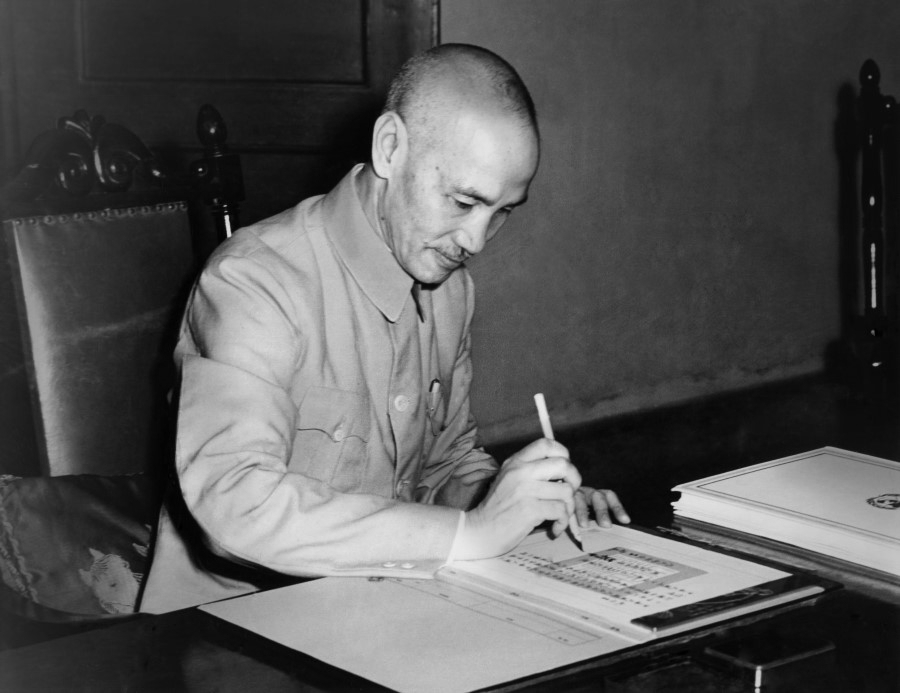
Chiang Kai-shek, President of the Republic of China, signing the UN Charter, before his representatives were expelled from the UN in 1971 following the adoption of Resolution 2758 restoring all its rights to the People’s Republic of China.
For China, Taiwan became a breakaway province that must be reunified in the name of territorial integrity and Chinese nationalism. This position is a fundamental ideological pillar of China’s communist regime, reinforced by the historical trauma of the foreign interference China suffered in the 19th and 20th centuries. The Republic of China and the People’s Republic of China are bound by the One China principle, which has three aspects: there is only one China in the world, Taiwan is an integral part of China’s territory, and the government of the People’s Republic of China is the sole legal government representing the whole of China.
In 1971, the UN General Assembly adopted Resolution 2758, deciding to restore all its rights to the People’s Republic of China at the United Nations and to expel forthwith the representatives of the Taiwan authorities from the UN and all the organisations related to it, the Minister of Foreign Affairs, Wang Yi, explained on 7 March 2025 at a press conference held during the annual sessions of the NPC and the CPPCC. “This resolution settled once and for all the question of the representation of the whole of China, of which Taiwan is a part, at the United Nations, and rules out any possibility of creating ‘two Chinas’ or ‘one China, one Taiwan’. At the UN, the Taiwan region has only one name, which is Taiwan, Province of China,” he stressed. The one-China principle.
For their part, the leaders of the Republic of China (ROC) interpret this principle differently: “The ROC’s position is that there are currently two political entities within this China: the PRC on the mainland and the ROC on Taiwan. Since 1949, these two entities have in fact governed Taiwan and the Chinese mainland separately. Taipei recommends that both sides accept the situation as it is and then work towards developing cooperation across the Strait. In practice, this means that talks should be conducted between the two entities on an equal footing, and not between a suzerain government and its vassal, as Beijing has always implied.”
This difference in interpretation is acknowledged by the United States, which maintains that “US policy is not an endorsement of Beijing’s position, since Washington maintains a ‘robust unofficial’ relationship with Taiwan, including continued arms sales to the island so that it can defend itself”, the BBC wrote.
3. The internationalisation of the Taiwan question
From the outset of the Cold War, the Taiwan question took on a major international dimension. The United States, committed to a global strategy of containment of communism (a policy of firmness aimed at preventing the spread of communism), saw Taiwan as a strategic bulwark against communist expansion in East Asia. Washington provided decisive political, economic and military support to the government in Taipei.
The Korean War (1950-1953) reinforced this dynamic. The UN and Taiwan backed the Republic of Korea (South Korea) against the Democratic People’s Republic of Korea (North Korea), which was supported by China and the USSR. Fearing that the conflict would spread, the United States deployed its fleet in the Taiwan Strait, thwarting any attempt by communist China to retake the island militarily. This intervention left a lasting mark on the triangular relationship between Beijing, Taipei and Washington.
From the 1970s onwards, however, a major shift took place. Against the backdrop of Sino-American rapprochement, the United States officially recognised the People’s Republic of China as the sole legitimate government of China. Taiwan then lost its seat at the United Nations and found itself increasingly marginalised on the international diplomatic stage.
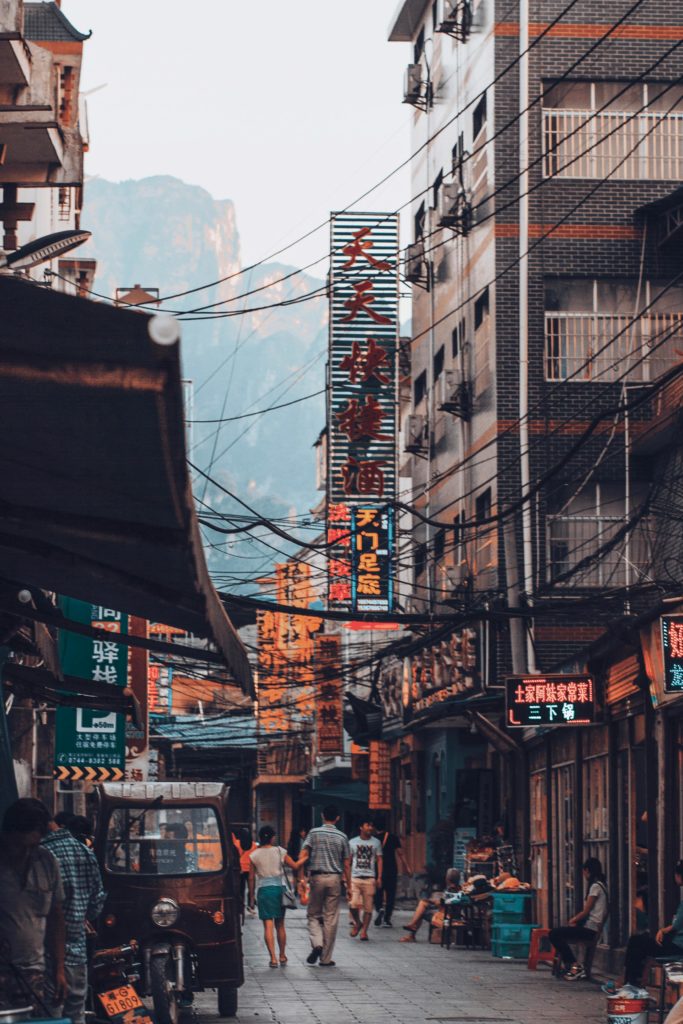
Despite this recognition, the United States maintains close unofficial relations with Taiwan, notably through the Taiwan Relations Act passed in 1979. The law commits Washington to providing Taiwan with the means necessary for its defence, without formally recognising its independence.
Over the years, Taiwan became an economic and commercial windfall for Washington. For “if you seize Taiwan, you seize the world’s main shipping lanes. Practically 80% of international freight, which matters to China, Japan and Korea, passes through these routes”, explained Emmanuel Lincot, a sinologist, professor at the Institut Catholique de Paris and researcher at the Institut de Relations Internationales et Stratégiques (IRIS).
The other sector coveted by the United States is semiconductors. For “Taiwan, a dominant player in the global semiconductor value chain, has acquired the indispensable status of industrial centre of gravity of the artificial intelligence revolution”. Cheng Ting-Fang, Chief Tech Correspondent for the business news outlet Nikkei Asia, told the Institut Montaigne that “the United States sets the pace of global artificial intelligence development”, increasing its investment in building artificial intelligence data centres. Taiwan has strengthened its cooperation with the United States in order to remain competitive. In March 2025, TSMC, a leader in semiconductors, announced a $100 billion investment plan in Arizona, including the construction of an R&D centre, two advanced packaging sites and three new factories. A third factory was also announced, with an investment of $65 billion.
II. Taiwan’s political evolution and the transformation of relations with China
1. From authoritarianism to Taiwanese democracy
After retreating to Taiwan in 1949, the Kuomintang established an authoritarian regime founded on martial law, which remained in force until 1987. Political power was monopolised by an elite drawn largely from mainland China, while the local Taiwanese population was marginalised. The period was marked by severe political repression, known as the “White Terror”, during which thousands of real or suspected opponents were imprisoned or executed.
From the 1970s, however, and above all in the 1980s, Taiwan underwent a gradual political transformation. Under pressure from social movements, intellectuals and a growing middle class, the government embarked on a series of democratic reforms. The lifting of martial law in 1987 marked a decisive turning point. Opposition parties were legalised, press freedom expanded and multi-party elections were gradually introduced.
This democratisation culminated in a historic event in 1996: the election of the President of the Republic of China by direct universal suffrage. This political development had far-reaching consequences for relations with mainland China, as it strengthened a distinct political identity and fuelled aspirations to autonomy, and even to independence.
Since 2000, Taiwanese democracy has been distinguished by peaceful transfers of power, active civic participation and institutional reforms in the face of geopolitical challenges. Despite tensions with China, Taiwan has consolidated a mature multi-party model.
The 2000 presidential election marked a historic turning point with the victory of Chen Shui-bian (DPP) over the KMT, the first transfer of power after 50 years of one-party rule, demonstrating the maturity of the system. In 2008, the KMT returned to power with Ma Ying-jeou, then in 2016 Tsai Ing-wen (DPP) became the first woman president with a parliamentary majority, illustrating the vitality of free elections. The 2020 and 2024 elections confirmed this stability, with high turnout (around 74%) and peaceful transfers of power.
Taiwanese democracy stands out for its dynamic civil society, as shown by the 2014 Sunflower Movement against a trade agreement with China, which influenced politics and strengthened transparency. In 2020-21, its exemplary handling of the Covid-19 pandemic, through open communication and participatory digital tools (such as Taiwan), was praised worldwide, involving citizens and experts in public decision-making. Referendums, introduced in 2003 and refined since, allow citizens to decide on major issues, such as same-sex marriage, legalised in 2019 after a popular vote.
Debates between the KMT (moderately pro-reunification) and the DPP (pro-independence) shape political life without paralysing it, though there are very strong tensions on certain issues, such as the budget, alongside continuity on the economy and Taiwanese identity despite the alternating victories. Post-2000 constitutional reforms modernised the Legislative Yuan, lowered the voting age to 18 in 2022 and promoted gender parity (more than 40% women in parliament in 2024).
Faced with Chinese pressure (cyberattacks, military exercises), Taiwan has built itself around a “defensive democracy”: the victory of Lai Ching-te (DPP) in 2024, despite intimidation from Beijing, demonstrates its electoral resilience. The economy remains a pillar of democracy, with GDP per capita exceeding $35,000 in 2025, funding inclusive social policies (universal healthcare, free education). Controversies persist, such as parliamentary deadlock and accusations of corruption, but the institutions deal with them through audits and frequent local elections.
Taiwan is often described as a “democratic miracle” in Asia, in contrast to Chinese authoritarianism, and serves as a model for countries such as South Korea and the Philippines. In 2025, its Democracy Index (Economist Intelligence Unit) ranked it 10th in the world, ahead of many Western states, thanks to a cultural pluralism that embraces Indigenous peoples and new immigrants. This vitality continues in 2026, with debates on cybersecurity and green energy conducted transparently.
2. The construction of a distinct Taiwanese identity
Democratisation fostered the emergence of an increasingly assertive sense of Taiwanese identity. Whereas for decades the Kuomintang had promoted an exclusively Chinese identity, Taiwanese society discovered its own history, shaped by the Japanese period, local cultures and a political experience different from that of the mainland.
Opinion polls show a significant shift: a growing majority of the population defines itself as Taiwanese rather than Chinese, or as Taiwanese first and Chinese second. Beijing views this transformation of identity with concern, seeing it as a direct challenge to the “One China” principle.
Indeed, according to a survey carried out in November 2025 by the Mainland Affairs Council, 78% of respondents reject Beijing’s claim that there is only “one China” in the world and that Taiwan is an integral part of that China. Taiwanese people also reject Beijing’s argument that cross-strait peace can be guaranteed only by respecting the one-China principle and the 1992 cross-strait consensus. However, 86% of those surveyed support the government’s wish to pursue exchanges and negotiations with the People’s Republic of China on the principles of equality and mutual respect.
Taiwan’s political parties reflect this divide. The Kuomintang remains in favour of closer ties with China, with a view to economic cooperation and maintaining the status quo. The Democratic Progressive Party, by contrast, takes a more assertive stance in favour of Taiwanese sovereignty, while avoiding a formal declaration of independence that could provoke a Chinese military response.
After coming to power in 2016, Tsai Ing-Wen of the Democratic Progressive Party received a call from the US president, Donald Trump. The exchange angered China, but above all it symbolised the radical shift in relations between Beijing and Taipei. Whereas the KMT had worked in collaboration with the CCP, Tsai did not reaffirm the 1992 Consensus, which embodies the one-China principle (or “one country, two systems”). This lack of recognition was backed by the Taiwanese public, who now aspire to greater recognition of their Taiwanese identity and culture.
After Tsai Ing-wen came to power, pro-independence movements grew stronger, calling for Taiwan’s independence. Beijing firmly rejected the call, denouncing what it described as a desire on the part of the Democratic Progressive Party to divide the country. Nevertheless, Tsai Ing-wen went on to establish a largely pro-American government, which endures to this day under the presidency of William Lai.
3. Cross-Strait economic relations: interdependence and paradoxes
Despite political tensions, economic relations between China and Taiwan have developed considerably since the 1990s. Mainland China has become Taiwan’s main trading partner, and thousands of Taiwanese companies have invested in Chinese industrial zones, drawn by an abundant workforce and lower production costs.
In 2024, total trade between China and Taiwan reached $292.97 billion, according to official figures cited by the Chinese news agency Xinhua. This economic interdependence creates a major paradox. On the one hand, it fosters a form of stability by making armed conflict extremely costly for both sides. On the other, it heightens Taiwan’s strategic vulnerability, as the island depends heavily on the Chinese market for its exports and its industrial value chains.
Yet the Chinese authorities suspect Taipei of seeking to promote economic decoupling and to “break the chains” of economic ties across the Taiwan Strait in order to please the United States, according to the Global Times.
Beijing sometimes uses this economic dependence as political leverage, threatening economic sanctions or restricting certain trade to put pressure on the Taiwanese government. This so-called “economic coercion” strategy aims to discourage any move towards independence.
But this strategy could have harmful consequences for the Chinese economy. That is why, in recent years, Beijing has decided to try a new strategy, stepping up military pressure on Taiwan. Since 2022, China has deployed warships and fighter jets around the island almost daily, and has launched six rounds of large-scale manoeuvres, the most recent in December.
4. China’s rise and its hardening stance
Since the start of the 21st century, China’s economic and military rise has profoundly altered the balance of power in the Taiwan Strait. Beijing has invested heavily in modernising its armed forces, particularly in naval, air and ballistic capabilities that could play a decisive role in any conflict over the island.
Since Xi Jinping took office as General Secretary of the CCP and President of the PRC, official Chinese rhetoric has hardened. Reunification with Taiwan is presented as an unavoidable historic goal, tied to the Chinese path to modernisation, which is “the great path to building a strong country and rejuvenating the nation”. The Chinese authorities no longer explicitly rule out the use of force, particularly in the event of a formal declaration of independence by Taiwan or of foreign interference deemed excessive.
This shift worries not only Taiwan but also the United States, which sees the Taiwan question as a major test of the credibility of its commitment in the Asia-Pacific region, and as a means of blocking China’s expansion into the Pacific.
To meet the US administration’s demands on military equipment (which will be supplied mainly by Washington) and to avoid being abandoned by Donald Trump, who has already hinted that he might stop supporting Taiwan, Taipei has decided to increase its defence budget.
On 7 February, Taiwan’s leader William Lai presented a highly ambitious budget of 40 billion dollars, which is for now being blocked by the opposition, which is demanding concessions, prompting signs of impatience in Washington. Taipei is indeed under US pressure to do more to counter the growing threat from China, which could attack Taiwan by 2027, according to US officials. For example, in a letter dated 12 February, 37 Republican and Democratic lawmakers from both houses of Congress urged Taiwan’s political parties to agree on a “significant” increase in defence spending “to deter aggression by the PRC (People’s Republic of China)”.
III. Taiwan at the heart of the strategic rivalry between China and the United States
1. Taiwan’s geostrategic importance
Taiwan occupies a particularly strategic geographical position in East Asia. Lying at the heart of the “first island chain”, which stretches from Japan to the Philippines, the island is a key crossing point between the East China Sea and the South China Sea. Control of Taiwan would allow China to considerably expand its maritime strategic depth and to project its naval power more freely into the western Pacific.
For China, annexing Taiwan would, in domestic political terms, allow President Xi Jinping to go down as the man who reunified China. China also wants to take control of the Taiwanese semiconductor giant TSMC (Taiwan Semiconductor Manufacturing Company), which manufactures more than 70% of the world’s output of the latest-generation integrated circuits at the heart of the new industrial revolution, according to Asialyst. As a result, “China would then hold all the cards to master virtually every advanced technology, the only essential one it still lacks being, precisely, the ability to manufacture the most powerful semiconductors”.
“If Taiwan falls under Chinese communist control, several things will happen, none of them good for the United States or the free world, not to mention the Taiwanese themselves. Militarily, it will be a huge advantage for Communist China’s People’s Liberation Army,” Colonel Grant Newsham explained in the American conservative daily The Sun on 16 May, as quoted by Pierre Antoine Donnet
For the United States and its regional allies, by contrast, Taiwan serves as a strategic lock. Indeed, if Taiwan were reunified with China, ” America’s reputation would be ruined. It would struggle to hold on in the Asia-Pacific region and would gradually be pushed back to Hawaii and the US west coast. Globally, it would be on the brink of the abyss”, according to Grant Newsham, author of the book When China attacks : A Warning to America.
Indeed, keeping it out of Chinese control helps to contain Beijing’s military expansion and to maintain a favourable balance of power in the Indo-Pacific region. A forced reunification would profoundly alter that balance and strengthen China’s ability to challenge the American presence in Asia. Such a change in status “will have enormous repercussions for the future of US alliances in the region, which are Washington’s most important asymmetric advantage over Beijing”, said David Sacks, a fellow for Asia studies at the Council on Foreign Relations (CFR).
2. Taiwan’s economic and technological role
Beyond its geographical position, Taiwan occupies a central place in the global economy. Indeed, it is “ranked among the world’s top 20 economies in terms of gross domestic product (GDP) per capita, offering attractive investment opportunities”, explained the consultancy Risques et Opportunités. Moreover, “with GDP of close to 800 billion dollars in 2024, Taiwan ranks as the world’s 22nd-largest economy and the 6th-largest in Asia”, the platform said.
The island also plays a considerable role in the high-tech sector. It is a key player in the semiconductor industry, whose products are indispensable to the functioning of modern electronic devices, advanced military systems and digital infrastructure.
The Taiwanese company TSMC (Taiwan Semiconductor Manufacturing Company) is the world’s leading manufacturer of high-tech microchips. This dominance gives Taiwan considerable strategic importance, often described as a “silicon shield”. The assumption is that global interdependence in semiconductors would deter any large-scale military action against the island.
For the United States, “Taiwan is a major trading partner of the United States and a vital link in global technology and manufacturing supply chains. Its economy is heavily dependent on international trade; exports account for around 70% of its gross domestic product (GDP)”.
Indeed, Taiwan’s security is closely bound up with the security of America’s technology supply chains. A Chinese takeover of Taiwan would pose major risks in terms of strategic dependence and US national security.
3. The US policy of “strategic ambiguity”
For several decades, the United States has pursued a policy of so-called “strategic ambiguity” towards Taiwan. The strategy aims to deter China from using force, while discouraging Taiwan from formally declaring independence.
In practice, this ambiguity involves not stating clearly whether the United States would intervene militarily in the event of a Chinese attack on Taiwan, signing bilateral economic and trade agreements and backing Taipei diplomatically on the international stage. Although it has recognised the People’s Republic of China since 1978, Washington has nonetheless maintained strong ties with Taiwan, selling arms to Taipei, which Beijing regards as a violation of its sovereignty. These purchases fall within the framework of the “Taiwan Relations Act”, which commits the United States to providing Taiwan with sufficient means of defence, without establishing a formal military alliance.
But since Donald Trump took office, relations have intensified in the technology sector. The United States is in direct competition with China in this sector, which has become crucial today. Moreover, some US officials have adopted a tougher stance, suggesting that the United States could defend Taiwan militarily. This shift, seen as a weakening of strategic ambiguity, is helping to heighten tensions with China. All the more so as
However, according to Charles-Emmanuel DETRY, the US administration is committed to supporting Ukraine and is helping Israel in its war against Hamas, and does not want to have to deal with another flashpoint. But when it comes to China, the United States’ main adversary, Democrats and Republicans hold fairly similar positions and are aware of what is at stake in a region that is the geopolitical centre of gravity of the world.
4. The growing militarisation of the Taiwan Strait
The Taiwan Strait has become one of the most militarised areas in the world. According to Hugo Tierny, “Taiwan is the key to the naval containment of China. Taking the island would allow Beijing to secure its coastline, break its maritime encirclement and benefit from Taiwan’s geographical advantages over its American and Japanese adversaries. Indeed, the island’s coasts open directly onto the deep waters of the Pacific; Chinese submarines could set sail from there undetected.”
That is why China is stepping up military exercises, air and naval incursions and shows of force there, designed to intimidate Taiwan and deter any foreign intervention. Mathieu Duchâtel explained to the Institut Montaigne that “these operations are part of a twofold context. First, a general context: since 2020, military coercion has played a growing role in China’s policy towards Taiwan. Chinese naval and air forces are deployed around Taiwan, without however entering its airspace or territorial waters, with an objective that is at once political – keeping up the pressure on Taiwan’s military and political authorities – military – preparing for a possible conflict by training on the ground – and psychological – convincing the Taiwanese and the international community of China’s determination to accept the cost of a war”.
In response, Taiwan is strengthening its defence capabilities, favouring a so-called “asymmetric defence” or “porcupine” strategy. “The aim is, with limited resources, to make the Taiwanese prey too hard for the Chinese predator to swallow.” Taiwan’s defence strategy thus relies on the use of missiles, drones, sea mines and mobile forces capable of making an invasion extremely costly for a numerically superior adversary.
Taiwan has few allies, but under the Taiwan Relations Act, Washington supplies US-made equipment (decommissioned frigates, various armoured vehicles and fighter jets) and critical components for projects of Taiwan’s defence industrial and technological base, alongside diplomatic and military exchanges. In addition, military exercises are held between the Taiwanese and US armed forces, notably in the United States, to familiarise Taiwanese personnel with the use of their new equipment.
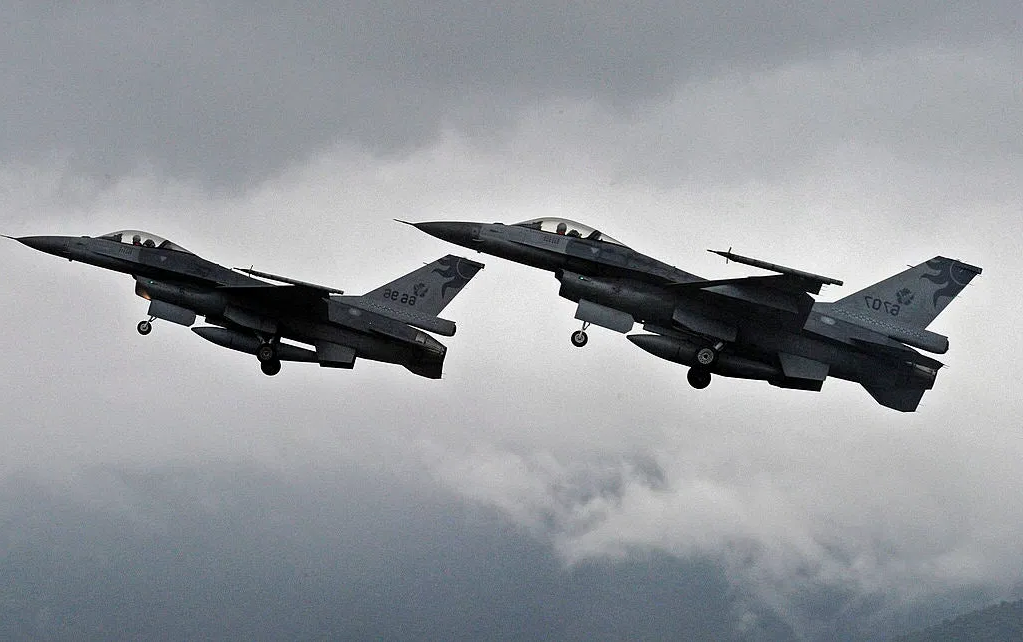
American fighter jets of the Taiwanese armed forces. Photo: Chine magazine.
Everything is now in the hands of the Americans, who are stepping up their military cooperation with Taiwan. Arms sales thus give Taiwan a strong deterrent capability and could complicate matters for the Chinese Communist Party in the event of an invasion.
The United States, for its part, is strengthening its regional alliances, notably with Japan, South Korea and Australia. This dynamic is feeding a security spiral in which each side justifies its actions by the need to protect itself from the other.
5. Taiwan as an ideological and political symbol
Finally, Taiwan carries strong symbolic weight in the Sino-American rivalry. For the United States, the defence of Taiwan is often presented as a defence of democracy against authoritarianism. Taiwan embodies a model of democratic success in the Chinese-speaking world, which enhances its ideological value in Washington’s eyes. Moreover, Taiwan has become a technological ally that must be protected at all costs in order to reduce dependence on China.
For China, by contrast, Taiwan is a matter of national sovereignty and regime legitimacy. As the 23rd province of the People’s Republic of China, any challenge to Chinese control over Taiwan is seen as a direct affront to the authority of the Chinese Communist Party and to national unity.
This ideological dimension hardens positions and makes any compromise particularly difficult. Indeed, several scenarios are possible. The first is that the status quo is maintained. Taiwan would continue to exist as a de facto independent state, without a formal declaration of independence, while China would pursue a strategy of diplomatic, military and economic pressure. This scenario, though unstable, is the one that has prevailed so far, as it allows each actor to avoid direct confrontation.
The second would be a negotiated peaceful reunification. Beijing is promoting the “one country, two systems” model, already applied to Hong Kong. The third is an armed conflict pitting Taiwan and the United States (as well as Japan) against China (backed by Russia). This could take various forms: a naval blockade, targeted strikes or a full-scale military invasion. Such a conflict would carry a high risk of escalation between major nuclear powers, and the human, economic and political consequences would be considerable.
Conclusion
Ultimately, Taiwan is far more than a mere territorial issue. It is a point where multiple dimensions converge: historical, political, economic, military, technological and ideological. The Taiwan question crystallises the growing rivalry between China and the United States.
For China, Taiwan is a matter of national sovereignty and political legitimacy. For the United States, it represents a major strategic stake and a symbol of the defence of democratic values. Caught between these two powers, Taiwan is seeking to preserve its security, its democracy and its way of life.
Taiwan’s future will depend largely on how Sino-American relations evolve and on the ability of international actors to manage their differences peacefully. In a world marked by the return of great-power rivalries, the Taiwan question appears to be one of the most crucial tests for international stability and peace.
Bibliography
BARBAZANGES Lucie and ROUX Vincent, 5 January 2024, “À Taïwan, la ‘Terreur blanche’ continue de diviser la société”, France 24, https://www.france24.com/fr/%C3%A9missions/billet-retour/20240105-%C3%A0-ta%C3%AFwan-la-terreur-blanche-continue-de-diviser-la-soci%C3%A9t%C3%A9
BBC, 8 October 2021, “Chine-Taiwan: comprendre ce qu’est la politique de la ‘Chine unique'”, https://www.bbc.com/afrique/monde-58829375
DOISE Roland, 19 August 2025, Coopérations militaires taïwanaises : un cercle de plus en plus restreint, Areion24, https://www.areion24.news/2025/08/19/cooperations-militaires-taiwanaises-un-cercle-de-plus-en-plus-restreint/
DONNET Pierre Antoine, 20 May 2025, “Why Taiwan is a major strategic issue for the West”, Asialyst, Why Taiwan is a major strategic issue for the West – Asialyst
DUCHATEL Mathieu, 12 March 2025, “TSMC: an economic war prize for the United States?”, Institut Montaigne, https://www.institutmontaigne.org/expressions/tsmc-une-prise-de-guerre-economique-pour-les-etats-unis
DUCHATEL Mathieu, 16 October 2024, “Taiwan: rhetorical games and military tensions”, Institut Montaigne, https://www.institutmontaigne.org/expressions/taiwan-jeux-rhetoriques-et-tensions-militaires
JULIENNE Marc, 9 April 2025, “How is Taiwan preparing to face China?”, interviewed in the report by Nicolas Rocca and Igor Gauquelin for RFI, https://www.rfi.fr/fr/podcasts/grand-reportage/20250409-comment-ta%C3%AFwan-se-pr%C3%A9pare-face-%C3%A0-la-chine
GOKMEN KUTAY Berk, 30 April 2025, “China accuses Taiwan of economic ‘decoupling’ to please the United States”, Anadolu Agency, https://www.aa.com.tr/fr/monde/la-chine-accuse-ta%C3%AFwan-de-d%C3%A9couplage-%C3%A9conomique-pour-satisfaire-les-%C3%A9tats-unis/3553413#
LE FIGARO (AFP), 6 February 2026, “Taiwan: ambitious defence budget mired in political deadlock”, lefigaro.fr, https://www.lefigaro.fr/international/taiwan-l-ambitieux-budget-de-defense-enlise-dans-une-impasse-politique-20260206
MADINIER Baptiste, 10 November 2021, “Is the Taiwan question the powder keg of Asia and the world?”, RCF Radio, https://www.rcf.fr/articles/actualite/la-question-taiwanaise-estelle-la-poudriere-asiatique-et-mondiale
LATRIBUNE.Fr, 8 April 2024, “Semiconductors: chip giant TSMC to build a third plant in the United States… at a colossal cost”, https://www.latribune.fr/economie/international/semi-conducteurs-le-geant-tsmc-va-construire-une-troisieme-usine-aux-etats-unis-pour-un-montant-colossal-994885.html
RADIO TAIWAN INTERNATIONAL, 1 November 2025, “Poll: nearly 80% of Taiwanese say Taiwan is not part of the People’s Republic of China”, https://www.rti.org.tw/fr/news?uid=3&pid=172738
RISK AND OPS, 2 June 2025, “Taiwan’s economic attractiveness: opportunities and risks?”, https://www.riskandops.fr/news/attractivite-economique-de-taiwan-opportunites-et-risques
SEMO Marc, 17 January 2024, “Taiwan: the end of American strategic ambiguity?”, Challenges, https://www.challenges.fr/monde/taiwan-la-fin-de-l-ambiguite-strategique-americaine_880334
TIERNY Hugo, 5 November 2023, The defence of Taiwan put to the test by China’s rise in power, Les Grands Dossiers de Diplomatie No. 71, adapted by Institut Catholique de Paris, https://www.icp.fr/a-propos-de-licp/actualites/la-defense-de-taiwan-a-lepreuve-de-la-montee-en-puissance-chinoise
WEI Siyu and DUAN Danjie, 31 October 2022, “Comprehensively promoting the great rejuvenation of the nation through Chinese modernisation”, Chinese Social Sciences Today, Comprehensively promoting the great rejuvenation of the nation through Chinese modernisation – CHINESE SOCIAL SCIENCES NETWORK
Translated from French. The French original prevails.