© UNICEF/Media Clinic
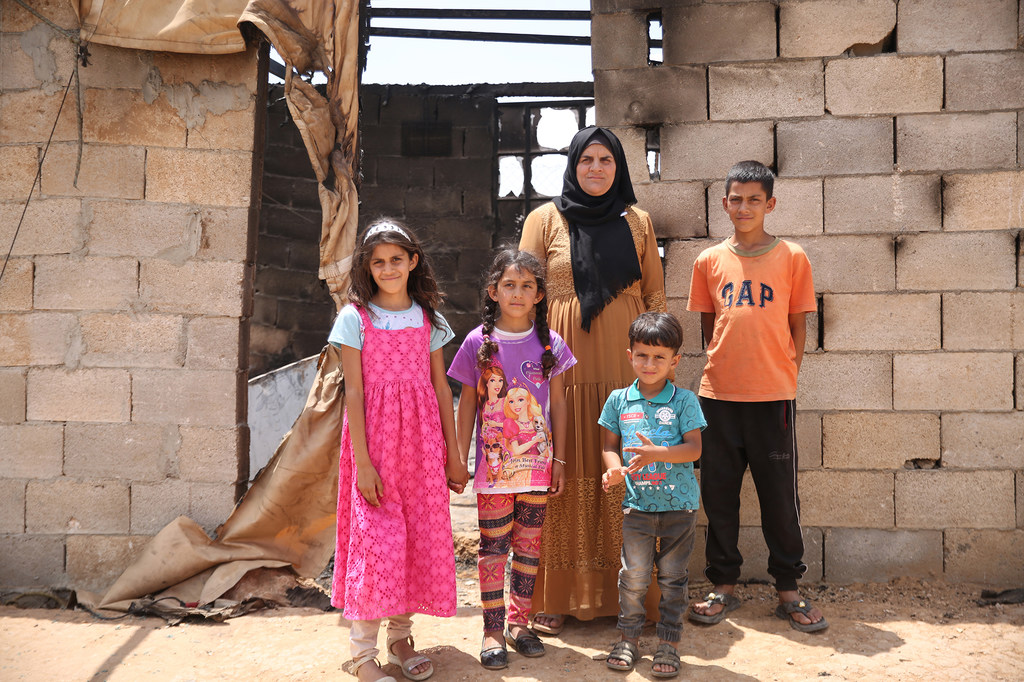
A Palestinian family stands in front of their home south of Hebron, in the West Bank, which was set on fire during a settler attack.
Recent decisions by the Israeli security cabinet to expand land expropriation in the occupied West Bank are part of a series of actions aimed at annexing Palestinian territory, the UN human rights chief warned on Wednesday.
According to the UN Human Rights Office, the measures seriously undermine the establishment of a Palestinian state and violate the Palestinian people’s right to self-determination.
On 8 February, the Israeli security cabinet approved a package of measures to extend Israeli civil authority in Areas A and B of the West Bank. Under the Oslo Accords, some of these powers fall within the jurisdiction of the Palestinian Authority.
Accelerated dispossession
The measures would amend the law to allow Israeli authorities and private individuals to acquire land in these areas. “This will further entrench Israel’s control over and integration of the occupied West Bank, thereby consolidating its unlawful annexation,” said the United Nations High Commissioner for Human Rights, Volker Türk.
According to the UN Office of the High Commissioner for Human Rights (OHCHR) in Geneva, if implemented, these decisions will undoubtedly accelerate the dispossession and forcible transfer of Palestinians and lead to the establishment of new illegal Israeli settlements.
“It will also further deprive Palestinians of their natural resources and restrict their enjoyment of other human rights,” Mr Türk lamented. He is calling for an immediate end to the occupation and the evacuation of the settlements.
On Monday, UN Secretary-General António Guterres had already expressed grave concern over the decisions of the Israeli security cabinet, warning that the current trajectory on the ground was undermining the prospects for a two-state solution.
Rise in attacks and demolitions
Beyond dispossession, these decisions extend Israeli control over key symbolic sites, eroding Palestinian powers and paving the way for new settlements.
Indeed, the Israeli decisions also strip the Palestinian Authority of its planning and building powers in parts of Hebron, including the Ibrahimi Mosque/Cave of the Patriarchs, and establish Israeli administrative control over Rachel’s Tomb in Bethlehem, in order to accelerate settlement expansion.
These administrative restrictions are not confined to Hebron and Bethlehem: they are part of a cycle of violence and settlement expansion that is stifling Palestinians’ daily lives and accelerating the appropriation of land.
© UNICEF/Alaa Badarneh
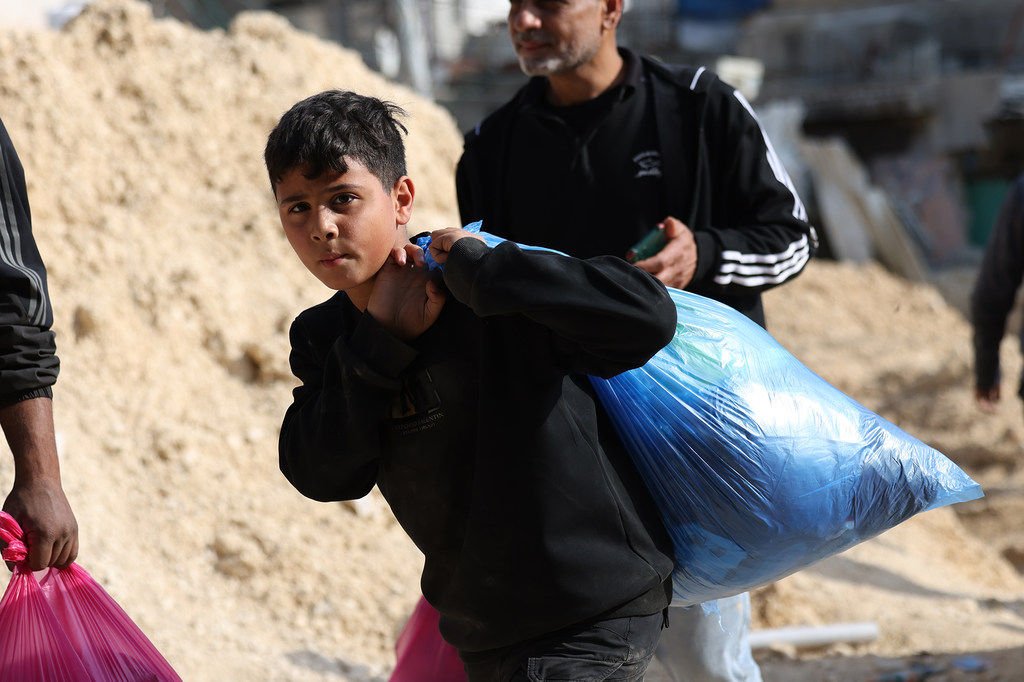
A boy carries belongings as his family leaves their home in Nur Shams refugee camp in the northern West Bank.
UNRWA warns of settlement expansion
These measures come against a broader backdrop of intensifying attacks by Israeli settlers and security forces against Palestinians in the occupied West Bank, forcible transfers, evictions, home demolitions, land grabs and movement restrictions, among other violations documented by OHCHR.
“We are witnessing rapid moves to permanently change the demography of the Occupied Palestinian Territory, stripping its population of its land and forcing it out,” Mr Türk argued, stressing that “these measures are backed by the rhetoric and actions of senior Israeli officials”.
For its part, the UN agency for Palestine refugees (UNRWA) stresses that these new measures pave the way for accelerated settlement expansion in the West Bank, further jeopardising the future of Palestinians.
“These measures also deal a further blow to international law, setting dangerous precedents that will have repercussions worldwide. They can only lead to tighter control, despair and violence,” the head of the UN agency, Philippe Lazzarini, said on the social network X.
Translated from French. The French original prevails.