The year 2025 was unquestionably defined by Donald Trump’s second term as President of the United States and by the jeopardy into which it placed multilateralism and the geopolitical order that has prevailed since the Second World War. This has led to a loss of funding and influence for multilateral bodies, and notably for Geneva as a UN hub. This year no doubt foreshadows unprecedented humanitarian crises, for lack of the means to mitigate their effects.
2025 also saw the return of the Monroe Doctrine in Washington, in its Trumpist version dubbed “Donroe”, asserting US supremacy over the Americas. It also saw the weakening of the transatlantic alliance, which in turn calls into question whether NATO’s Article 5 can be relied upon to be triggered automatically – the article that commits all signatory countries to defend any member that comes under attack.
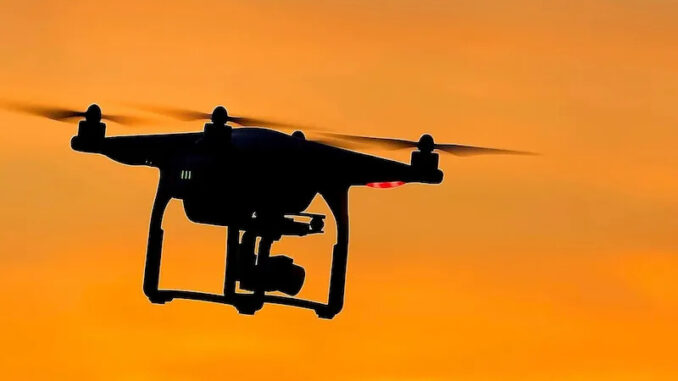
The pre-eminence of drones, both on the front line and in deep strikes
In the United States and in South America (with the election of an admirer of Pinochet 52 years after the military coup in Chile, and that of Milei in Argentina), as in a Europe battered by Russian and American cyber-assaults, a reactionary, authoritarian, anti-woke and anti-immigration surge has led to intellectuals and opponents being blacklisted, a tougher migration policy and a rise in deportations in the United States. In Eastern Europe, Russian interference has severely disrupted democratic processes in Romania, Georgia and Moldova, while the governments in power in Hungary and Slovakia are clearly playing Moscow’s game within the EU.
Far-right parties are gaining ground, sharing power in Northern Europe or leading the government, as in Italy. Reactionary ideas on social mores are advancing, following a wave of emancipation for sexual minorities in particular.
In Europe, the political and financial crisis in France is weakening the European Union, while several countries are embarking on a drive to rearm in the face of the Russian threat. Ukraine continues to resist the Russian aggressor, whose economy is beginning to suffer from sanctions and the war effort. Weakened by corruption scandals at the heart of government, Ukraine has lost the firm backing of the Biden administration and must contend with the U-turns of Trump, who is more concerned with doing business than with securing a peace agreement from Moscow – one that Putin, moreover, is not ready to accept as things stand.
This war, which began in 2014 and escalated in 2022, has brought about a major development that will change military strategy for the long term: the pre-eminence of drones both on the front line and in deep strikes against energy or military installations, as well as the instilling of terror among deliberately targeted civilian populations, in breach of the laws of war.
The Gaza war has also left Israel isolated on the international stage
In the wake of the 7 October terrorist attacks in Israel, the war in Gaza and the bombing in Lebanon, Syria and Iran, together with the fall of Bashar al-Assad’s regime, have weakened the axis of resistance (the armed groups backed by Iran) and the Shia crescent in the Middle East. Iran’s loss of power was also made plain by a coordinated attack by the United States and Israel on its military nuclear facilities, though without really weakening them. The Gaza war has also left Israel isolated on the international stage and has served as the spark for an unabashed surge of antisemitism on the far left and in universities in Europe and the United States.
Around the world, a Gen Z-led revolt has toppled or is challenging authoritarian governments in Sri Lanka, Nepal, Bangladesh, the Philippines, Indonesia, Madagascar and Morocco. The failure of the Arab Spring has led to new authoritarian regimes in Tunisia, where the 2011 revolutions began, as well as in Egypt. In Syria, the former jihadist now in power is trying to demonstrate his respectability while attacks on the Alawite, Druze and Christian minorities rock the country.
In Africa, France’s withdrawal from the Sahel, where it has been replaced by brutal Russian militias that help themselves to the country’s resources and commit crime after crime, heralds the return of jihadists from northern Mali, who are once again threatening the capital, Bamako. France’s loss of influence coincides with the appetite of new players in the region, following China and India, such as Turkey, Israel, Saudi Arabia, Qatar, the United Arab Emirates (UAE) and Iran.
Translated from French. The French original prevails.