As the 59th session of the UN Human Rights Council opens, High Commissioner Volker Türk is sounding the alarm over the global conflagration, the erosion of international law and the weakening of multilateral institutions, at a time when human rights appear to have been relegated to the background.
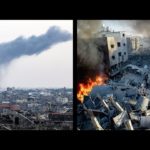
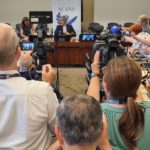
In Geneva on Monday 16 June, the mood was not one of hushed diplomacy but of palpable concern. In a speech of rare intensity, the High Commissioner for Human Rights, Volker Türk, laid out before the Council a map of global chaos. From Gaza to Sudan, from Ukraine to Myanmar, massive violations of international humanitarian law are no longer the exception but the rule. The protection of civilians has become an afterthought. The Geneva Conventions, cardinal though they are, are flouted every day. And this reality is setting in amid a deafening international silence.
All eyes are on the situation in the Middle East. The High Commissioner expressed his “deep concern” at the military escalation between Israel and Iran, calling for immediate de-escalation and diplomatic negotiations to bring the attacks to an end. He reaffirmed the need for strict respect for international law, in particular the protection of civilians in densely populated areas. That concern echoes his remarks on Gaza, where he denounced the “unconscionable” suffering inflicted on the Palestinian population and the “dehumanising rhetoric” of Israeli officials, while calling for impartial investigations into attacks on civilians. Against this backdrop, the failures of transparency, the barring of international journalists and the lack of accountability for crimes committed bear witness, in his view, to a dangerous slide towards impunity.
For beyond the conflicts, it is the very idea of multilateralism that is faltering. “Can we carry on as if nothing were happening, when powers are rejecting the agreements that underpin our world?” Türk asks. The question resonates in a Palais des Nations that is itself weakened: attacks on the International Criminal Court, pressure on UN mechanisms, budget cuts that are strangling those working on the ground. The system has been weakened, and with it the capacity to prevent crimes, to name abuses and to protect the most vulnerable.
In many countries, civic space is shrinking. Journalists, NGOs and human rights defenders are being arrested, intimidated and silenced. Women’s rights are going backwards, from Kabul to some US states. LGBTIQ+ people are increasingly being singled out as scapegoats. Even children, migrants and people with disabilities are becoming the targets of repressive policies or open contempt.
What Volker Türk is denouncing is the growing marginalisation of human rights in the hierarchy of international priorities. While military budgets are soaring, development aid and funding for protection mechanisms are collapsing. While artificial intelligence is advancing at breakneck speed, no safeguards are being seriously debated at the global level. And while leaders stoke “culture wars”, social, climate and humanitarian emergencies are worsening.
Yet the High Commissioner has not given up on a glimmer of hope. He points out that many countries continue to defend fundamental rights, and that progress – modest but real – is being made, from the legalisation of same-sex marriage in Thailand to the abolition of forced marriage in Pakistan. But this hope hangs by a thread. Without a collective awakening, without a renewed political will to put human rights back at the heart of decision-making, the world risks sliding even further into a brutal order, where might supplants right and silence replaces justice.
“Is this the world the drafters of the Charter of the United Nations envisaged?” asks Volker Türk. He is not looking for a diplomatic answer, but for commitment. His own is clear: to keep documenting, denouncing and defending. It remains to be seen whether states will heed him.
Translated from French. The French original prevails.