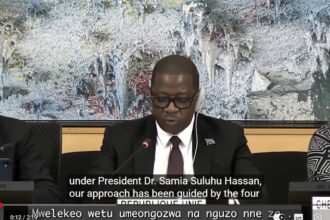
As humanitarian crises multiply around the world, a high-level conference organised by the Permanent Mission of Kuwait in Geneva, with the participation of several United Nations agencies and international experts, issued an urgent appeal: humanitarian aid and the protection of those who deliver it are no longer mere logistical considerations, but an inescapable legal and moral imperative.
Moderated by Nawaf Naman, Vice-President of the Geneva Geostrategic Observatory, the side event entitled “Humanitarian aid and the protection of personnel: a pillar of the promotion of human rights in times of conflict” was held on the sidelines of the 59th session of the United Nations Human Rights Council. It brought together a panel of experts from several UN entities — including OHCHR, WHO, OCHA and the mandate of the Special Rapporteur on the right to food — as well as representatives of the University of Geneva.
The aim was to affirm that obstructing humanitarian aid and attacking relief workers are serious violations of international humanitarian law, undermining the most fundamental rights — to food, health, water and education.

Gaza: symbol of a global crisis
In a video message, Dr Michael Fakhri, the UN Special Rapporteur on the right to food, condemned the use of starvation as a weapon of war in Gaza, describing a deliberate strategy of destroying food and health infrastructure in order to destabilise the population. He urged the international community to implement Security Council resolution 2417 and called for aid convoys to be escorted by peacekeeping forces.
The picture painted by Francesco Motta, of OHCHR, is equally alarming: one million people at risk of famine by September 2025, no hospital in Gaza operating at full capacity, and 377 humanitarian workers killed in 2024, including 168 UN staff — a record.

Chilling figures and calls for respect for the law
Dr Altaf Musani, of the WHO, revealed that 8,630 attacks on health facilities have been recorded since 2018, causing more than 4,000 deaths. Gaza, the West Bank and Sudan, as well as Iran and Israel, are among the worst-affected areas in 2025.
For Professor Marco Sassòli, of the University of Geneva, refusing aid on discriminatory grounds constitutes a double violation of humanitarian law. He called for the full implementation of resolution 2730 (2023) to guarantee the safety and transparency of humanitarian operations.
For his part, Patrick Duplat, an adviser at OCHA, highlighted the growing obstacles on the ground: political deadlock, the militarisation of humanitarian corridors and insecurity. He stressed the need to maintain neutral and independent access, grounded in humanitarian principles.
A moral, legal and political emergency
In conclusion, Nawaf Naman asserted that humanitarian access is not a privilege but a fundamental right. Failure to guarantee it is a political failing, but also a legal and ethical one. He called for international frameworks to be strengthened, for effective accountability to be ensured and for human dignity to be placed back at the heart of humanitarian action.

Translated from French. The French original prevails.