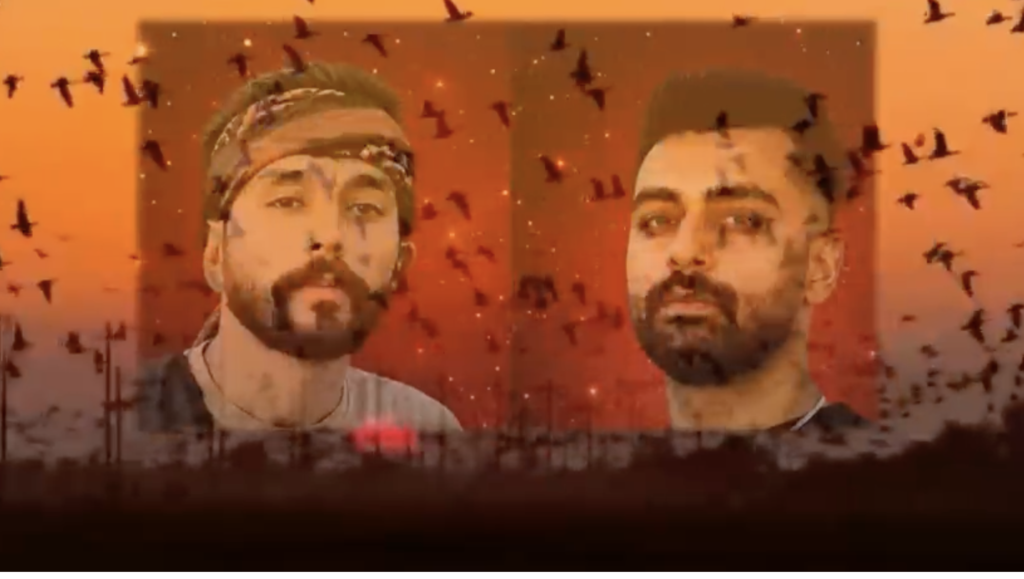
On Tuesday 16 June, the Iranian authorities executed two young men, Javad Zamani and Abolfazl Saedi, from Shahrud in the north-east of the country. Both had been sentenced to death for their alleged involvement in the protest movements that have shaken Iran in recent months.
According to the judicial authorities, they had been prosecuted for offences relating to national security. Their execution comes amid a tightening crackdown on opponents, activists and those taking part in the protests.
For many observers, the case goes beyond the purely judicial. The executions are seen as a warning to all protesters and as a show of the regime’s resolve in the face of any form of dissent. Human rights organisations condemn a policy built on intimidation and fear, designed to prevent any popular mobilisation.
A challenge to the international community.
The execution of Javad Zamani and Abolfazl Saedi the day after the signing of the framework agreement between Tehran and Washington could also be a political message to the international community. For many analysts, the decision reflects the determination of the regime’s most conservative factions to show their resolve in the face of international pressure.
It is being interpreted as a challenge to the international community as a whole, and to the United States in particular, which regularly condemns human rights violations in Iran. By carrying out these executions despite the criticism and appeals for clemency, the Iranian authorities intend to show that they will not bow to foreign demands concerning their internal affairs.
Drug-related executions still account for the majority
Despite the attention paid to political prisoners, most of the people executed in Iran since the start of 2026 were put to death for drug-related offences.
According to estimates by organisations such as Iran Human Rights, HRANA and Amnesty International, between 150 and 200 people are believed to have been executed between January and mid-June 2026. The lack of comprehensive official statistics, however, makes it impossible to establish a precise toll.
Cases of drug trafficking or possession reportedly account for nearly half, if not more, of the recorded executions. This is part of a trend observed for several years, with Iran remaining one of the countries that most frequently resort to capital punishment for such offences.
This policy of combating drug trafficking is all the more paradoxical given that the Islamic Revolutionary Guard Corps, notably the Quds Force, is reported to have strongly encouraged certain allied Syrian and Lebanese groups to expand their smuggling of captagon, a product that has become a significant component of the shadow economy of several regional actors.
Murder convictions make up the second-largest category. In these cases, the sentence is often applied under qisas, a principle of Islamic law that allows the victim’s family to demand the execution of the convicted person or to pardon them in exchange for financial compensation.
Rise in politically motivated convictions
The situation of political prisoners is nonetheless causing growing concern. Since the protests of January 2026, several NGOs have reported an increase in death sentences handed down on charges such as “waging war against God” (moharebeh), “corruption on earth” (efsad-e fel-arz) and offences against national security. According to Amnesty International, several dozen people are reported to have already been executed in spring 2026 in politically motivated cases.
The authorities justify these sentences in the name of combating terrorism, espionage or violence directed against the state. Human rights defenders, by contrast, denounce trials that fail to meet international fair trial standards and accuse the authorities of using capital punishment as a tool of repression.
In addition to these executions of political prisoners, there are the protesters killed during the brutal crackdown of January 2026. Human rights organisations have put forward figures ranging from 2,400 to more than 3,000 confirmed deaths, while some activist estimates put the toll at more than 12,000, or even higher.
Other executions relate to cases of rape, kidnapping or other violent crimes. Although fewer in number, they continue to be announced regularly by the Iranian judiciary.
Iran today remains one of the countries that make the most extensive use of the death penalty in the world. In 2025, international organisations recorded a record number of executions, well in excess of a thousand cases.
Translated from French. The French original prevails.