By Gwenegan Le Fol
Islamic State Khorasan teaches its recruits “responsible” use of artificial intelligence
By Gwenegan Le Fol
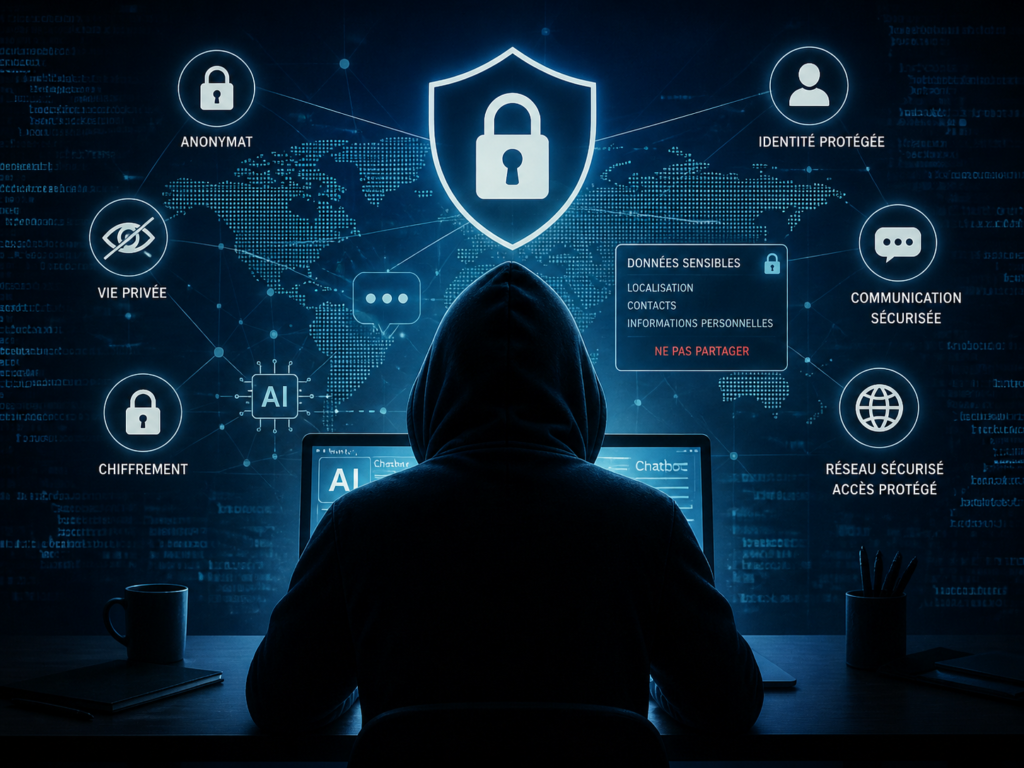
In an article in Politico published on 23 February 2026, the journalist M. Boycott-Owen writes that in the last two issues of The Voice of Khorasan, the online magazine of the Afghan branch of Islamic State (Islamic State Khorasan), members of the terrorist organisation teach their readers how to use artificial intelligence and chatbots “responsibly”. The penultimate issue focuses on comparing the various large language models (LLMs) on the market – ChatGPT, Gemini, Claude and Deepseek – and warns recruits of possible links between these tools and the Israel Defense Forces. The publication recommends privacy protection tools.
As for the latest issue, its subject is the “responsible” use of artificial intelligence. The journalist quotes the terrorist organisation’s message on artificial intelligence: “AI is like fire. You can use it to light a house, or to burn it down. […] It is everywhere. Learn to use it before it learns too much about you. Educate your children and your students so that they are
“cyber-aware” and grounded in spirituality.”
La doctrine du groupe est ici on-ne-peut-plus claire, et la revue poursuit en donnant aux lecteurs des exemples d’utilisation d’outils sécurisés pour la prédication et le recrutement. Le journaliste poursuit son analyse, et cite que ce numéro de La Voix du Khorasan rappelle l’utilité de l’IA pour chercher anonymement des informations en évitant le partage d’informations sensibles et éviter de s’exposer à des «risques inutiles».
One conclusion emerges from this analysis of the magazines: the progress made by AI since 2021, its content-generation capabilities and the creation of automated chatbots are a godsend for Islamist terrorist groups, which, despite their sometimes negative perceptions of new technologies in the past, are now changing their doctrines to adapt and find their place in this new ecosystem. Islamic State Khorasan is a good example, even though the group had lost territory as a result of its fighting against the Taliban in power in Afghanistan and the Pakistani state.
Indeed, ISKP has not only maintained its ideological cohesion but has also been able to continue recruiting and carrying out attacks in Iran and Russia, beyond its local sphere of operations. The use of AI is boosting its propaganda and recruitment capabilities. The Politico article quotes Johnathan Hall, an expert who advises the British government on its counter-terrorism legislation. In 2025 he warned of “a wave of AI in terrorist groups”, arguing that the technology risked intensifying propaganda and making it easier to plan attacks. In his view, LLMs enable terrorist groups to produce sophisticated, “tailor-made” propaganda.
ISKP has an extensive online media network and publishes content in several languages of the region in which the group operates, as well as in English. The terrorist organisation has also used AI to generate propaganda videos in the style of television news bulletins after attacks. According to the Politico journalist, a previous issue of ISKP’s magazine asserted that mastering artificial intelligence was “Fard Al-Ayn”, a religious obligation “that every Muslim must fulfil”. The same issue addresses its readers: “AI is no longer optional, it is your shield and your compass in a digital world full of hidden threats.”
Artificial intelligence therefore presents itself as an asset for ISKP, but the technology remains a risky tool that requires greater awareness, so much so that even terrorist groups take seriously the need to train their recruits and raise their awareness. As AI models improve and companies develop high-performing artificial intelligence agents, the resulting question is when terrorist groups will gain access to them.
Link to the Politico article: https://www.politico.eu/article/comment-letat-islamique-enseigne-lia-responsable-a-ses-recruescomment-letat-islamique-enseigne-lia-responsable-a-ses-re/
(This article was first published by POLITICO in English and was edited in French by Jules Darmanin.)
Further reading: analyses in English on the website of the Global Network on Extremism and Technology on the use of AI, cryptocurrencies and cyberspace by Islamic State Khorasan Province: Firoz, Fahadh. “Mapping ISKP’s Strength: Social Network Analysis of Tech-Driven Jihad”. GNET, 9 April 2025. https://gnet-research.org/2025/04/09/mapping-iskps-strength-social-network-analysis-of-tech-driven-jihad/.
Minniti, Fabrizio. “Automated Recruitment: Artificial Intelligence, ISKP, and Extremist Radicalisation”. GNET, 11 April 2025. https://gnet-research.org/2025/04/11/automated-recruitment-artificial-intelligence-iskp-and-extremist-radicalisation/.
Nunez-Guerra, Paula. “Light of Darkness: An Analysis of ISKP’s Digital Handbook”. GNET, 13 October 2025. https://gnet-research.org/2025/10/13/light-of-darkness-an-analysis-of-iskps-digital-handbook/
Tulga, Ahmet Yiğitalp. “Soliciting Terror: ISKP Digital Communications and Financing.Tactics Through Voice of Khurasan”. GNET, 12 December 2024. https://gnet-research.org/2024/12/12/soliciting-terror-iskp-digital-communications-and-financing-tactics-through-voice-of-khurasan/.
GNET is hosted by the Centre for Statecraft and National Security (CSNS) at King’s College London. The academic body describes its aim as being “to better understand how terrorists use technology”.
Translated from French. The French original prevails.