In 2011, as a wind of revolution swept across the Middle East and spread to the Maghreb, a NATO-backed commando unit killed Colonel Gaddafi, who had led the Libyan government since 1969. After 40 years in power, the head of state was ousted in the wake of the crackdown on Arab Spring protesters. The country descended into chaos.
In 2014, Libyan territory was split vertically into West and East. The two sides have clashed continually in a bid to gain ground. In 2019, Khalifa Haftar, the leading figure in eastern Libya, launched an offensive on Tripoli, the capital of the western part of the country. Khalifa Haftar is a former associate of General Gaddafi, who sidelined him from the political scene by sending him into exile in the United States for 20 years. After the general’s fall, Khalifa Haftar returned to his homeland and resumed the fight, setting up the self-proclaimed Libyan National Army. The attempt to seize Tripoli failed, but the episode changed the country’s overall situation. As tensions mounted, the United Nations decided to abandon its passive stance and set about organising a ceasefire, which was formalised in January and February 2021.
Despite the attempt to restore stability, the fighting continued and the ceasefire was entirely ignored by the warring parties. A government was then appointed without national consensus and recognised internationally, in the hope of bringing stability. The Government of National Unity (GNU) was established in Tripoli. At the same time, the UN backed the appointment of Abdul Hamid Dbeibah as interim Prime Minister, tasked with organising national elections. In return, Prime Minister Dbeibah was obliged not to stand in the elections he was to organise. The elections, scheduled for the end of 2021, held out hope of reconciliation between the two Libyan territories. The leaders of the various factions could stand for head of state, bringing their demands within a legal and legitimate framework. Khalifa Haftar indeed announced his candidacy. The leaders also met to settle the details of the elections so that they would appear fair at every level. However, the legal framework failed to win the agreement of the parties. Without it, it was impossible to draw up electoral lists, organise the candidates’ campaigns or have Libyans vote for a head of state. Thus, on 20 December 2021, the head of Libya’s High National Elections Commission announced that the elections would be postponed. Following this delay, it became clear that the elections would not take place and that Abdul Hamid Dbeibah would not give up power.
As a result, the eastern camp, led by the House of Representatives in Tobruk, decided to withdraw its confidence in the western leader. In March 2022, the House then formed its own government, known as the Government of National Stability (GNS). Khalifa Haftar’s Libyan National Army, with some 25,000 troops, joined it. Since then, Haftar’s forces have regularly attacked Tripoli’s forces in the hope of seizing total control of the country.
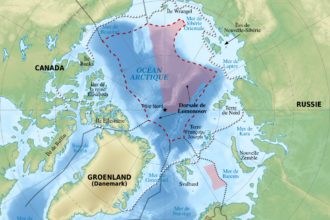
Figure 2 Source: Jeanne Arvat
International support
Since 2014, the United Nations has tried several strategies to calm the situation in Libya. Until 2021, the organisation was banking on elections to stabilise politics, but the events of 2021 and 2022 undermined that approach. Today, the UN is calling for a consensus between the two sides before democratic elections can be held. Negotiations are therefore continuing, the most recent having taken place in the summer of 2023.
Meanwhile, several countries in the Middle East and other regions have taken sides in the internal conflict. Egypt, the United Arab Emirates, France and Russia support the Government of National Stability, in other words eastern Libya. Egypt, and even more strongly the Emirates, want to see the Government of National Unity fail because of its affiliation with the Muslim Brotherhood. The United Arab Emirates has even carried out a bombing raid on the eastern zone with its own forces. Moreover, Khalifa Haftar takes the Egyptian president, Abdel Fattah al-Sisi, as his political model. The Government of National Unity is backed by the United Nations, Italy, Qatar and Turkey. Turkey has not hesitated to make grand statements in favour of the western government in order to secure access to oil. The same is true of Italy, which has a number of oil companies operating on Libyan soil.
Tripoli, a local battleground
Alongside these national tensions, clashes regularly break out in Tripoli. The city is itself divided into zones of influence. The south and the suburbs of Tripoli are controlled by the 444 Brigade, led by Mahmoud Hamza. The brigade is also the only one to hold other zones of influence outside the city, elsewhere in Libyan territory. It acts under the orders of the Government of National Unity’s Ministry of Defence and is reputed to be the most disciplined body in the country. The Rada force, a conservative group drawn from Tripoli’s police forces, is the 444 Brigade’s rival. The Rada force controls eastern and central Tripoli, as well as the operational international airport, and answers to the Ministry of the Interior. Both groups are recognised by the United Nations as legitimately exercising influence over a certain part of the capital. The forces regularly clash in Tripoli in pursuit of new territory. On Monday 14 August 2023, the two brigades met and engaged in a fierce exchange of fire in a densely populated urban area. Heavy weapons were used, supplied by the two factions’ allies. Tanks and missile launchers were out in the open street. 55 people were killed and 100 injured. At the heart of the clash was control of a highly coveted district of Tripoli, home to valuable real estate. The district is also known as the gateway to Tripoli, and it was through here that Khalifa Haftar’s men entered the city during the attempted seizure of power in 2019. The area also contains an old international airport, due to be renovated soon. Bringing it back into service would shift the balance of power between Tripoli’s different zones. The airport, located in the southern part of the city, is a symbol of power that will strengthen the presence of the 444 Brigade. In addition, Mahmoud Hamza, commander of the 444 Brigade, is the former commander of the Rada force. He resigned after the Tripoli war (Khalifa Haftar’s attempted seizure of power) to set up his own brigade, the 444 Brigade. The rivalry is therefore all the more intense. This urban warfare is driven first and foremost by local dynamics, but also by developments in the national situation. The attack of 13 August came a few days after the start of talks between the east and west of the country on the creation of a potential new interim national government accepted by all. Is this a coincidence? For now, the parties to the clash have made no statement to that effect.
Thus, at both local and national level, Libya is marked by a profound fragmentation of power. This fragmentation makes it hard to hope that the country will one day be unified and at peace again. However, following Storm Daniel, which caused colossal damage and loss of life in Libya, a certain rapprochement between the two governments can be seen as they work to get the country back on its feet. On 11 September 2023, the storm reached Libya after passing over southern Italy and Greece, where 15 people died. It mainly hit western Libya, and the city of Derna was completely devastated by flooding. To date, 2,500 people have been declared dead and 5,000 missing. In addition, 30,000 people have been displaced across the country. Although journalists have been barred from entering the city, a delegation from Tripoli has been allowed in to assess the extent of the damage. This first step by one government towards the other is promising. Will the two rival regimes find common ground around protecting their populations from natural disasters?
Translated from French. The French original prevails.