In a hard-hitting opinion piece published on 18 May 2025, Jean-Pierre Raffarin, the former Prime Minister and honorary president of the association Leaders pour la Paix, and Donia Kaouach, its president, issue an impassioned appeal: peace can no longer be content with being a moral ideal; it must become a genuine political objective, structured, taught and actively pursued on a global scale.
Founded in 2016, Leaders pour la Paix has set itself the mission of fostering a political culture of peace, notably by training new generations of leaders. The ambition is clear: to counter an alarming global trend in which violence appears to be becoming normalised, despite the unprecedented technical and diplomatic means at humanity’s disposal. Drawing on damning figures — “2023 was the most violent year since the end of the Cold War” — the two authors denounce the ineffectiveness of military models and the failure of the great powers to impose a shared world order.
Jean-Pierre Raffarin and Donia Kaouach protest that “brutal leaders fascinate” while “the voice of peace is portrayed as naive”. In their view, this fascination with force and war contributes to the weakening of states, as demonstrated by the failure of the Pax Americana, which they describe as a “bilateral defeat” for both the military powers and the societies they claim to liberate. Quoting Camus, they speak of those peoples “condemned to die together, with rage in their hearts”.
To avoid this impasse, the op-ed argues for a paradigm shift. Peace should no longer be defined merely as the absence of war, but conceived as a “positive, universal and global” project. This means tackling the structural causes of conflict: poverty, climate change, inequality, disinformation, corruption… all ills that states alone cannot address.
The association Leaders pour la Paix intends to embody this vision through action. Through its Universités itinérantes de la Paix (Travelling Universities of Peace), it trains young leaders in conflict zones. “Investing in the largest generation of young people in the history of humanity is the most effective form of defence spending”, the authors recall, quoting Kofi Annan. In the long term, they envisage the creation of a World University of Peace, based in Africa, to offer a “third path of engagement” between resignation and radicalisation.
The op-ed thus puts forward a vision that is bold yet clear-sighted: one of peace built on education, cooperation and renewed governance. At a time when conflicts are multiplying, it sounds a warning — but also offers a roadmap.
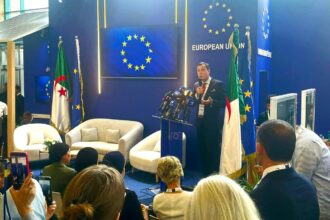
*Photo caption: As it does every year, Leaders for Peace awards a prize for early childhood peace education. This year, the hashtag#SmartPeacePrize was presented by our guests of honour, His Excellency and President of the International Peace Institute (IPI), hashtag#PrinceZeidRa ’adalHussein, and by the United hashtag#United Secretary-General’s Special Envoy for Road Safety, Chair of the Board of Directors of the International Peace Institute (IPI) and former Managing Director of Ferrari, Mr hashtag#JeanTodt, at the Ministry for Europe and Foreign Affairs in the presence of Minister Jean-Noël Barrot, to the Founding Director of hashtag#ActionKivu, Matabaro Amani. In the hashtag#DemocraticRepublicofCongo, a country deeply scarred by violence, resentment and tensions, hashtag#ActionKivu brings hope by empowering 600 young pupils every year through peace education, dialogue and the universal values that unite hashtag#humanity.
Translated from French. The French original prevails.