From the Qaboos doctrine to the Sultanate’s search for balance in the Iran-United States conflict.
By Lyed MEJRI
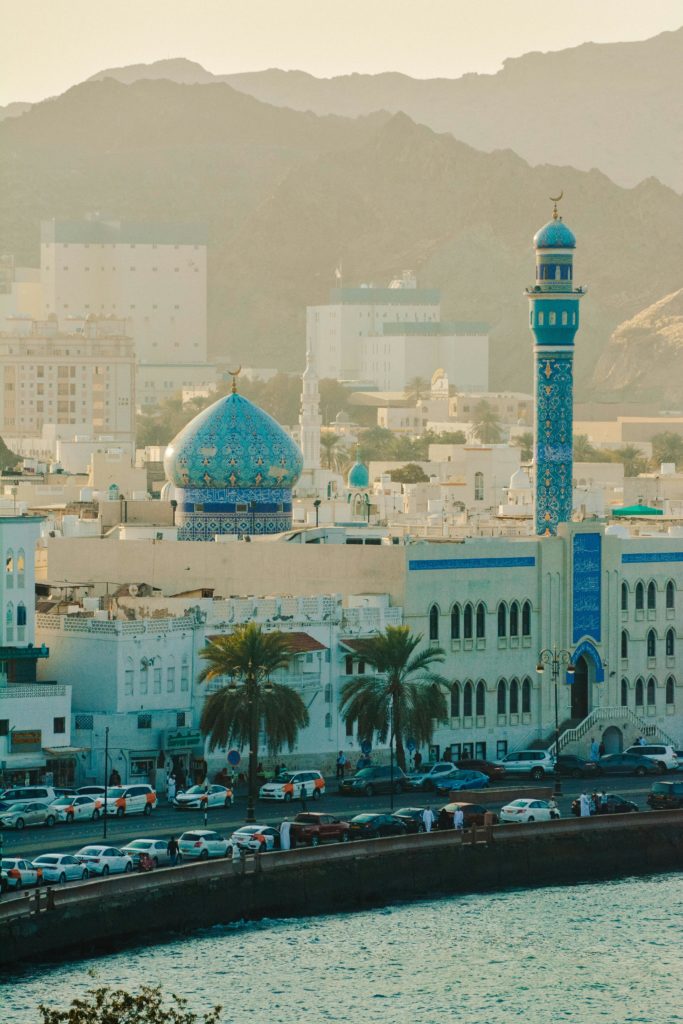
Since the 1970s, Oman has stood out in the Middle East by adopting a form of active neutrality, a guiding principle it has upheld with consistency. Today, however, the intensifying military tensions between the United States, Israel and Iran are shaking the foundations of this stance. Unlike countries such as Switzerland, whose neutrality rests on solid historical foundations, Oman’s depends on more fragile regional balances, a reality that, over time, is eventually laid bare.
The structural foundations of Oman’s doctrine of neutrality
Oman’s neutrality is not the product of an opportunistic diplomatic manoeuvre; it stems from a threefold geographical, religious and historical determination that makes it an obligation before it is a tactic. In geographical terms, control of the Strait of Hormuz, through which some 20% of petroleum products pass, is shared between the Sultanate and the Islamic Republic of Iran. This physical dependence makes any openly hostile stance towards Tehran structurally impossible.
This determinism is reinforced by the religious dimension. Unlike most of its neighbours in the Gulf Cooperation Council (GCC), Oman is predominantly Ibadi, practising a form of Islam distinct from both Sunnism and Shiism. Historically, this distinctive feature has allowed it to stay clear of the sectarian bloc dynamics that characterise the rivalry between Iran and Saudi Arabia. It is this doctrinal detachment that enables Muscat to engage with Tehran without that dialogue being read as taking sides in the Sunni-Shia divide.
Ultimately, the historical debt incurred during the Dhofar rebellion (1965-1975), when Shah Mohammad Reza Pahlavi sent expeditionary forces to fight alongside Sultan Qaboos, established an Iranian-Omani bilateral relationship based on a principle of reciprocity that was not shaken by the Islamic Revolution of 1979. While the rest of the Gulf was closing its channels of communication with Tehran, Oman continued to maintain an active diplomatic channel, not out of ideology, but out of memory and self-interest.
Diplomatic effectiveness founded on systemic discretion
The operating model of Omani diplomacy rests on a principle that is rare in international relations: discretion is regarded as a means to effectiveness rather than merely a method. This reticence is no cultural accident; it is the cornerstone of the sultanate’s credibility with parties that would never tolerate being seen to negotiate in public. In March 2013, secret bilateral talks between Washington and Tehran began in Muscat, led on the American side by William Burns and Jake Sullivan. These discussions would lead to the 2015 Vienna agreement. In 2024, Oman acted as an intermediary in passing on Iranian warnings ahead of a retaliatory attack on Israel, thereby helping to manage the escalation.
It is important here to distinguish Omani neutrality from forms of neutrality that are only superficially comparable. Since 1815, the Swiss Confederation has offered a model of neutrality enshrined in international law and protected by a geography that places it at the centre of the European system without drawing it into its vital conflicts. Switzerland has always been neutral and can maintain that position even when conflict engulfs its neighbours, because it is not structurally bound up in the security issues they face. Oman, by contrast, remains neutral in the eye of the storm: its neutrality is a constant balancing act, not a stable position.
The contemporary forces of erosion
The first dynamic stems from the logic of maximum pressure revived by the Trump administration since November 2024. Washington’s diplomacy, which publicly parades its partners and adversaries alike, simply cannot work with the Omani approach. Oman’s role rests on discretion and confidentiality. By shining a light on what Muscat builds in the shadows, Washington finds itself sawing off the branch on which it is sitting.
The second dynamic is economic. In the event of armed conflict, the closure of the Strait of Hormuz would pose a vital risk to the Sultanate’s public finances, which is why Muscat has always regarded peace as a necessity that is not only ethical but also economic. This economic vulnerability, precisely because it is recognised, erodes its position of neutrality. An actor whose very existence is tied to stability cannot claim to display the same degree of detachment in the face of challenges as a mediator from outside the region would.
The third dynamic is more structural: it lies in the glass ceiling beyond which polarisation, at a certain level, ceases to be seen as a diplomatic posture and becomes an object of suspicion. Following the joint strikes by the United States and Israel on 28 February 2026, Iran’s response targeted every Gulf country except Oman. While this reality confirms Tehran’s recognition of Oman’s role as mediator, it also has a stigmatising effect within the GCC. To be spared by the common adversary is to risk being suspected by one’s allies.
Neutrality as a regional public good under threat
Omani neutrality is, in the strict sense, a regional public good: it benefits all the actors involved, including those that do not formally recognise it, by keeping open a channel of communication that escalation systematically tends to close.
Its demise, which would come about gradually and without proclamation, through quiet departures and declined interventions, would leave a gap that neither Qatar, whose middle-power aspirations hamper the indispensable discretion, nor any other actor from outside the region is capable of filling in the same way. For the systemic conditions that allowed such diplomacy to exist have collapsed around it.
Translated from French. The French original prevails.